




 I think it would have been hard to find a more difficult premise for an anime if you were looking to find commercial appeal than this one. That’s one of the reasons I admire Cypic for adapting it – they’ve already shown an appetite for challenging material. They adapted it brilliantly too, which is certainly a huge plus. World is Dancing is not going to be recognized by most as the masterpiece it is, but it’s not like I ever expected that to happen anyway. It’s enough for me that I know, and had the opportunity to experience it. When that happens with an anime, my first reaction is gratitude to everyone involved, from the mangaka on down.
 As regulars may know, my usual practice is to jot down notes on a pad (real paper) when I’m watching an episode for coverage. But on very rare occasions that just doesn’t cut it, and this was one such occasion. I wasn’t thinking in words but whole sentences, trying to capture the majesty of what I was seeing on screen. God damn, this series is deep – like, seriously deep. Profound before breakfast. It’s not like a show has to be deep to work, but it’s a rare quality I treasure when we get it.
 Endings are hard. We all know that. This was the ending of the year for me, eloquent and beautiful and completely expressing everything that the series has been saying for 12 episodes. Making sense of it. It was gorgeous of course, a stunning triumph of cinematography and art and animation and music. It had me legit emotional from the beauty of it. But I was also emotional from the sheer brilliance, which is a unicorn moment for me with any art form narrative or otherwise. Huge ideas expressed intelligently and cogently, a conclusion at exactly the right moment of the story. There was no drama in that sense – this is a six-volume manga and the adaptation was always going to be a complete one. But complete and conclusive are not the same thing, and only the former could be taken for granted.
 Way back in Episode 7 I wrapped by saying “Art is nothing if not re-invention. It survives by destroying what came before it – like the shark if it stops swimming, it dies. Be destroying what came before, it preserves it – it’s remembered. In a new form perhaps, but the essence of the old one survives in it.” That notion reached its glorious apotheosis here. Oniyasha said it himself – “To protect our craft and ensure it endures, we must make changes”. This is, in the end, a theme expressed through the two principals, Oniyasha and Inuo. Their approach to art could not be more different, and that difference is why Oniyasha became Zeami and Inuo was – despite Zeami’s efforts and until the movie that bears his name – largely forgotten.
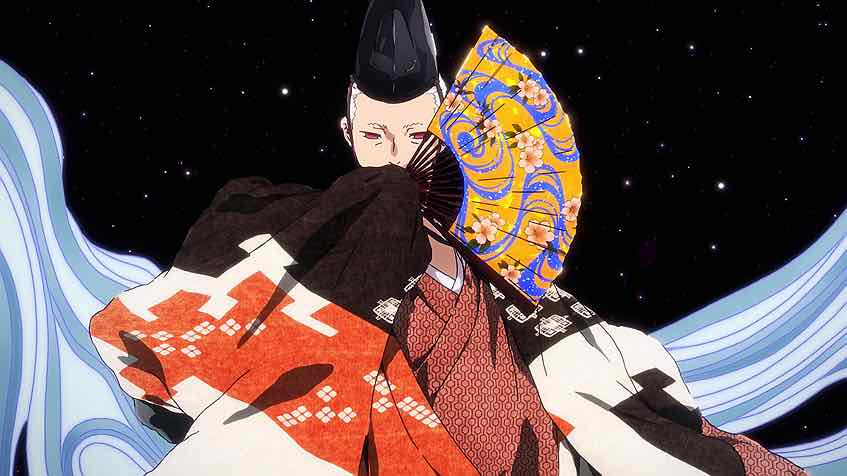
 This then was the birth of Noh – Noh more and Noh less (forgive me, I couldn’t stop myself). Inuo and Oniyasha, Yin and Yang. Inuo is singular, a genius, unique. Unmistakable. He performs alone, for he needs no one else on stage with him. The art is the man, the man is the art. But, as Oniyasha realizes, he will die someday. In fact it would be many decades later but in the Muromachi, he would have expected it to be fairly soon. Inuo’s dance will die with Inuo. Zeami’s dance will be forever reborn, because his dedication was to the idea of performance itself.
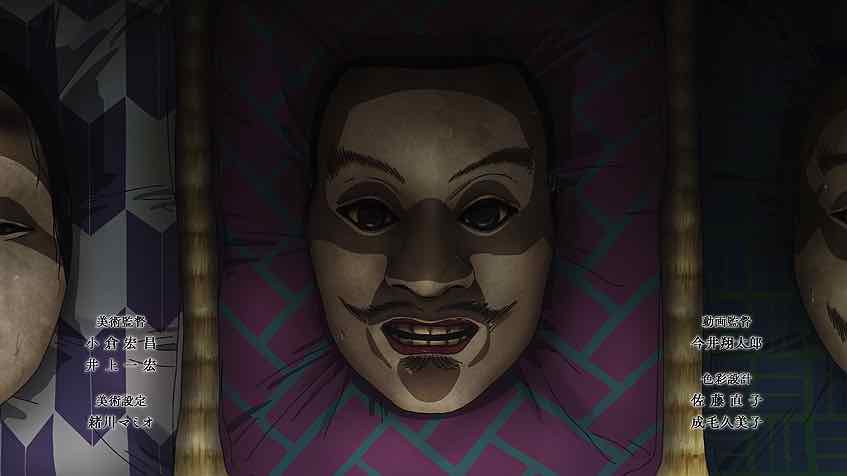 That was Zeami’s life. A selfless devotion to documenting that which came before him, to adapting it for the time in which he lived, and for leaving behind a foundation others could build upon to keep it alive. As romantic as it sounds, it’s not fiction – that really was Zeami’s life. He set out to do exactly that and triumphed to an extent he could never possibly have imagined when he was alive. If that’s not a happy ending, what is? Zeami was an author, a costume designer, an artist, a poet, a composer, a playwright, and of course a dancer. But none of it was about him. It was always about the art, and what it could mean to people in distant corners of the world and in the distant future.
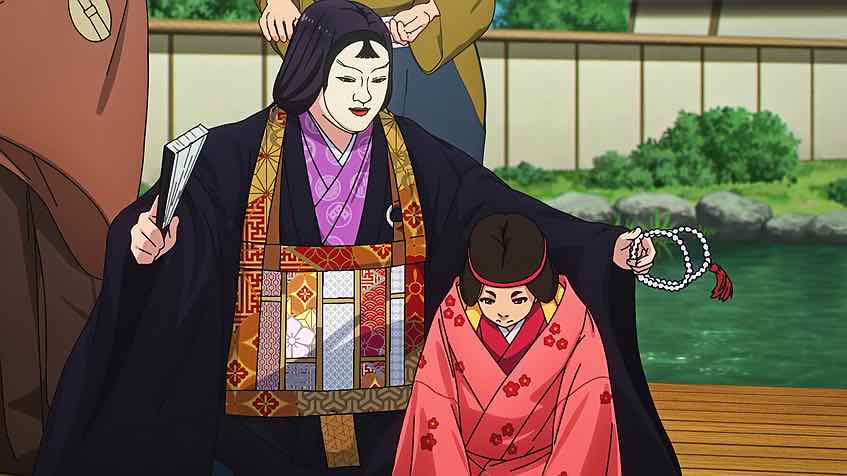
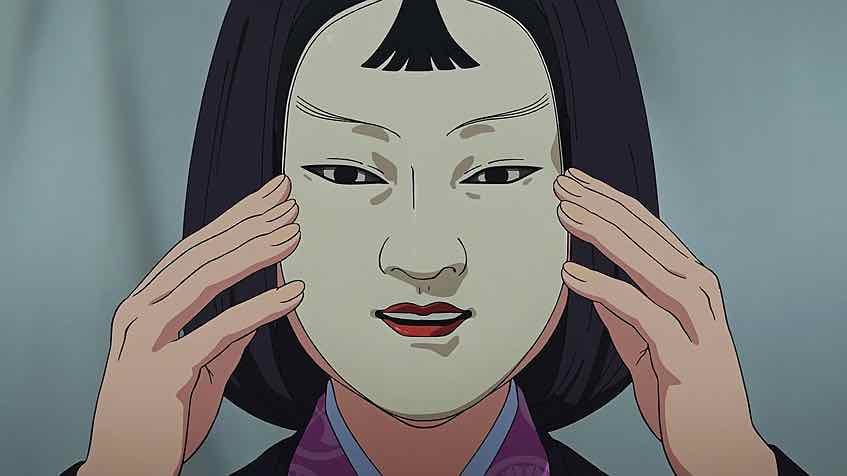
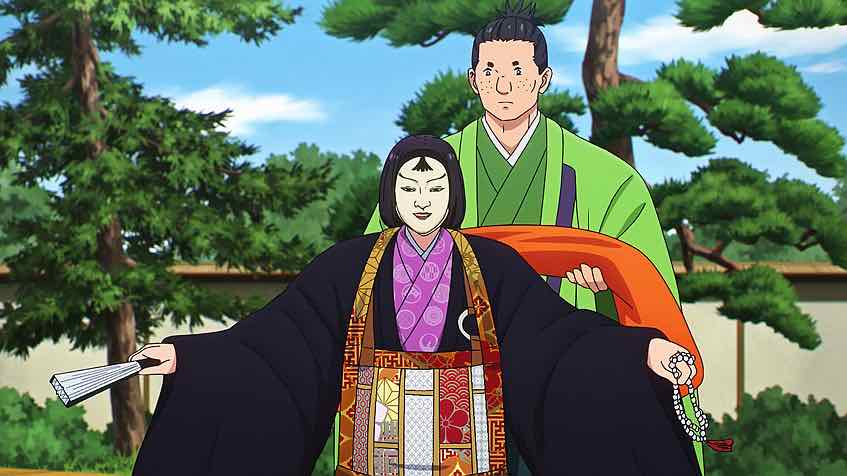
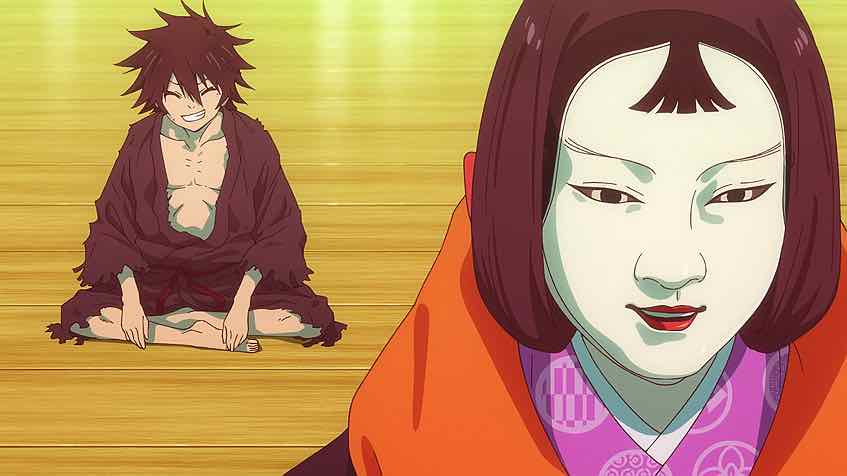
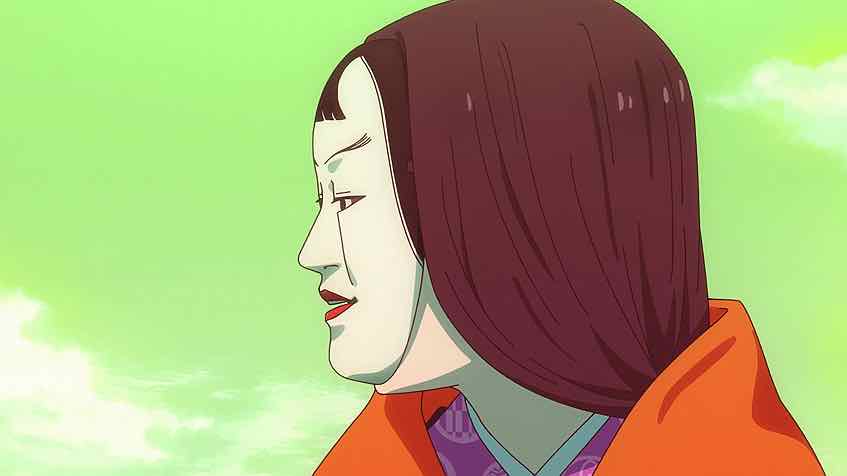
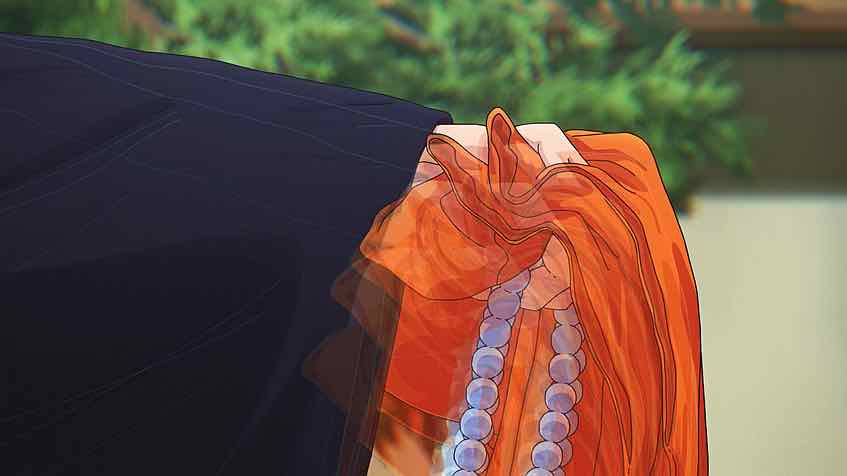
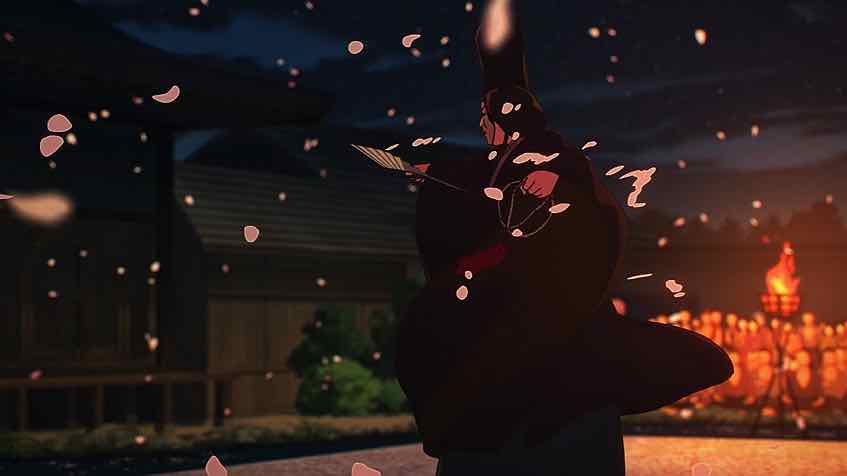
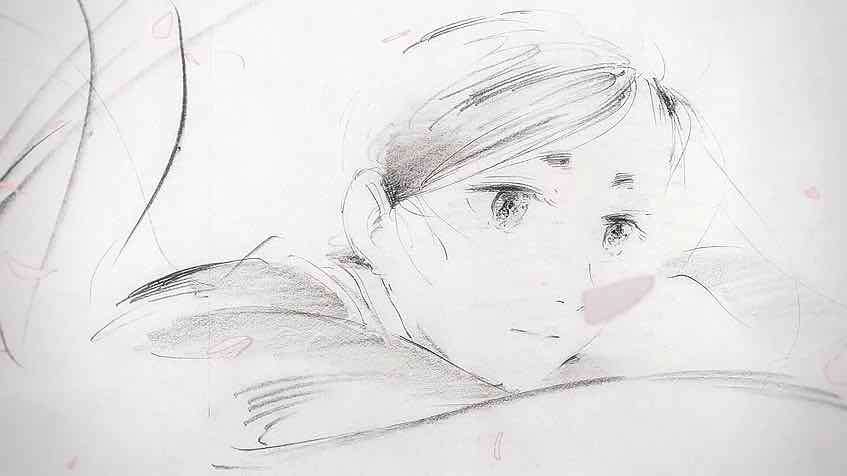
 To succeed in this, he had to embrace change. The youth Oniyasha, in costume and mask, looking back and effectively saying goodbye to his childhood innocence was an incredibly bittersweet moment. He realizes that he keeps that boy alive by embracing that experience and building on it, changing it. He goes to Kan’ami and requests permission to wear a mask on stage for the first time – a monumental privilege for a Sarugaku performer. The mask and play he chooses is Jinen Kouji, a work written by Kan’ami, and perhaps the one he was most famous for.
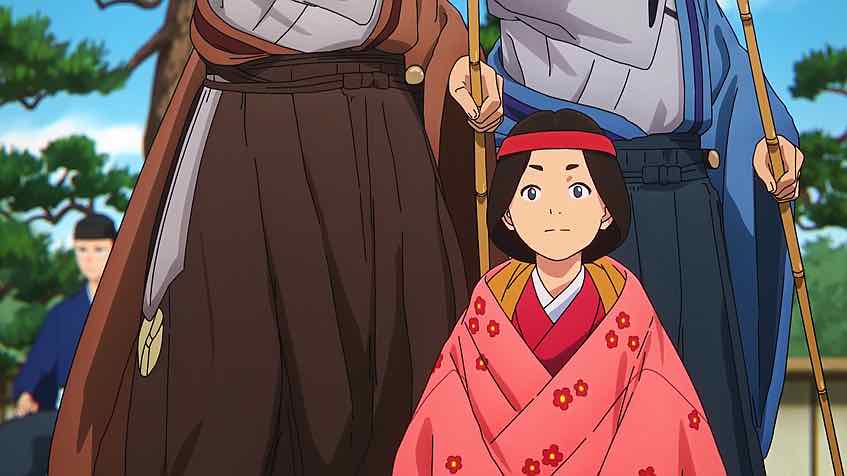
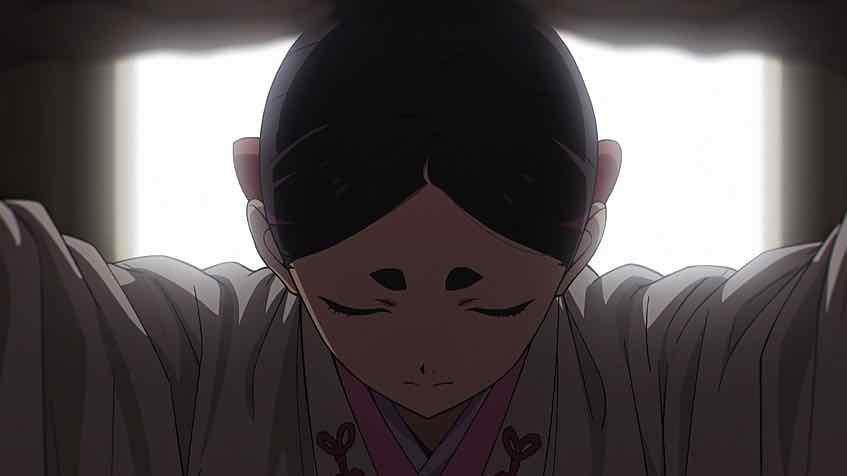 Jinen Kouji is a play that suits the subversive political message Oniyasha believed in, though that’s only part of the meaning behind its use here. It’s a story about the rejection of the material and protecting the weak, of selflessness and sacrifice for others. And Jinen Kouji himself is a man who must prove his worth as a dancer with high stakes in balance – in the fictional case, the life of a child who sold herself to slavers to buy a kimono so she could donate it for prayers for her parents’ souls. Jinen Kouji leaves his fundraising sermon in order to bring the girl back – which he does.
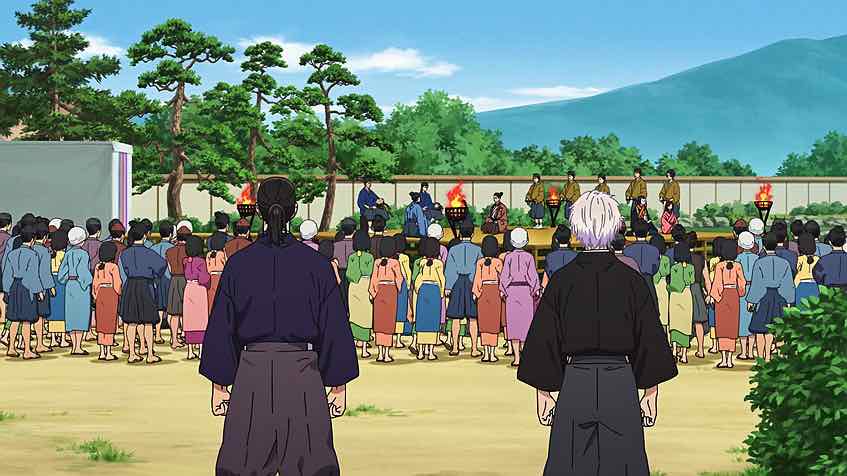
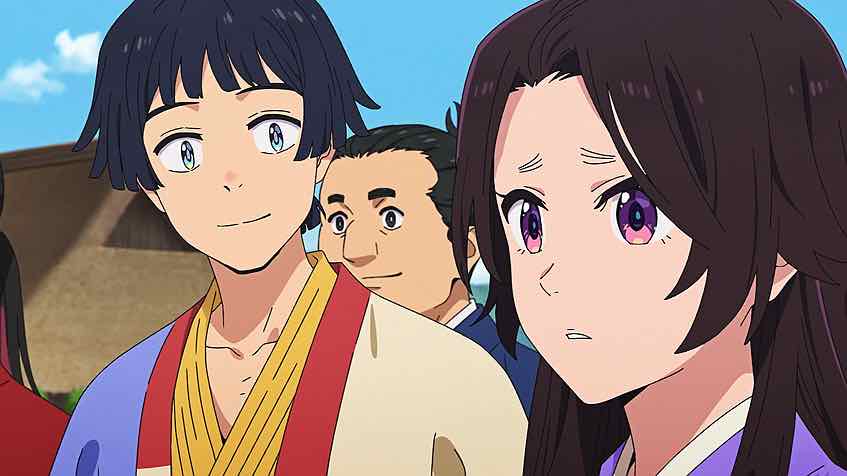
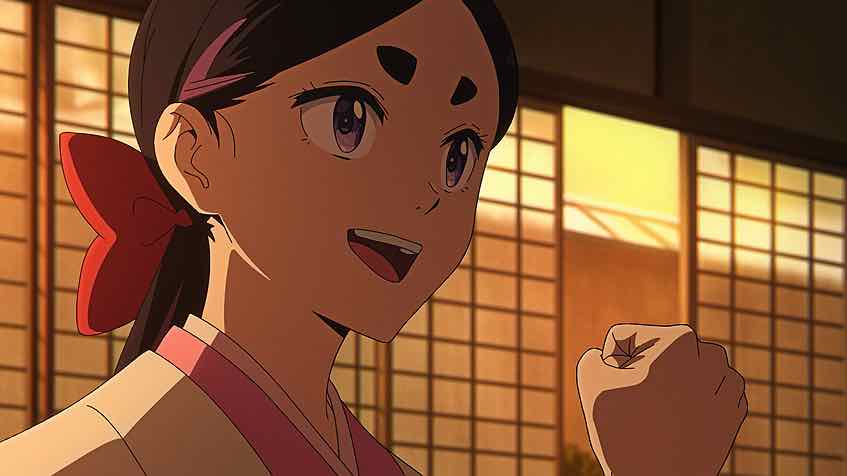
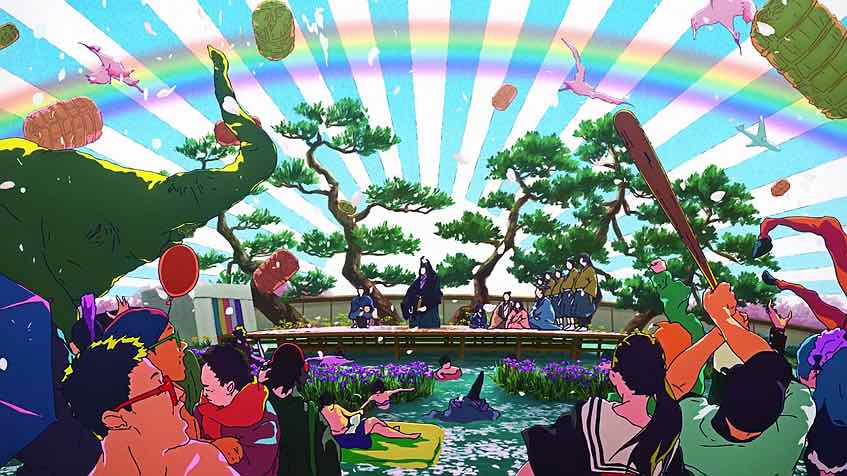
 Oniyasha, of course, does not perform the play exactly as his father wrote it. Or play and dance the role as his father did. He also knows he cannot succeed alone as Inuo did, so embraces those around him to assist. Youichi of the Shinza Troupe, who always stood by him. Chiharu, playing the flute on stage in spite of her gender, Touta (Sekine Arisa), the new young apprentice of the Kanze, playing the role of the child. And most importantly Ishiya, lending his voice to the chorus, on stage with his spiritual brother and comrade at last. Wracked with growing pains Oniyasha dances slowly, challenging his audience, some of whom don’t get it and leave. He provides contrast, silence, empty space between steps and speeches. As Claude Debussy said, “music is the space between the notes”.
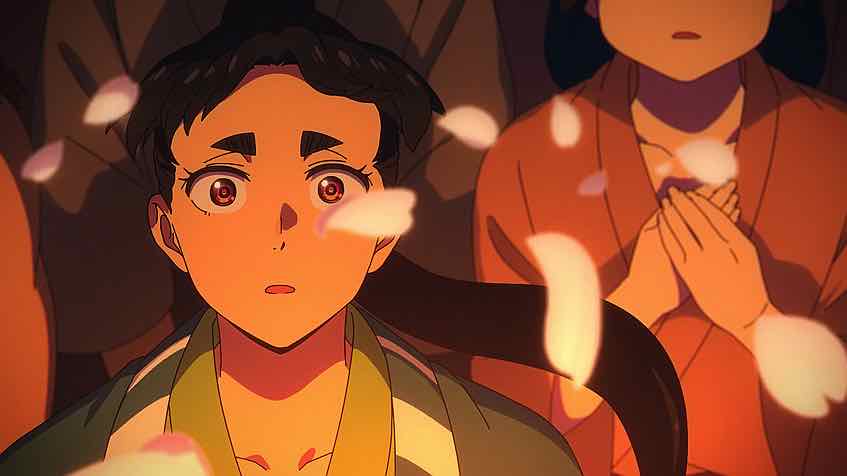
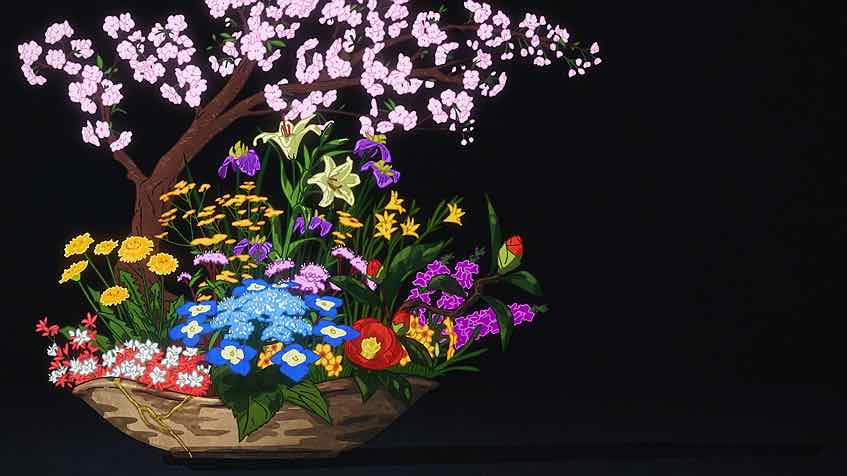
 The notion here is that Oniyasha becomes the wind – an artistic conceit that suits the situation. He removes himself from the moment and lets the art speak for itself. There’s only one goal, for the art to survive him and grow. To reach far and wide, as it would to a degree Zeami probably never dreamed possible. Even a Philistine – let’s be honest – like Yoshimitsu can’t help but see the truth of it. He may have sought the perfect flower to spread his idea of art across the land, but it wasn’t a flower that could do that. It was a breeze that could carry its petals far and wide, untethered to the Earth by ego.
 This was so beautiful, so profound, so wise, and so brilliantly executed. To see such huge and noble ideas treated with such respect is a rare thing. This is the story of a truly great man, but also not – it’s the story of a confused child trying to understand his place in the world. The journey from Oniyasha to Zeami was not a painless one, something I’m sure matches the reality of it. But Zeami found himself – by realizing his own unimportance – in a way few people in history have ever equalled. The ultimate tribute to Oniyasha is the enduring legacy he left behind in the Japanese arts, but the man himself would be remembered and revered. That wasn’t his goal, surely, but it’s all the more deserved because of that.
































Henk
September 23, 2026 at 6:17 amA fantastic ending for a fantastic show. Thanks for another great write-up!
catterbu
September 23, 2026 at 7:20 amThanks for your reviews of this show Enzo! I was quite engaged on my own, but you really took it deeper. Especially this final episode. Even after reading and watching it, you still helped me pull it all together in a new way with this.
Guardian Enzo
September 23, 2026 at 8:40 amThanks Catt and Henk, it’s a wonderful show to write about. Definitely a rewatch candidate.
Joshua
September 24, 2026 at 11:01 pmAs someone who was unfamiliar with Noh dancing and the culture surrounding it, including its history, it saddens me how much this left me feeling so cold all the way to the end. And I hated that I can’t appreciate this more because of that.
Andy L.
October 1, 2026 at 7:18 amPretty much know this one will be my AOTY, since I really don’t see anything comin’ fallor winter topping it. Such magnificent storytelling from beginning to end; went ahead and threw it on again and whoops flew thru the whole thing in a night and a half and cried like eight times; the way it comes full circle by ending as it began, with Jinen Koji but different, is such a beautiful encapsulation of everything it was doing. Possibly my favorite anime about art and performance ever? It’s real high up there. Wonderful score as well.
Guardian Enzo
October 1, 2026 at 4:04 pmYep, I see a close race among three possible contenders (regulars here can probably guess which) but WiD is definitely right there. The finale was so profound and beautiful and inspiring. I don’t know that much about Noh or even consider myself a huge fan, but it doesn’t detract from the experience at all for me.