



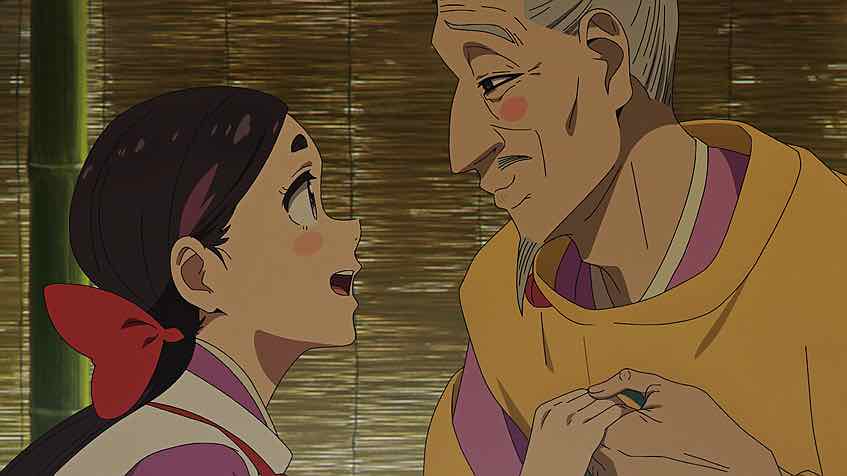
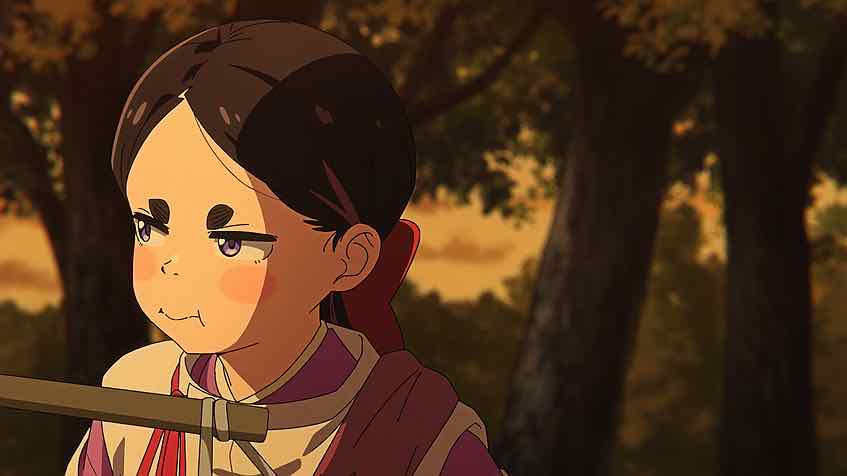

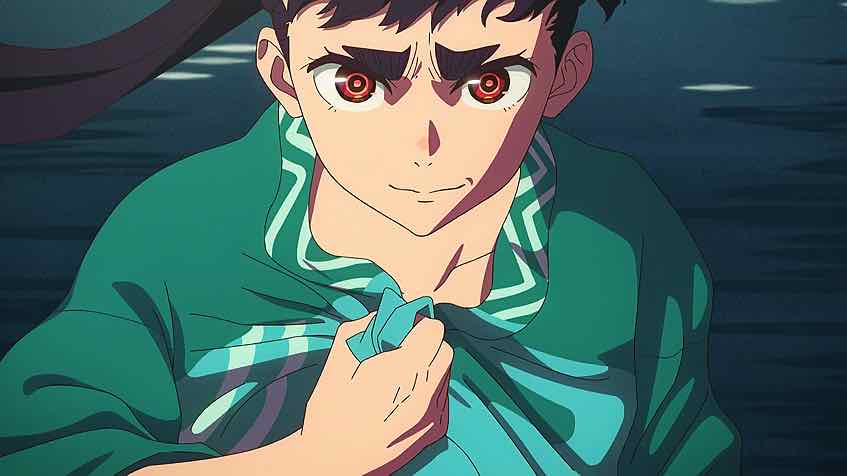

I’m always quite torn when I get to the end of an episode of World is Dancing. I’m overflowing with enthusiasm for what I’ve just seen (that’s been a constant so far) and want to start writing about it. But this series is so intellectually dense that it’s always more than I can handle to sort everything out right away. I need to decompress like a deep sea diver avoiding the bends. It’s a combo of browser tabs researching details and random divergences down trivial and unrelated rabbit holes that does it.
In the first place, the deeper we get into the anime the more I’m struck by how many changes it’s made to the manga (which I’m reading just behind where the anime is). Some of it was unavoidable, like toning down the sexual content where Oniyasha is indirectly (occasionally directly) concerned. But there are some massive shifts that are strictly editorial – new characters added, others missing altogether. I wouldn’t say one version is superior – I think they’re equally sublime. But it’s interesting to see big structural changes for a series that more or less fits the length of the adaptation as-is. It reflects a lot of thought that went into the process.
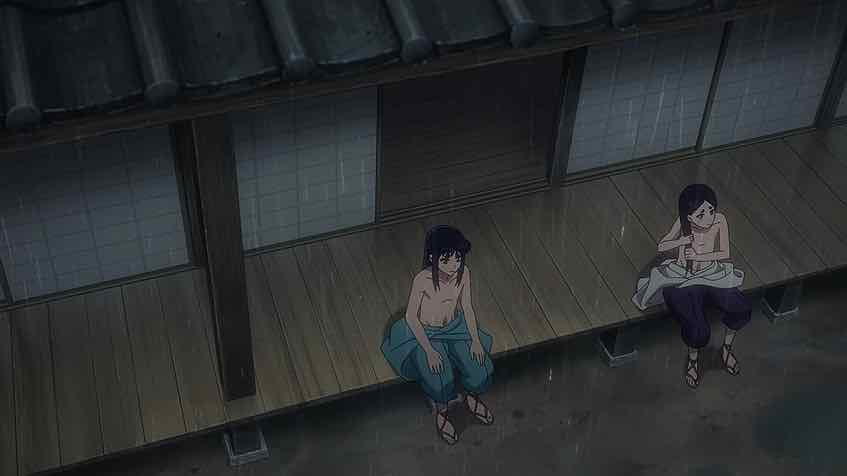


Also, I realize that I grievously erred in my Episode 4 post. In which I stated that “As far as I know, the Shinza troupe itself is fictional, meant to personify the popular status of Dengaku at the time”. Not only was the Shinza troupe very real, but Zoujirou is based on Zoami. Zoami was, in fact, a very important contemporary and rival of Zeami (whether we’ve met the most famous of those is officially unknown). In fact Zoami was credited as the inventor of the Zo-onna, a female mask which would go on to be one of the most important masks in Noh (and I wonder if we’ll see its invention next week).
Zoami’s birth and death dates are unknown to history, but he was thought to be roughly the same age as Zeami. What is known is that Zeami was an admirer of his and frequently praised his work – as indeed he did that of Inuo. One thing that stands out about Zeami’s life is how unconcerned with both “credit” and rivalry he was. He cited his influences and praised their work, and openly acknowledged that his own contributions were the sum of those who came before him and those of his own time that he learned from. We certainly see this as a dominant personality trait in Oniyasha.


The flip side of this, however, is that for artists in those days (and not jus those days) competition was a very real thing. Especially where the patronage of the shogun is concerned. We see this reflected late in the episode, as Zoujirou wrestles with the reality of what performing with Oniyasha means. Not only are the boys rivals for the Shogun’s favor, they’re representatives of two performance arts that were already seen as being in direct competition. In effect Zeami and Sarugaku would “win” – it’s they whose work would come to define the Japanese stage arts for centuries. Zoujirou would not have known that but he could have sensed it. And Zeami would surely never frame things that way.
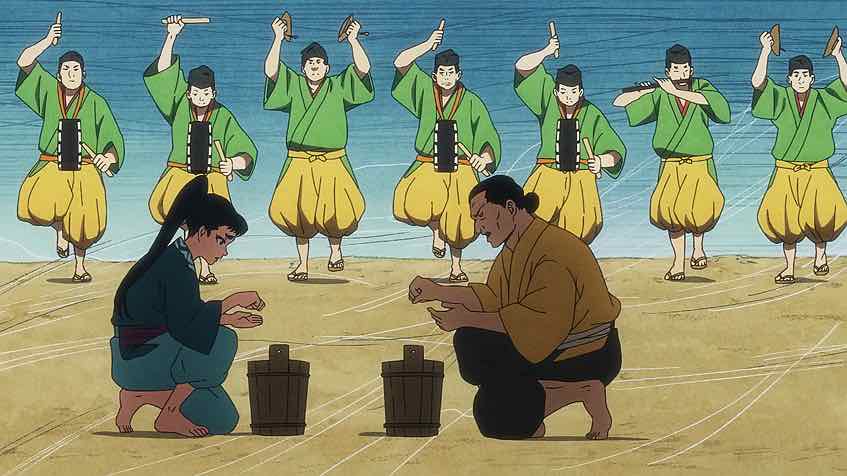
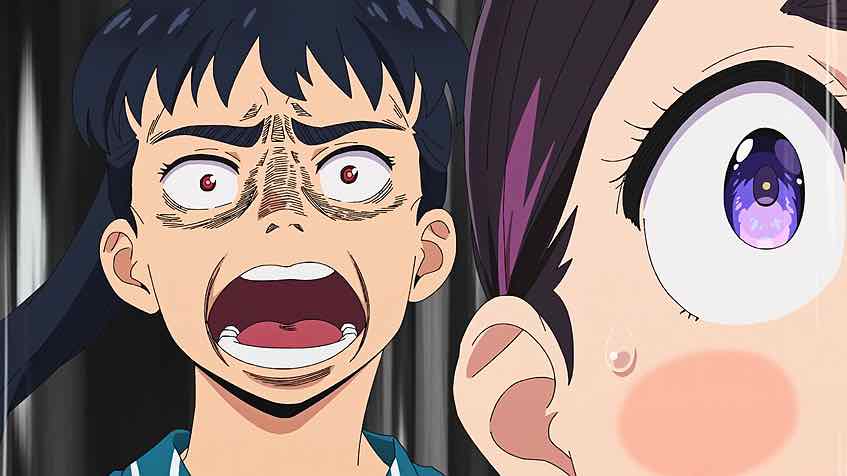
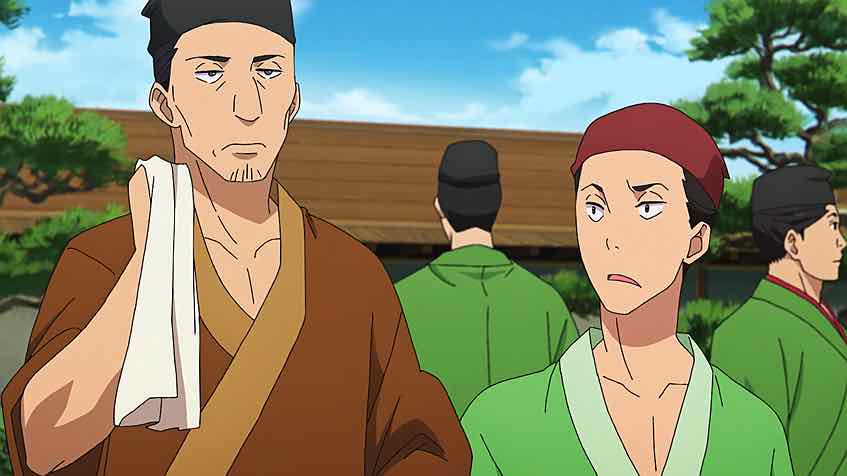
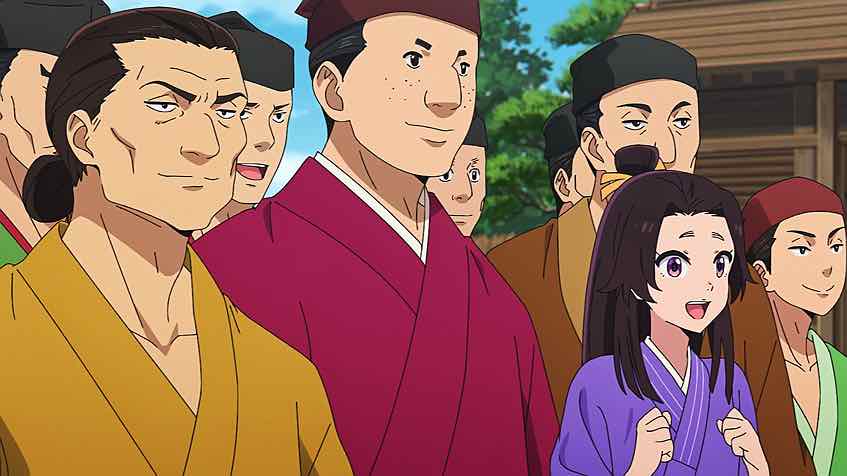
In face Zeami and Zoami did perform together at least once in an event called the “Daidokoro Sarugaku”, a performance for the Shogun which combined elements of both Sarugaku and Dengaku. As such this joint Shiokumi almost surely is fictional, though I could easily be wrong again. Shiokumi was a song credited to Kiami, Zoujirou’s former master in the Shinza Troupe. But as his elder Inomaru (15 – seriously??) points out, Dengaku is less of a story and more a routine. So when Oniyasha – who has zero tact – bluntly states that it’s “missing something”, Inomaru doesn’t dispute him. Shiokumi may be among the most Sarugaku-like of Dengaku pieces, but it lacks the Sarugaku touch.
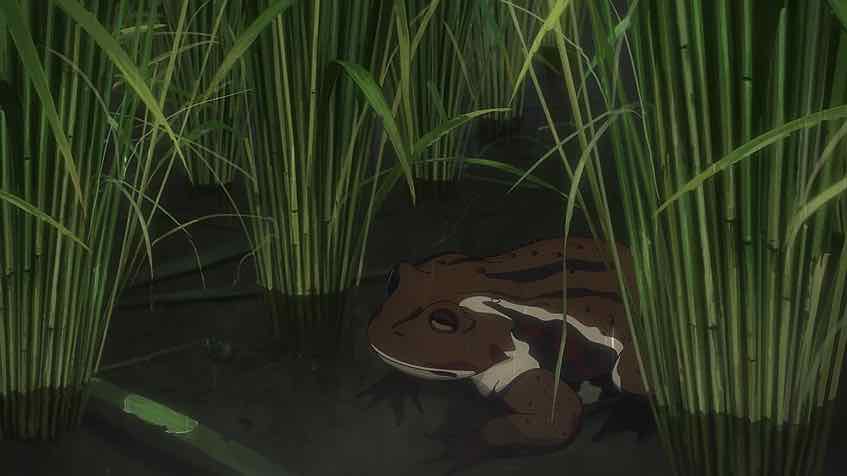
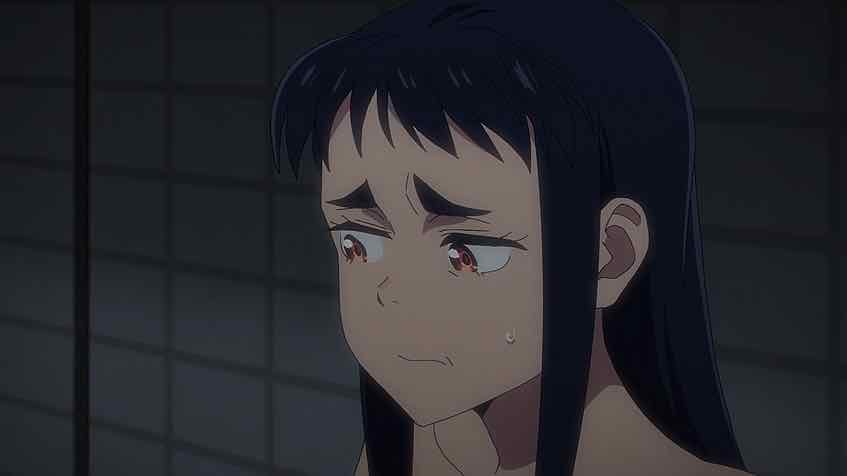

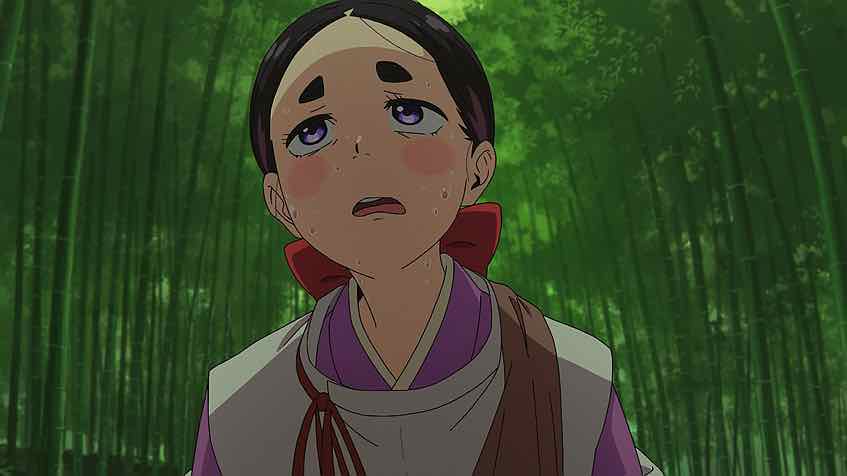
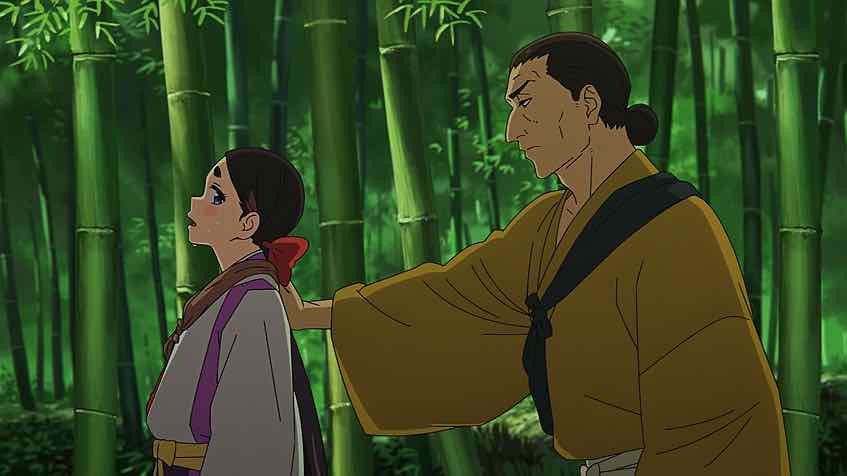
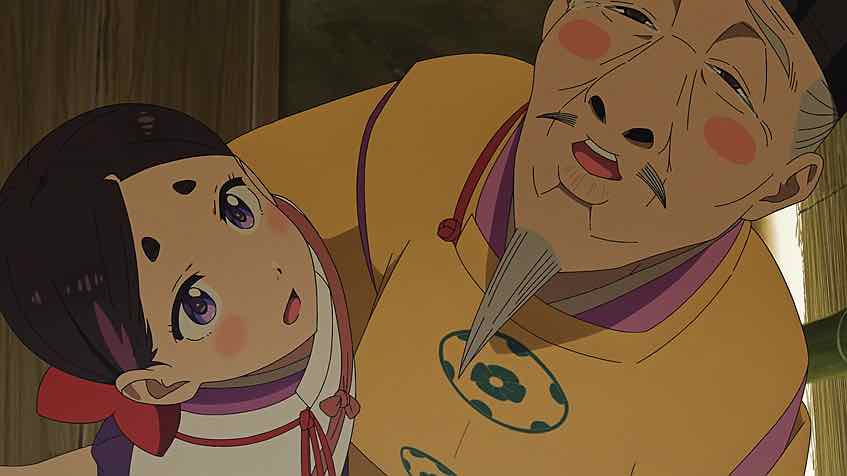
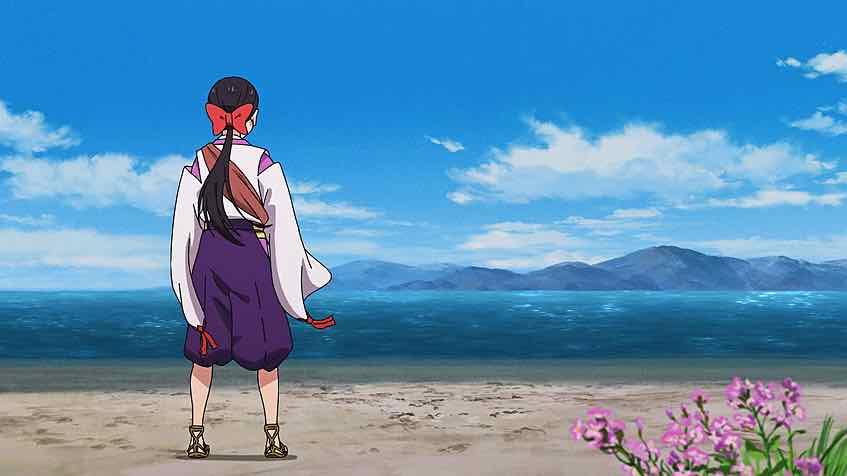
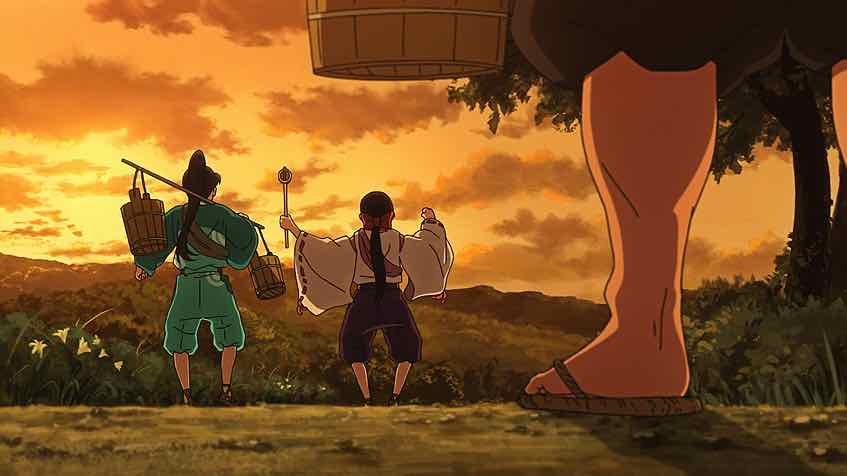
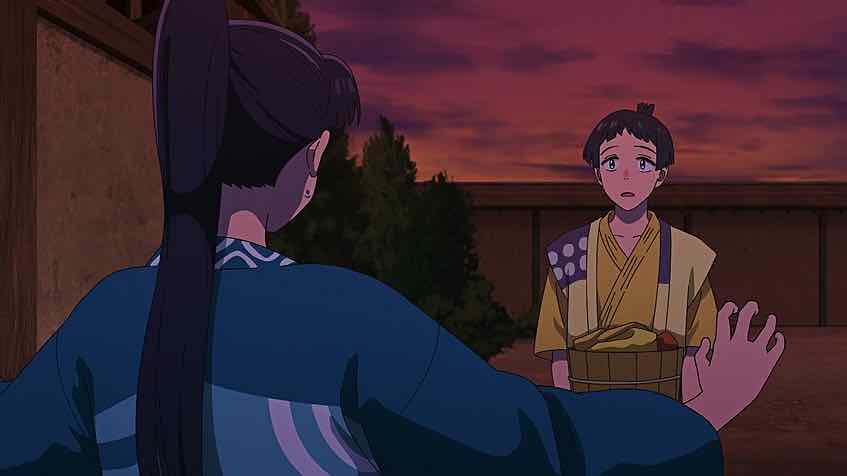
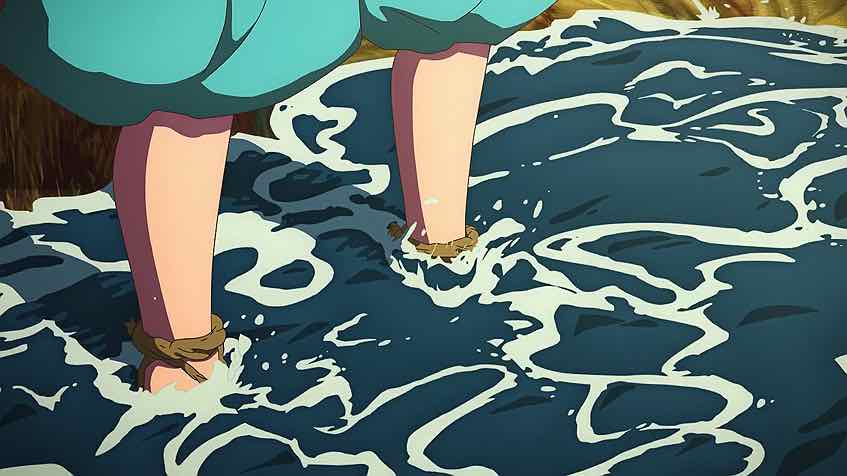
Lady Nariko suggests that the atmosphere would be improved if the “Brine Maidens” could actually ladle brine. The sea may be too far, but the “Little Sea of Grebes” – Nio-no-Umi, Lake Biwa – is close by. A research road trip finds Oniyasha exhausted but eventually inspired, not least by the intervention of Yoshimoto Nijou. It’s through him that World is Dancing comes closest to acknowledging the rumors that have always followed Oniyasha’s time at Yoshitsune’s palace. Yoshimoto was indeed an admirer and patron of the young Zeami at the very least. He did provide him materials to educate himself further, and was himself known as a great Waka and Renga master.
Not only that, Yoshimoto gave young Oniyasha yet another name – Fujiwaka. This was a bit scandalous at the time, because Fujiwaka was a “court name” and lowborn performers were not supposed to have those. Whether there was more to the poet’s interest in the dancer we’ll never know for sure. His influence on the future Zeami, however, is indisputable. Many of the Noh plays Zeami would eventually write were based on Renga, and in fact the teenage Zeami would even co-compose a Renga sequence with Yoshimoto at a formal court gathering.



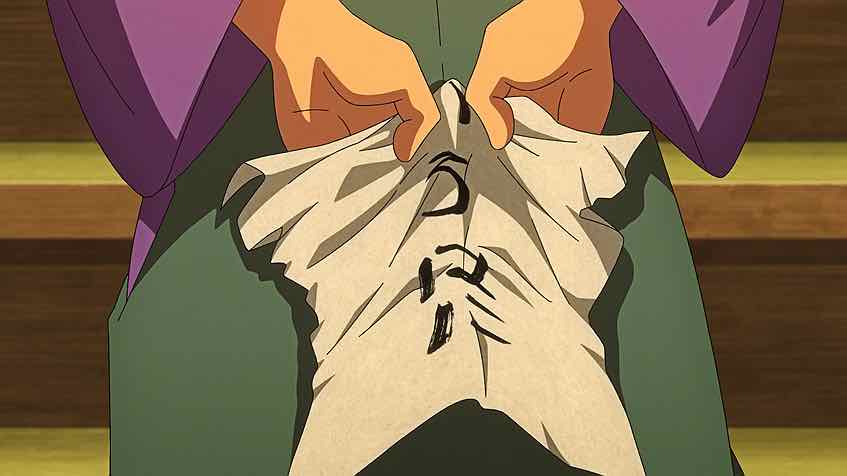
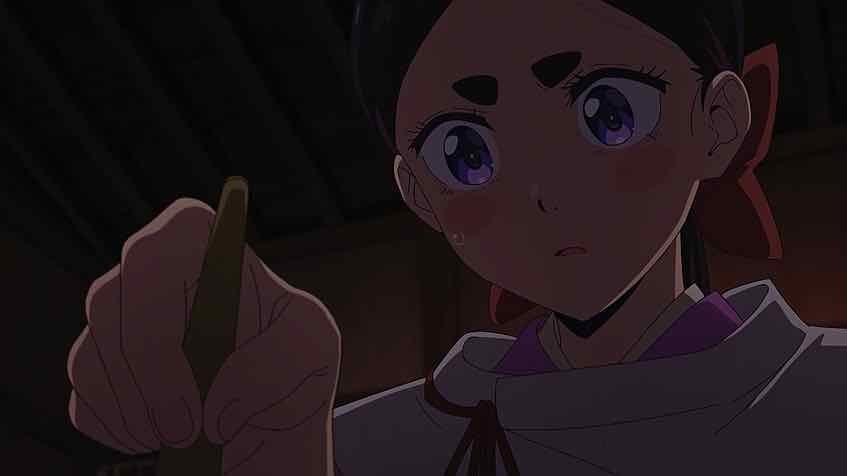
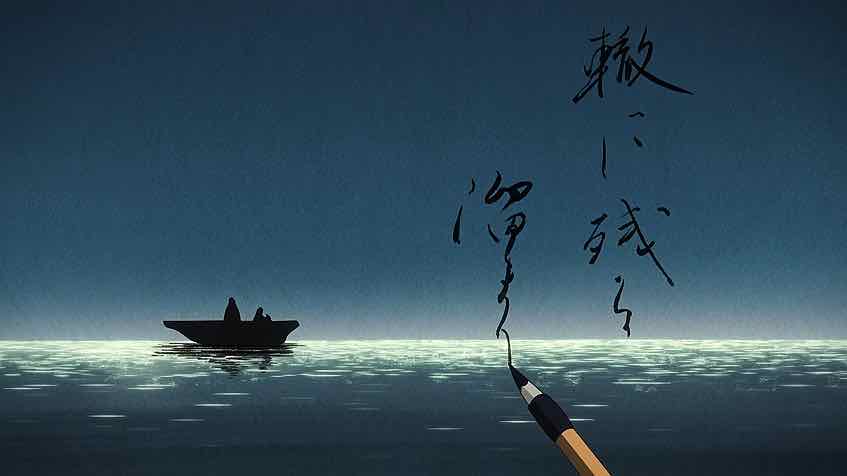
This is a tremendously important moment in Oniyasha’s life, and in World is Dancing. For all that he was among the greatest dancers Japan has known, Zeami’s most crucial legacy is as a writer. Much of the Noh catalog (and thus by extension the Kabuki catalog) was penned by him. Not only that, he wrote extensively about the history of the arts in Japan and his own role in them. His Sotoba Komachi was his first act of creation, no doubt. But in declaring that he would sit down and rewrite Shiokumi – find the “hidden emotions” lurking in it – Oniyasha the writer was truly born.
This entire series is more or less an exploration of the creative process – Oniyasha’s in particular. I feel quite certain that the remaining episodes will focus keenly on his evolution as a writer, and in fact we see the beginnings of that here. When Inomaru and Zoujirou express surprise that he hasn’t added more dialogue to express those hidden emotions, Oniyasha replies that he thought so too – until he heard Ishiya and Chiharu sing his version. In doing he realized that it was the role of the dancer to fill in that gap, not the words on the page – expressing Zeami’s unique position at the junction of those two worlds.



































Roger p
September 3, 2026 at 6:59 amAnother wonderful episode and commentary! Thanks!
Guardian Enzo
September 3, 2026 at 7:32 amTYVM. Just wish this show was getting more attention in English, though I’m not surprised it isn’t.