


 Now this is more like it. It’s hardly a surprise that Akane-banashi is trending up – the manga is getting into some more interesting stretches, which I knew full well. Still, it is nice to get a reminder that this show can deliver in big moments, since Kaisei is really the only one we’ve had do so thus far. It’s valid to note, I think, that this series is at a bit of a disadvantage against Shouwa Genroku Rakugo Shinjuu (in addition to all the obvious reasons) because early on, it’s mostly depicting performances by rakugoka who aren’t supposed to be that great. Well, mission accomplished, if we’re honest.
 That’s changing, though. We’re getting to the point where if the performances don’t pass mustard (if you get it, you get it) that’s an abject flaw in the adaptation. That includes Akane herself, and IMO the jury is very much still out on whether Nagase Anna can pull that off. Akane is supposed to be improving at breakneck speed, after all. But also the likes of Karashi and Hikaru are presented as prodigies, so they have to sound like it. Koguma too is rated as a comer, and Kobayashi Chiaki did fine with his performance. Not on the level of Shiono Akihisa but perfectly acceptable.
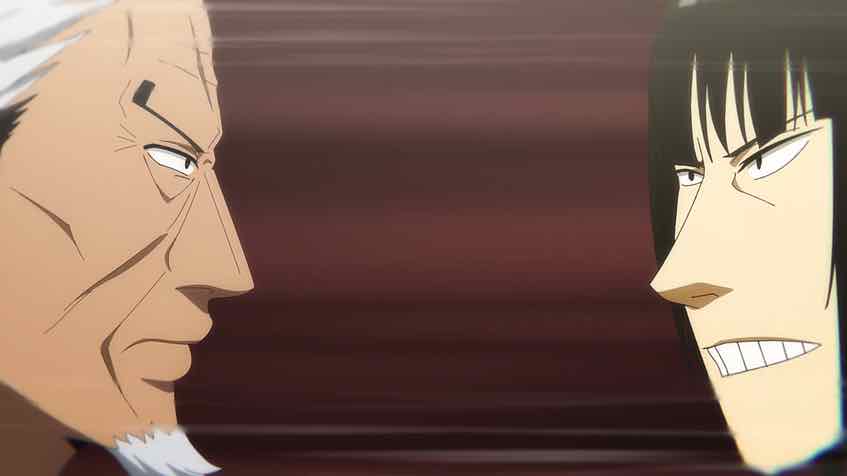
 This time it’s Eguchi Takuya stepping up as Nerimiya Karashi, and given that he’s won the Karaku Cup two years running he has to be convincing. We actually got a truly great seiyuu join the cast in Hirata Hiroaki, playing Ikken – one of the top dogs in the Arakawa School. Sadly though we won’t get much chance to hear Ikken perform. Nor Isshou for that matter – which is tragic, as who wouldn’t want to hear Ohtsuka Akio (and Hirata for that matter) doing rakugo? But their generation is not the focal point of Akane-banashi, and the both of them are just here as judges.
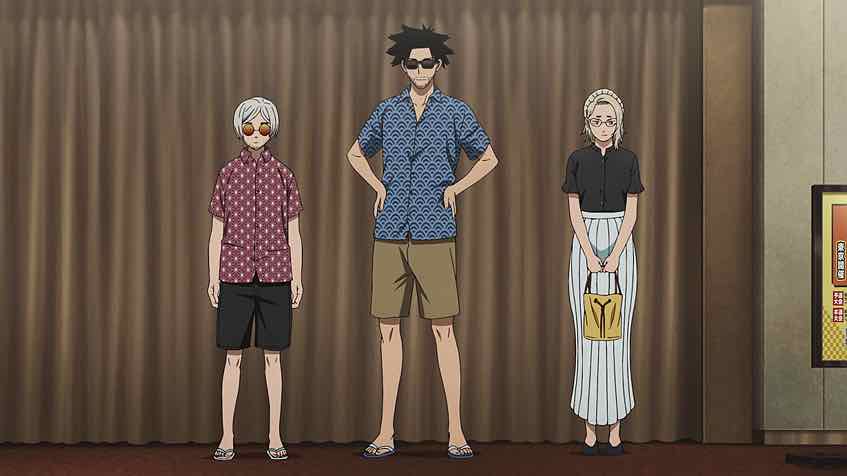 The whole “conflict” with Karashi is a bit broad to be honest – modern rakugo et al. As always Akane-banashi paints in primary colors, befitting what it is at heart – a WSJ sports series. But in the context of the story sure, it’s an interesting element. Karashi is a non-traditionalist, and – as Kashio scolds his kouhai – those do exist in rakugo. Updating stories, doing original stories – Shouwa Genroku touched on this too of course. Karashi doesn’t view rakugo the same way an apprentice like Akane does, he’s an outsider. The Karaku Cup is a competition to be won for its own sake. With an audience full of young people for whom a lot of the gags in something like “Tenshiki” may as well be in ancient Greek.
 We’ve heard “Tenshiki” once in this series already, of course. But in Karashi’s hands it’s something transformed, set in the agricultural sciences department at a graduate school and called “BM“. In English there’s one phrase that comes to mind when I hear that term, and indeed that’s part of the joke. But Karashi incorporates several layers of humor, some of it culturally specific and all of it modern. The young audience eats is up and for my money, Eguchi does quite well with the performance. What’s more, this is probably the most interesting rakugo sequence of the series in visual terms, which is a bit of a shock considering the director.
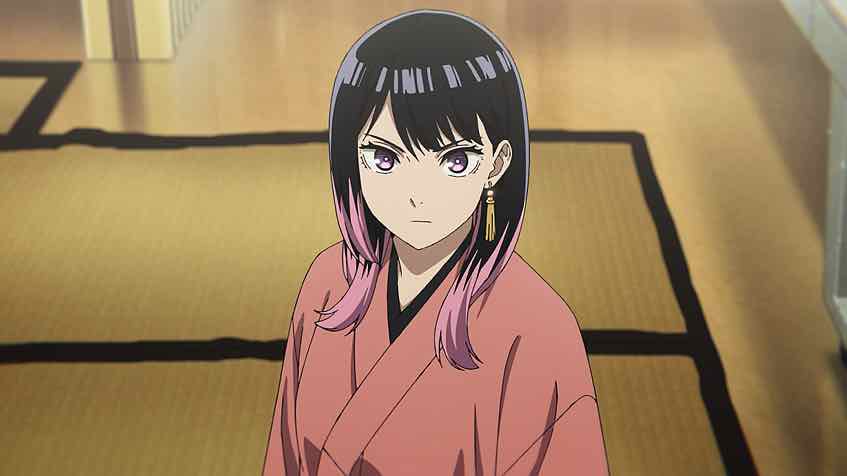
 So in production terms it’s test passed, I would say. Narratively speaking, of course the elephant in the room is what Isshou – presented as the ultimate traditionalist – is going to think of all this. In short, it’s complicated. He professes not to have laughed, but then adds that he’s obviously not the target demographic (which is true), and praises Karashi for having connected with the audience and used excellent stagecraft. Considering the source that sounds like high praise, and the gauntlet is thrown down for Jugemu-chan (which is what Karashi has dubbed Akane). But first it’s Hikaru’s turn – and she too comes at rakugo from a non-traditional direction.