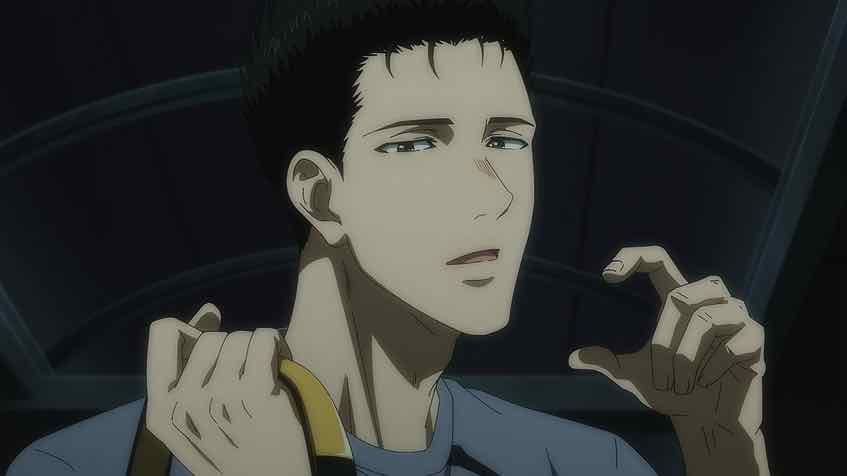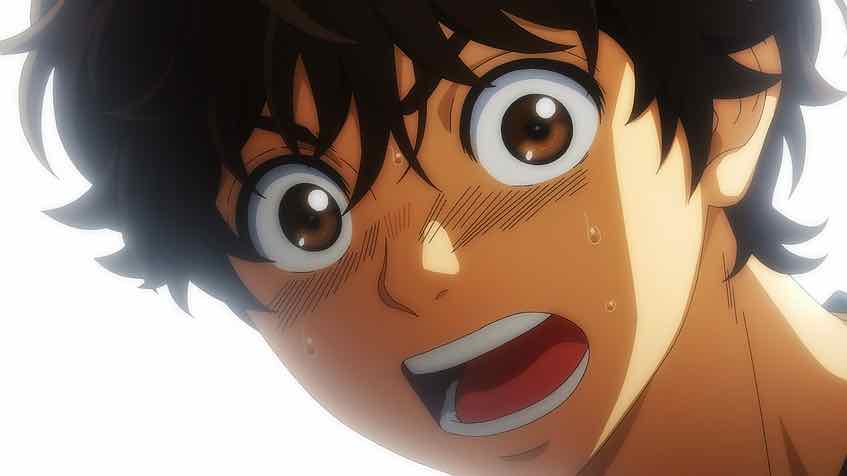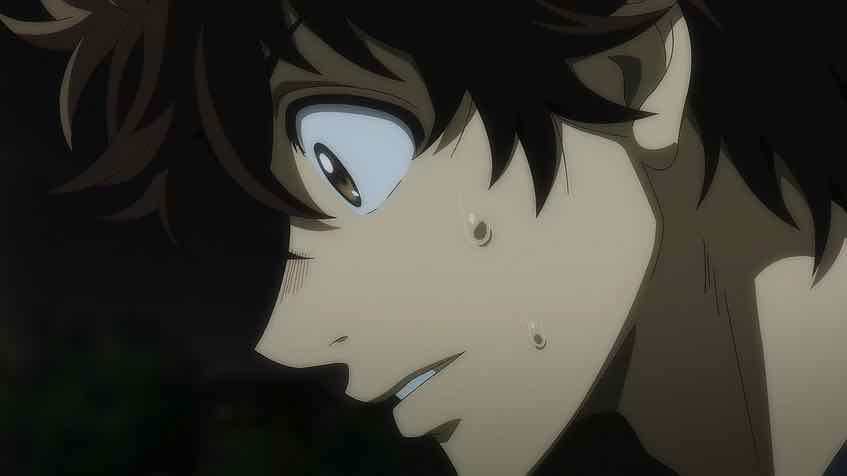



 When I say Ao Ashi has gotten better this season, I don’t take that statement lightly. S1 was pretty great, and it was Production I.G. so it looked fantastic. But there’s no question this has been even better. Maybe there’s been a small retreat in pure production quality, but the show is still drawn and animated more than well enough for it to be pleasing to the eye. And the story is just getting more and more compelling. The direction – Yokoyama Kazuki is also new this season – has been outstanding too. With a studio and director change if you’d told me we’d be level with the first season I’d have bitten your hand off taking that offer. But we’re eclipsing that, no question about it.
 I have so many notes here I hardly know where to begin. That’s a reflection of the fact that both the sports and character sides of Ao Ashi are God-tier, and firing on all cylinders. And nothing is more important than the fact that the protagonist and the coach-mentor – the two most important characters in the cast – are Ballon d’Or quality. There’s so much subtlety to the writing here that it’s just fascinating to watch things play out. The rope drill, for all that Ashito mocked it, is exactly what he needs. It shows him where he’s lacking, and allows him to see where the others (especially Togashi) are.
 If you watch carefully you’ll note that Fukuda-kantoku coaches Ashito in very minimalist terms. That’s his style generally, and one of the reasons he’s not doing more in this situation is that he wants the kids to be teaching other and learning in the process. But he also doesn’t want to handcuff that about Ashito which makes him special. Theory isn’t his thing – that’s not how his brain works. He sees, he processes, he grows. That’s why Fukuda is obsessed (let’s be honest) with him. He doesn’t want to constrain Ashito’s imagination and inspiration – and he also has faith that the boy will figure stuff out if left alone.
 This is actually a great compliment to Ashito, though it’s absolutely not his fault that he doesn’t see it that way – he’s just a baby, there’s no way he could. When Fukuda-kantoku talks about “sediment” it’s Ashito – and Akutsu, though both boys would hate to admit it – that he means. Purity is the enemy of greatness – cookie-cutter youth players all trained in the same way, learning to play the same game. You need some of those, but it’s the mold-breakers that Fukuda wants because that’s the direction in which greatness lies. Kanpei and Eisaku hear this from Nozomi-kantoku in slightly different terms, and it’s hard especially for Kanpei to hear. But Nozomi also tells Eisaku – to his shock – that he has the stuff to be a captain one day.
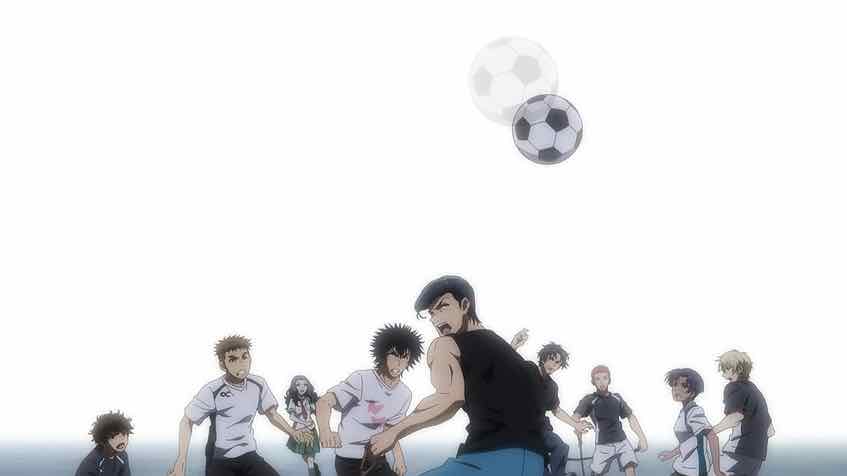 With Fukuda joining the guys every Thursday for their nighttime sessions, there’s ample opportunity to learn. Fukuda can teach by example – he still has game, big-time. Again, to Ashito he offers very little direct coaching – “the rope is taut” notwithstanding. But he makes it clear by asking Togashi “how many red signs do you see on the way to school from the dorm?” and then asking Ashito the same question that he recognizes his talent. What Togashi is trying to learn is harder than what Ashito is, which is why players like Ashito make it to the top level more often than players like Togashi do.
 The next Thursday session is full of interesting developments. Miyako invites herself, desperate for another chance to be coached by Fukuda (who obligingly includes her in his written advice). She and Anri spot Hana and Kuribayashi at the station, and Miyako blithely spills this to Ashito after the session. You really have to feel for Anri here – when she offers to make Ashito (who she says has lost weight) lunches, all he can say is “I’m following Hana’s dietary calendar”. Anri has no chance, there are only two things on Ashito’s mind – soccer and Hana.
 His reaction when he hears this tidbit puzzles Ashito, because he doesn’t really understand that part of himself yet. All the more so when Kuribayashi shows up to offer him some advice. Ashito is conflicted as hell – this is a huge opportunity for him and he should be thrilled, but his mind focuses in on “what’s happening between those two – are they dating?”. In fact all Ashito needs to know on that score – if he could understand it – is that Hana is the reason Kuribayashi is here. When he asked for nutritional direction, she offered it in exchange for Kuribayashi giving Ashito advice, Hana is always thinking of him (and the feeling is pretty much mutual, though I’ll wager Ashito is distracted by other things more often).
 While there are exceptions (like Larry Bird), the general rule of thumb is that retired grinders and journeymen make better coaches than retired superstars. Ego is part of that, but the bigger reason is that players so good they’re on another level than everyone else have a hard time teaching those who don’t see what they see. Kuribayashi derides his own teaching ability, then hands Ashito the notebook he was scribbling in during and after the Kashiwa game. Most people can’t understand it, he says – but he doesn’t seem too surprised when Ashito does.
 Kuribayashi knows one when he sees one. Ashito asks him what drives him – a boy knowing J League is in his future – in soccer. And Kuribayashi makes it clear – to be the best. “If you’re going to give the only life you have to soccer, I don’t know why your goal would be anything else.” That’s the sort of thing a guy in his shoes has the luxury of saying, because that which others struggle to achieve comes easily to him. But he’s absolutely being sincere here. And that drive is why, despite being preternaturally gifted, Kuribayashi works harder than anybody else when it comes to soccer. That’s a good lesson for Ashito to learn, no matter how far away Kuribayashi’s back seems to him right now.