






 While we have no idea how much of what happens in Tenmaku no Jaadugar has any truth to it – I’m guessing not very much – there’s no denying it’s fascinating storytelling. What I would say is that rather than truthful there are elements of this story that are truthy in the Colbert sense. The Mongol Empire was a technological and academic marvel for its day, in addition to its military might. It was a place where women could achieve more power and influence than anywhere else in the contemporary world. It was, to an extent, a meritocracy. Wouldn’t that make it a fascinating setting for its own Game of Thrones? Tomato Soup thought so, and I’m certainly glad she did.
Let me reflect for a moment on last week’s post:
As to what really happened here, now that’s a fascinating question. In effect Tolui was assassinated – that seems pretty certain. It also seems pretty certain that Boraqchin was behind it, and used Töregene as a scapegoat. Mind you that’s quite a long game she was playing if so – almost murdering Ögedei as a means to lure Tolui to his own demise. But it probably survives Holmes’ “whatever is left must be true, however unlikely” test.
 Indeed, all that pretty much proves out. A long game indeed – Boraqchin used herself as a guinea pig to test how she could almost kill Ögedei, and in doing so lure Tolui to his death. Töregene was a useful tool, an instrument. Boraqchin was looking at the big picture, Töregene focused on her own grievance – that made her an easy mark. Boaqchin is smart, ambitious, and fearless. The faith Ögedei shows in her is a powerful motivator, and it seems safe to say she and her husband share a broad view of what’s best for the Mongol Empire. One that in the modern world we might call enlightened, certainly compared to Tolui’s.
 In a sense one might argue that Boraqchin is doing the wrong thing for the right reasons. But wrong it is, no question. She’s a murderer and conspirator, and the Kha’an’s life was at risk if she made even the smallest error. Fatima is in a unique and uniquely perilous position here. There’s no one quite so imperiled as someone who’s smart but not as smart as they think they are (as any cat person could tell you), and that’s exactly what Fatima is. She’s not nearly in command as she thinks she is.
 This business of saving Töregene is personal, I would argue relatively insignificant in the greater scheme of things. As such it’s not a bad thing for Fatima to focus on it here, as it prevents her from digging herself into even deeper trouble. Boraqchin is ruthless but not vindictive for its own sake. Töregene was useful to her, and doesn’t represent much of a threat now. It’s not important enough to Boraqchin that she’ll be furious at Fatima for getting caught up in it. She has bigger fish to fry, and that fish is Sorghaghtani Beki. Töregene is mainly useful as a means to marginalize her influence.
 That means is Güyük, who the Khatun intends to marry off to Sorhagtani. He’s part of a disgraced line, and his own power is minimal. Fatima initially urges the terrified prince to marry Sorghaghtani, because her priority is saving Töregene. But Fatima is caught up in bigger events, whether she wants to be or not. Effectively she’s at the crucial point here and has to choose. Is Boraqchin – knowing what Fatima knows about her – someone she wants to align herself to? Are her lofty aims for the empire and position as the tormentor of Fatima’s perceived tormentor enough to justify pledging her service to her?
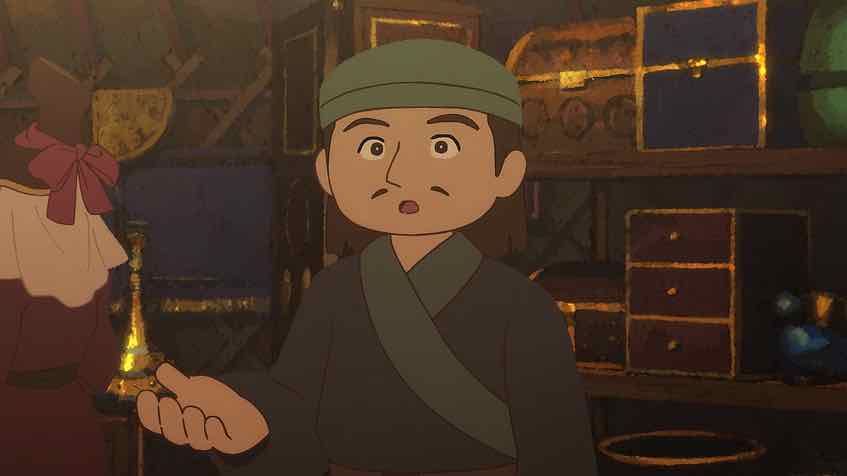 At this point it’s been three years since Fatima has even seen Sorghaghtani. Shira still serves her, and he’s as close as anyone to what Fatima might call a friend (and just maybe a hair more, potentially). But Sorghaghtani is – in Fatima’s mind – the personification of evil. She took everything from her. In point of fact Sorghaghtani never treated Fatima with anything but kindness, but was blissfully ignorant of what her husband’s actions wrought on the girl. And Sorghaghtani’s own aspirations seem quite lofty, as she expressed them to Fatima when they first met.
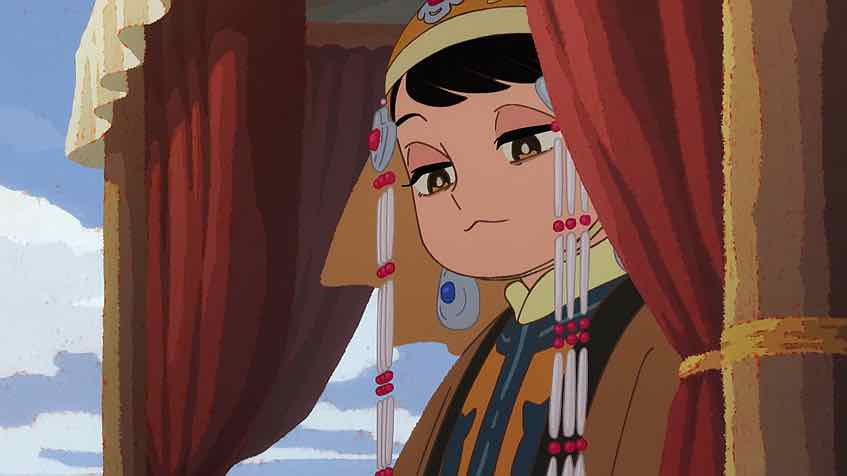
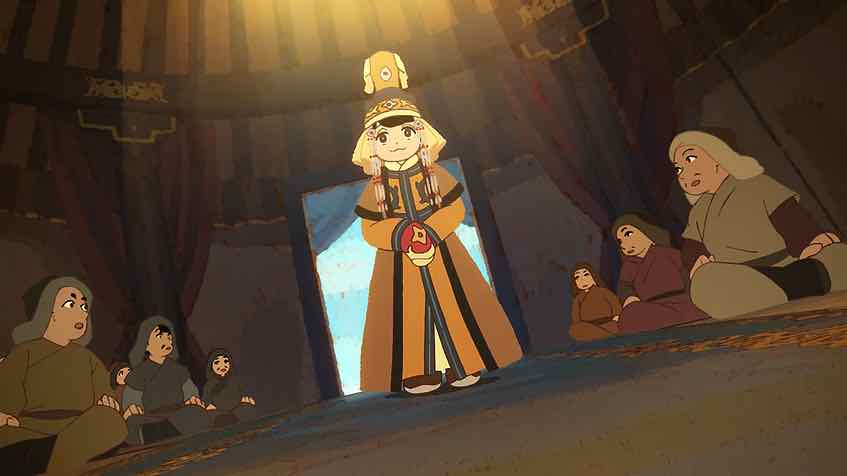
 The moment when Fatima goes – as Boraqchin’s messenger – to convince Sorghaghtani to marry Güyük is a fascinating one to be sure. Fatima is gleeful at the notion of this women being humbled and tumbled from grace, a shell of herself. But in the moment, Fatima finds herself torn. What is Sorghaghtani if not a smart, independent, ambitious woman of learning – exactly like herself? Her anger at Sorghaghtani for her role in her life is eclipsed by her despair at seeing such a woman surrender those qualities she admired in her, and aspires to herself.
 One could interpret this scene as Fatima having to choose who represents her model – is it Töregene or Sorghaghtani? Is her anger more important, or her aspiration? Fatima understands Töregene of course, as few could. But she’s also seen what being consumed by righteous outrage has wrought for her. Fatima is smart enough to see possibility where it exists, to understand that there is another path for her in this world, should she choose to pursue it. And to see who is worthy of her admiration and who isn’t. This is truly the crossroads of Fatima’s life, and her words to Sorghaghtani give a strong indication of which path she’ll choose to take.





































EnterMyName
September 8, 2026 at 3:55 amBoraqchin is trying to stop war, should that not be a great motivator to align to her, from Fatima perspective ?
Plus she murderer the man that killed her surrogate mother, what more can one ask for ?