




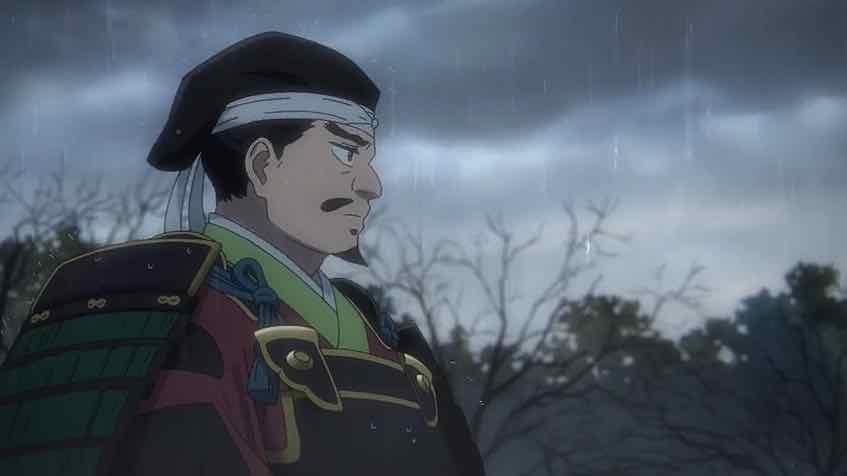
 My expectations were high for World is Dancing. That’s a given whenever a series is the face of a Season Preview. There are obvious dangers to that – it’s easy to be disappointed even by something good. Sky-high expectations are a lot harder to live up to than middling ones. And there’s a special risk factor when we’re talking about a source material about which I know very little. I was going strictly on vibe, pretty much. The previews looked amazing, and the theme here – the life of Zeami and the birth of Noh – could hardly be more appealing.
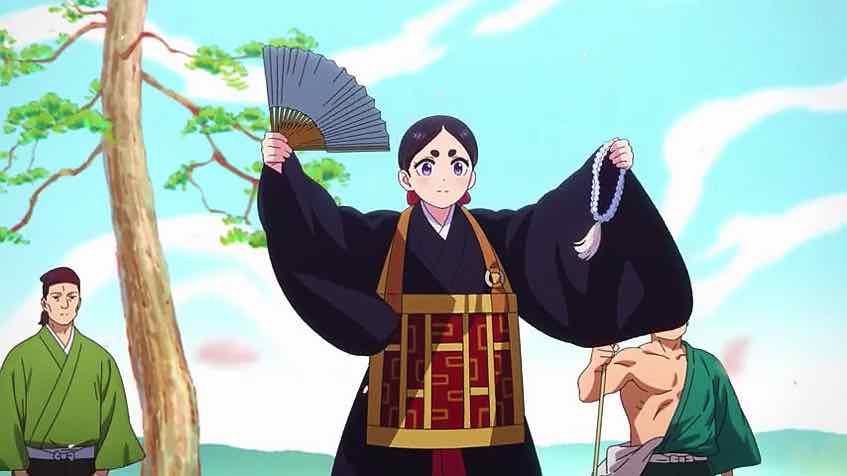
 The spoiler is, my expectations were met – I absolutely loved this premiere. But I have to say, it got there quite a bit differently than I expected. This was much more… I guess “whimsical” is the right word – than I expected. It even had a Gainax-y feel to it, which was certainly something I never expected. Animation director/character designer Sasaki Keigo does have a bit of Gainax experience, but that’s about it that I can see – with one big exception. It is overall a very experienced and talented staff, full of names mostly knows by hard-core sakuga anoraks. The director, Kuroyanagi Toshimasa, is an underrated stalwart who helmed the superb Fune wo Amu – and worked on Tengen Toppa Gurren Lagann, along with Sasaki.
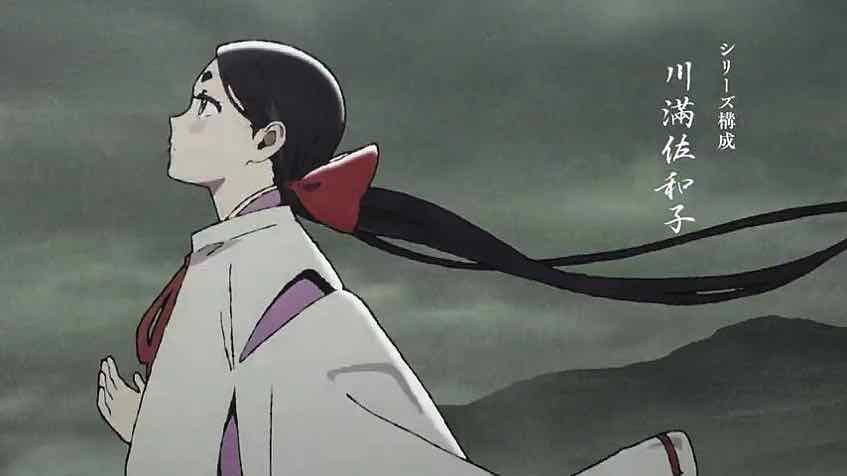
 World is Dancing is indeed the story of Zeami – though equally the story of Oniyasha, which was Zeami’s childhood name (his family name was Motokiyo). It begins in 1374, which was the critical year in Zeami’s career as a performer, for reasons which will become apparent later. His father was Kan’ami Kiyotsugu, the leader of the Kanze Troupe. Their style was known as Sarugaku (“Monkey Music”), which had been around since the 12th Century mainly as a sort of raunchy plebeian entertainment. The Kanze grew in popularity in the region around Kyoto and Nara, which had long suffered under the civil war between rival Imperial courts in Kyoto and Yoshino.
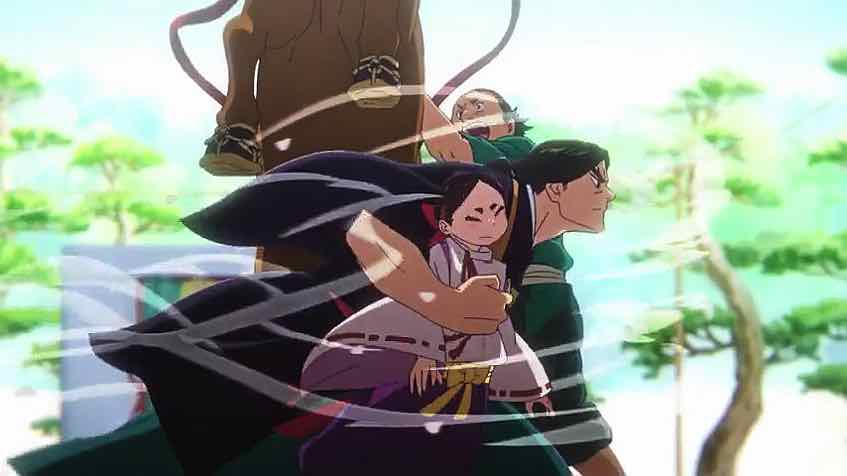
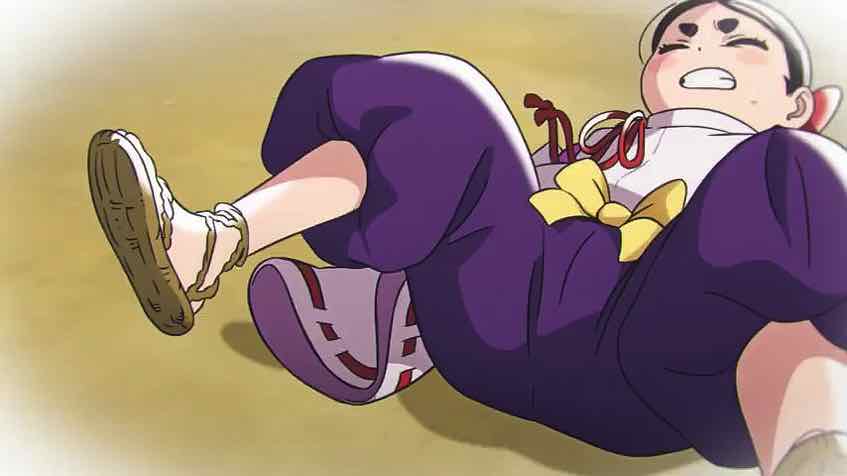
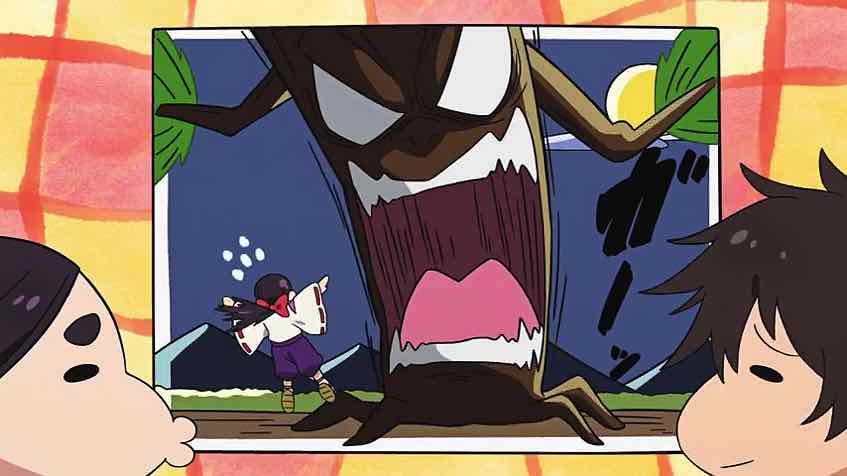
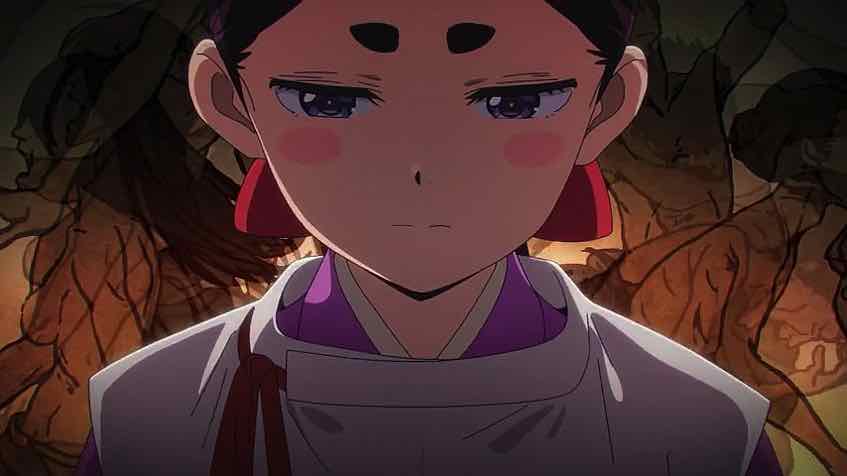
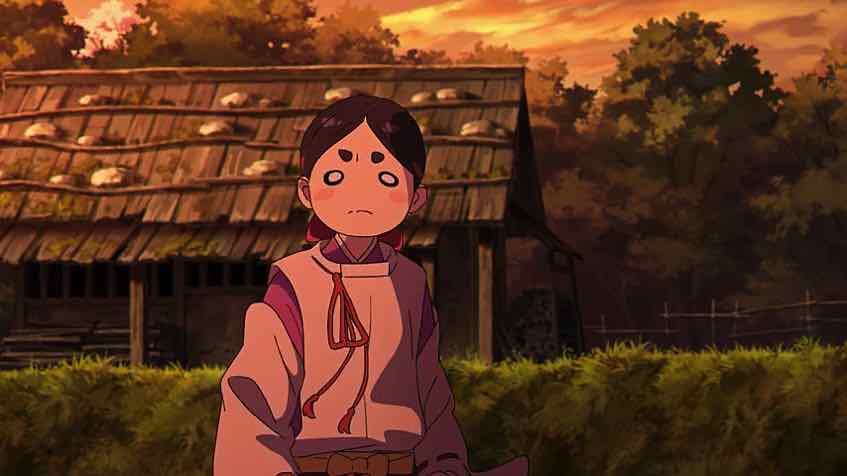
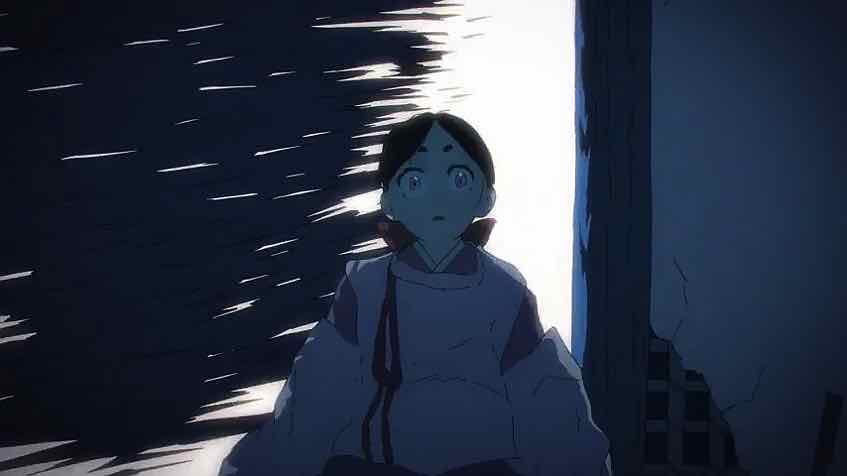
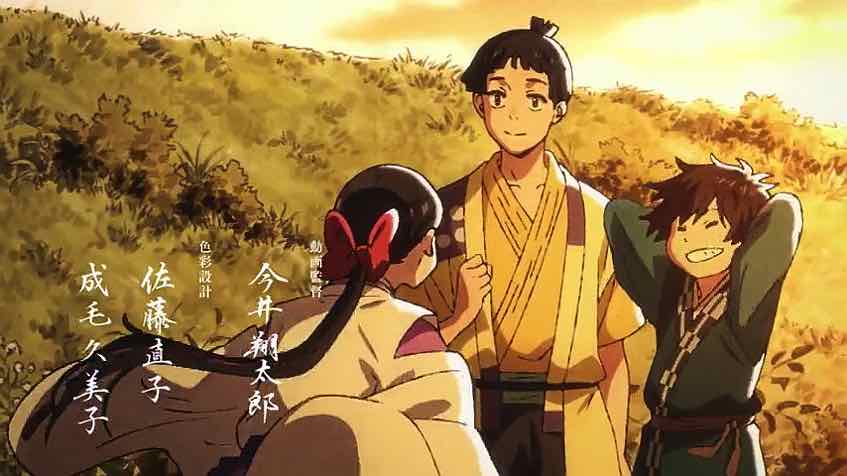
 The Oniyasha (Hanamori Yumiri) we meet here is disillusioned with his father and disinterested in dancing. Kan’ami (Konishi Katsuyuki) was a harsh master, often lamenting that his son was “not built for dancing”. The boy takes this to heart, noting that while birds are made to fly and horses to run, humans are not built to dance. In kinship with a certain Tokiyuki – his fellow 14th-Century bishounen – the young master Oniyasha is good at hiding and dodging his responsibilities. His best friend amongst the troupe is Ishiya (Tsuchiya Shimba), a slightly older boy with a bad leg whose job is more or less to keep an eye on Oniyasha and keep him out of trouble (which is no easy task).
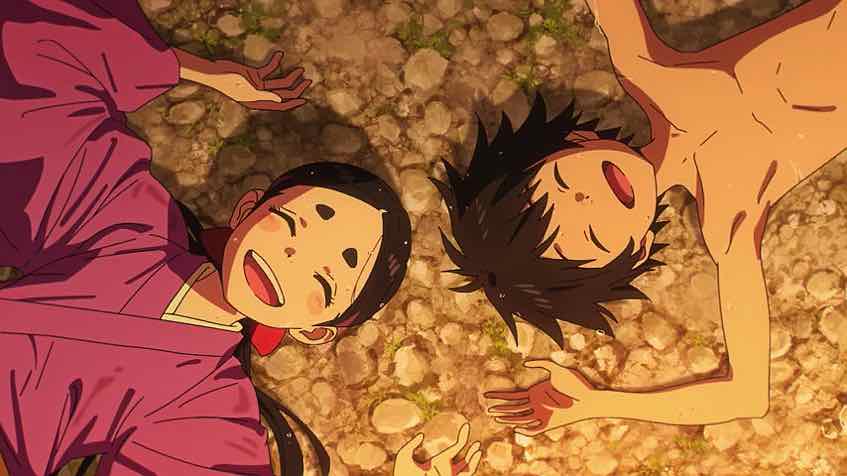
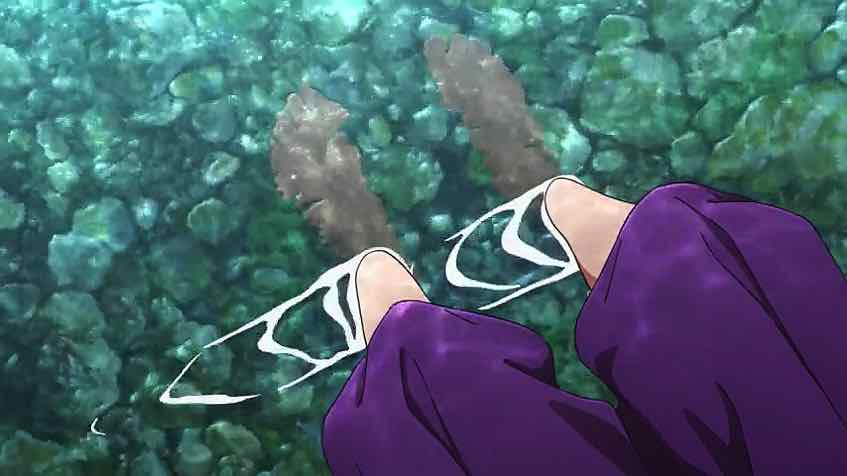
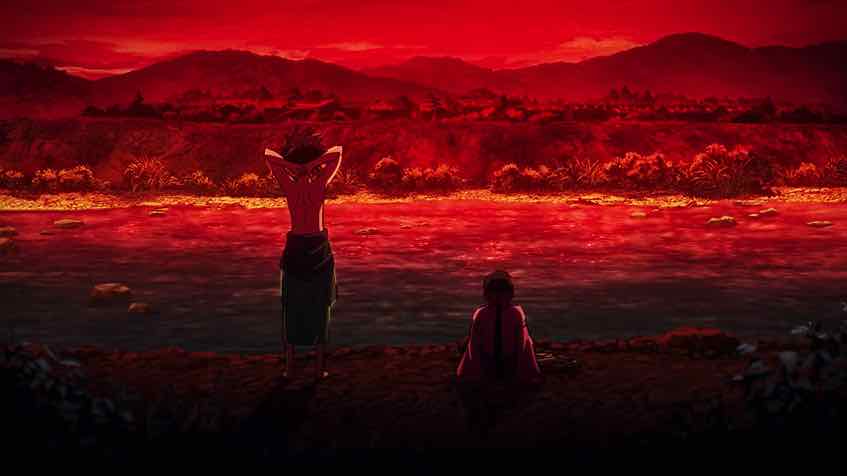
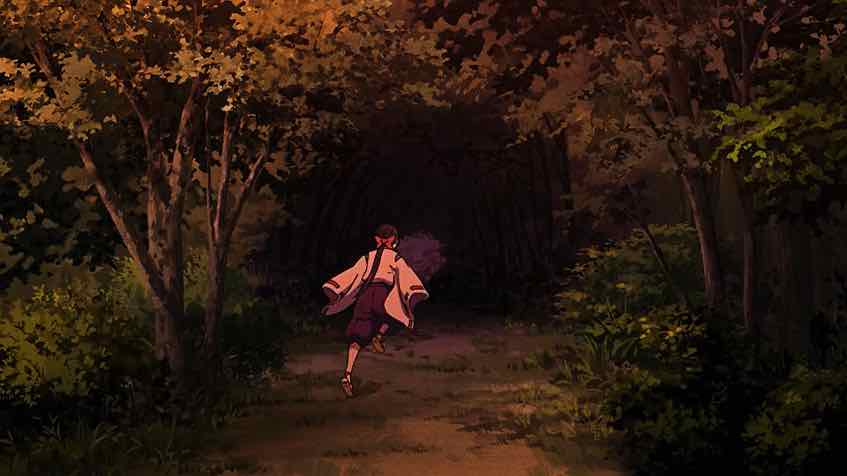
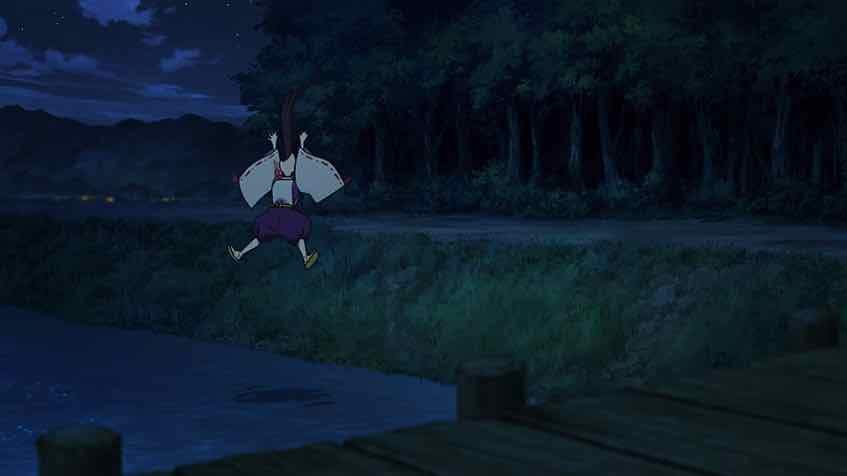
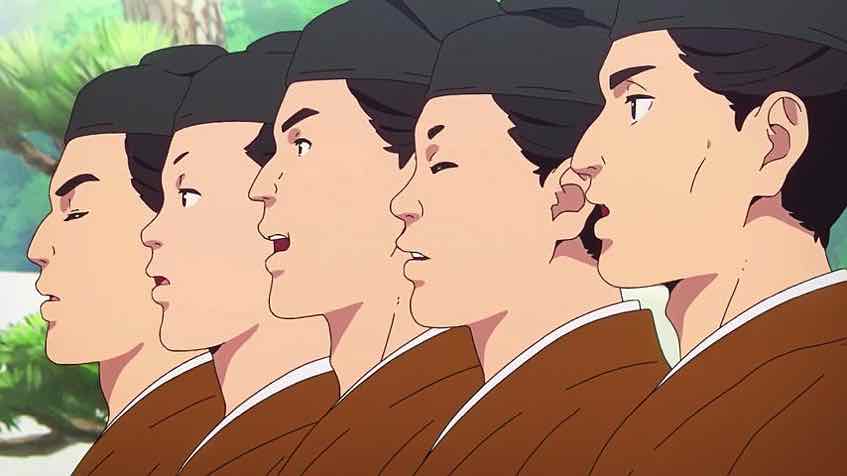 On one of his seemingly regular AWOL expeditions, Oniyama runs into Kogane (Uchida Maaya) at the riverside. Kogane seems to be a commoner boy of considerably coarser demeanor than Oniyasha, but the two get on famously and love sharing ridiculous and patently false tales about themselves. After a merry time playing at the river’s edge Oniyasha excuses himself to sneak back home – except he gets lost along the way. I had initially thought that Kogane might be another historical Noh figure from anime who seems likely to appear in World is Dancing, but I rather suspect it’s the youth with the scythe Oniyasha meets after realizing he’s gotten lost.
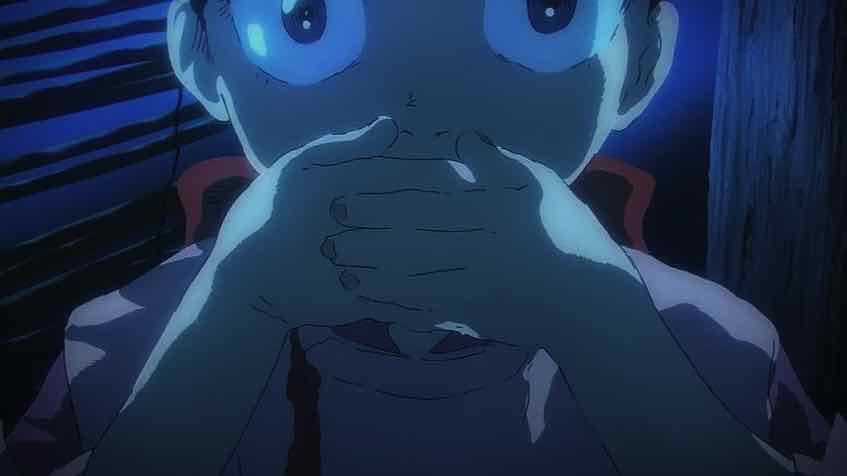
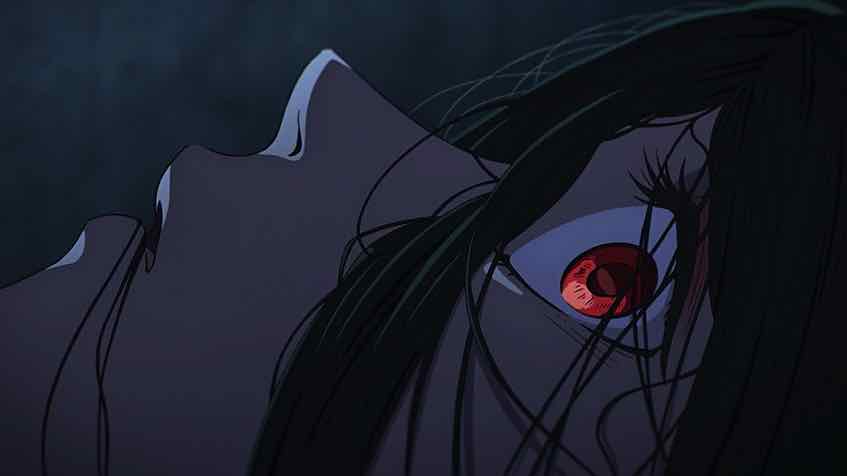
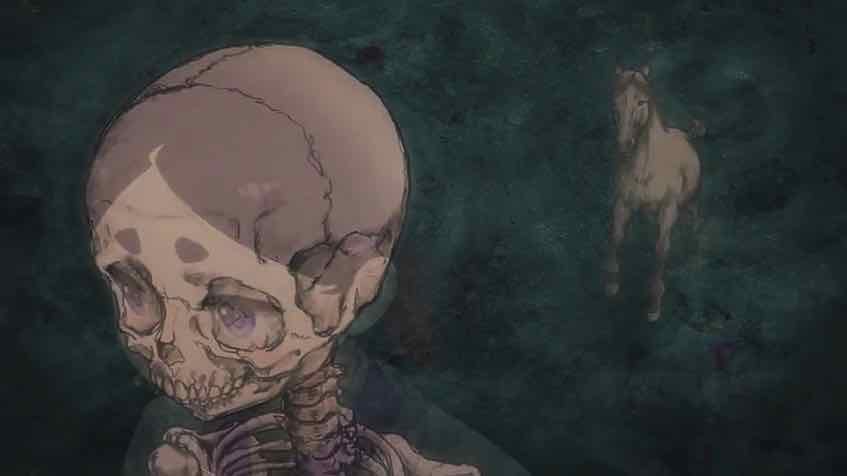
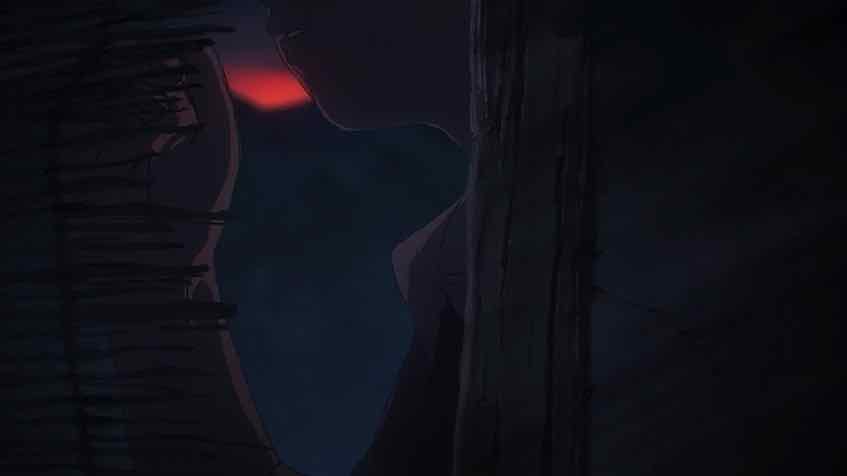
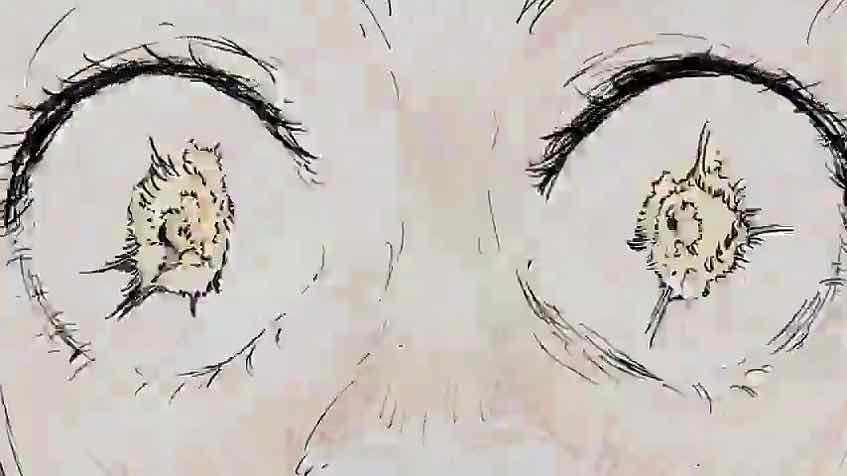
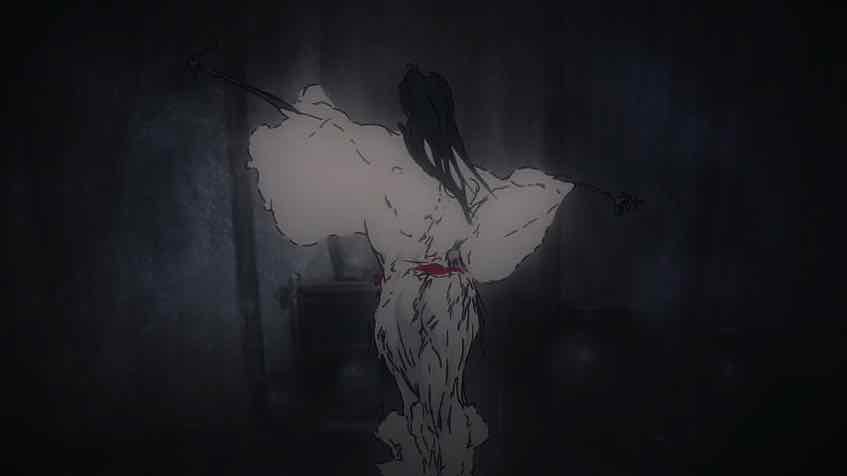
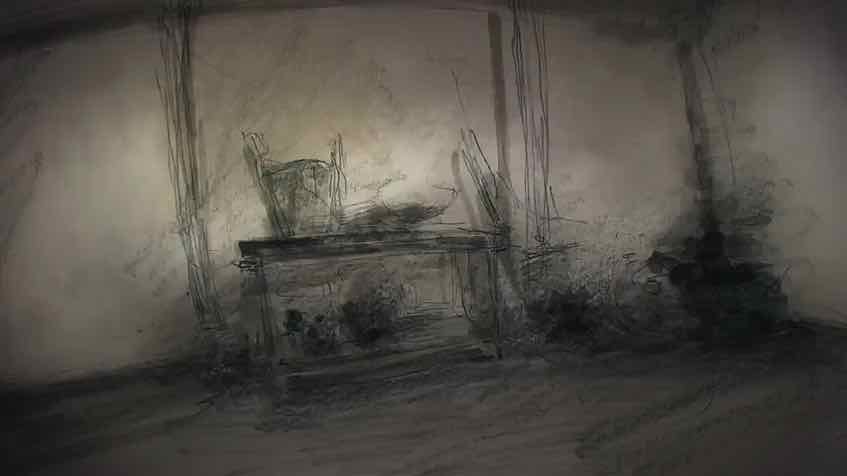
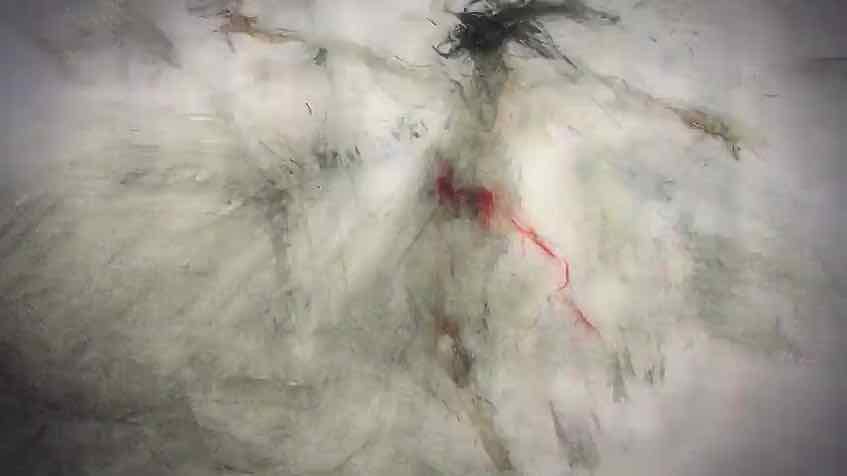
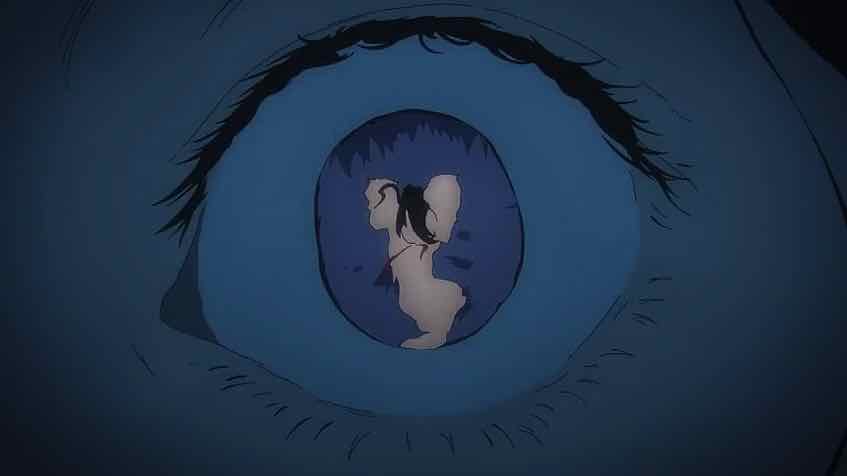
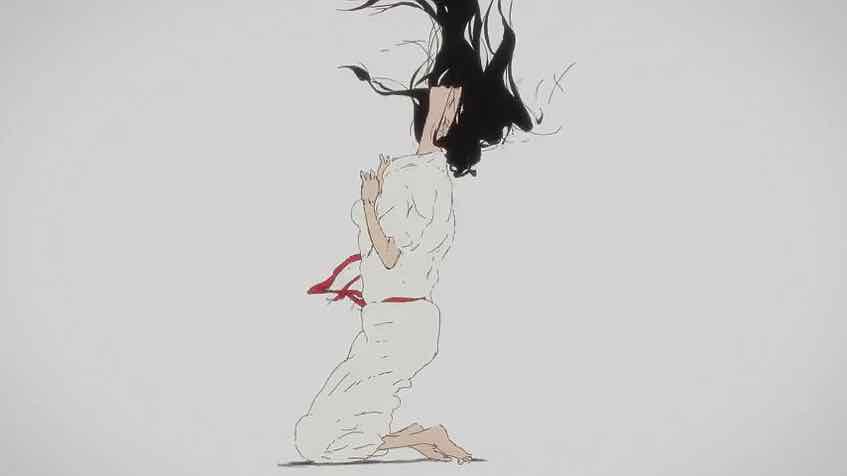
 It’s here that the episode really explodes into pure genius, as good as it is up to this point. Oniyasha hears raspy singing coming from a tumbledown shack, and being the curious boy he is sneaks over to investigate. He’s absolutely transfixed by what he sees and hears, and frankly so was I. The change in visual style is immediate and total, as things go completely surrealistic to the point of psychedelia. Who the woman (I assume) he sees is I don’t know, but after a lifetime seeing performance as a duty, seeing it as pure abstraction is completely transformative in a way things can only be when we’re unformed children.
 This sequence, in addition to its aesthetic brilliance, is genuinely deep. “That was good” – a simple yet profound revelation that changes Oniyasha in ways he cannot begin to understand. He doesn’t even know what “good” means in this context – he just knows he’s seen something amazing and been changed by it. And in that knowledge, he realizes that dance – or any performance – does indeed have the power to change the world after all. His world. Never has the phrase “the rest is history” been more appropriate, and even if the actual history didn’t happen this way it matters not a whit – this was a more poetical and resonant depiction of a historical moment than history likely could ever have provided.
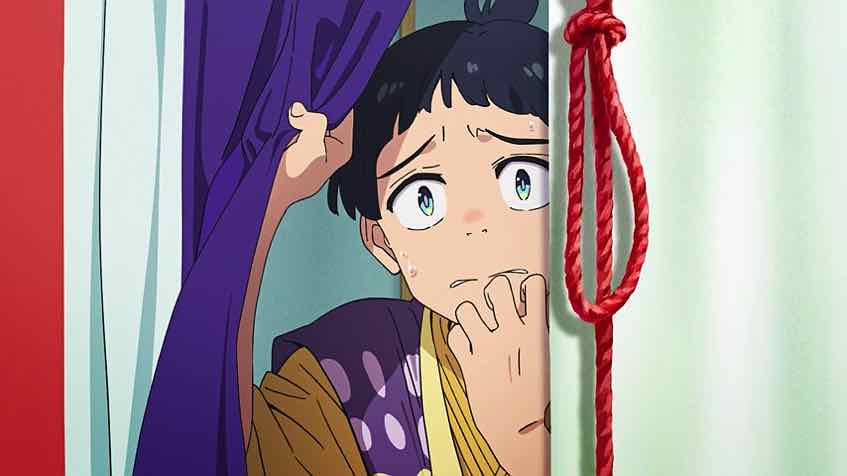 Cygames Pictures is now known as Cypic, apparently. But whatever you call them, they’re officially a force to be reckoned with on the anime scene. They really announced their presence with the wildly inventive original Apocalypse Hotel, proved they could nail adaptation with Hikaru ga Shinda Natsu, and show none of it was a fluke with The World is Dancing. This premiere is, as I said, generally more whimsical in tone and style than I thought – I was expecting more elegance and regality – but is no less brilliant or compelling for that. I went in here thinking this show had a chance to be in the AotY conversation, and nothing I saw here makes me question that belief.










































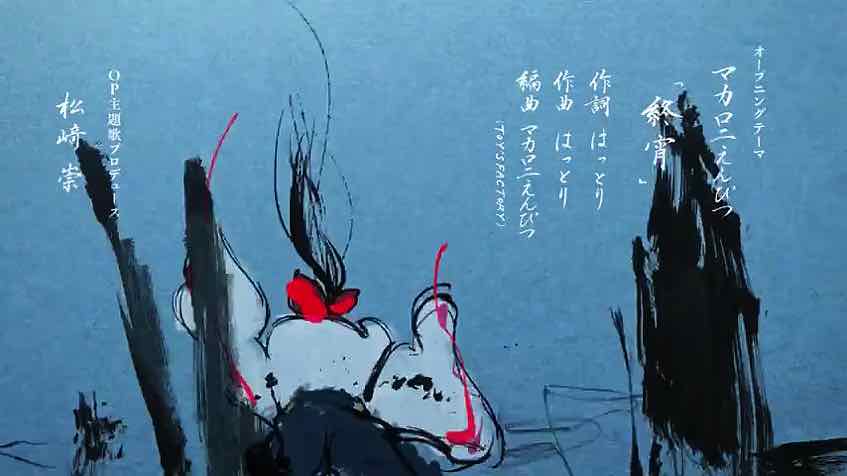
OP: “Shūshō” (終宵) by Macaroni Enpitsu




ED: “Namonai Hana” (名もない花) by hockrockb







Henk
July 1, 2026 at 4:51 amA strong start indeed. Another great showing from cygamespictures, so far at least.
Guardian Enzo
July 1, 2026 at 7:30 amI am slightly worried about pacing – 6 volumes for 12 (presumably) episodes is a lot. But it can be done, and at least we should get the real ending (not that it’s a mystery to anybody who knows the history).
catterbu
July 1, 2026 at 7:53 amWow. Quite the premiere.I can imagine they went in deciding that that moment of Oniyasha seeing that dance needed to be believably transformative. Job Done. I browsed the first chapter of the manga prior, but this was a remarkable level, even in just pure sakuga terms. I just hope the writing and animation can keep up all the way through. In another sign that anime scores on aggregator sites are not exactly great representations of quality, this is ~7.34. I mean come on. Oh well. At least we know we are getting the whole story and I am sure LiA will champion it all the way through. I just want other people to find this gem on HiDive (in the US).
Guardian Enzo
July 1, 2026 at 8:40 amWell, I predicted 5.8 on MAL so we’re above that.
That was the moment dance transformed from mundane to magic for Oniyasha, so it really had to be sold hard. Brilliantly done.
Andy L.
July 2, 2026 at 11:09 pmAn artistically splendorous premier, tho(and it’s odd to say about something I def watching more of) I find myself less than hooked. Just don’t yet feel much of anything about Oniyasha as a lead or about his journey, and it rather has the feel of the beginning of any given “cute kid gets into hobby/club series” on n fast forward, w the setting and sheer artistry in display providing much of the intrigue. And those aren’t small things clearly, but I definitely caught myself checking my phone more than once. It’s a wait and see.