



I don’t know if saying Kujima Utaeba Ie Hororo is the best at what it does is much of a compliment, since there aren’t really any other series that do what it does. But at the very least it’s damn good at whatever that is. There is an animanga archetype this is drawn from, no denying that. But that archetype is all about quirkiness, non-conformity. No two examples the same. I think Kujima is almost a platonic ideal evolution of it. Just pure slice of life, with a truly wonderful (and underrated) soundtrack, a terrific cast, and the perfect combination of heart and irreverence.
One thing I really like here is that in spite of this being a story about a giant bird who speaks Japanese with a Russian accent, it can feel extremely realistic. The Kouda family dynamics are spot-on. And Arata is a very typical 14 year-boy, always on the lookout for something to make his life more interesting. Whatever Arata’s relationship with Kujima is, it’s meaningful. Siblings (like Mitsuki-san seems to believe) friends, whatever it is – they’re almost soulmates at this point.


One thing we know for sure – both Mitsuki and Makoto believe Kujima is a boy, for what that’s worth. He assumes Suguru is talking about Kujima when he thanks him for being nice to his brother. And later, when Makoto and Kujima are making Valentine’s chocolate (we’ll get there in a minute), she (internally) refers to Kujima as a “he”. That doesn’t mean they’re right of course. Speaking of Suguru, he’s acting even weirder than normal, seemingly in a bit of a daze having just re-taken the university entrance exam. He turns up when Kujima is breaking up a duck fight (I’ve never seen one of those) and seems to cross paths with Kujima constantly over the next few days.
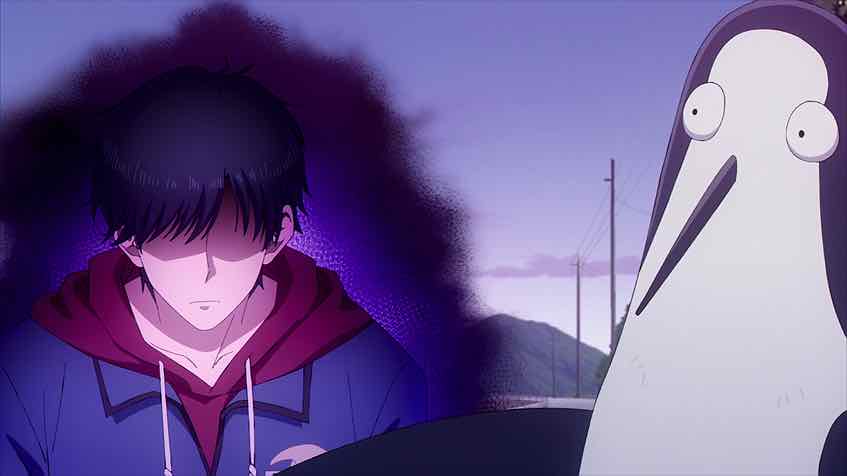
Suguru being mad at Kujima is nothing new – if it weren’t for Arata’s words to the contrary we might assume he’s always been this irascible. He was none too thrilled with Kujima having given him the “Professor Proverb” moniker to the Mitsuki clan. Kujima frets about the “scary face” Suguru keeps showing them. But it turns out that’s just Suguru trying not to laugh – which allows Kujima to reinterpret Maxim’s behavior in the past. As hard as it is to imagine Suguru laughing at anything, he seems confident he’s passed the exam this time. Maybe we’ll even see him act like a human being towards his family now.


After that we get a fun little bit with Arata and Kujima doing origami, which Arata notes that Suguru is a bit of a wizard at. Kujima’s paper cranes turn into paper Kujimas, which gives Suguru another opportunity to suppress his laughter. Finally Kujima heads off to Makoto’s house, and Arata is quite pointedly not invited. He doesn’t connect the dots and come up with the real reason, so is a bit put out to be left out. Makoto has always given Arata giri choco on Valentine’s Day, so this change certainly clarifies some things. She did ask Kujima to help, but not because she believed Arata’s tales of their cooking prowess – she was just too embarrassed to make chocolate for and give chocolate to Arata on her own.
Kujima is a whiz in the kitchen – as we know – but Makoto is a bit hopeless. As such they wind up doing it all themselves. This is no good for Makoto’s psyche, so she seizes control and promptly tries to put the eggs in without separating them before a horrified Kujima stops her. Makoto can’t even break eggs properly (as Kujima will find out eating her cookies later). But with Kujima’s help the chocolate gateau is a success, and even if it’s too soon for Arata to put the pieces together he groks enough to blush (which she’s doing, too). I don’t know if Kujima qualifies for the “man” part, but they certainly have the “wing” down…










Collectr
May 30, 2026 at 10:00 pmI continue to be bowled over by Kouzuki Yuria’s vocal performance as Kujima. The ‘talking’ voice must be hard to maintain, but the glory is the wide range of chirps, trills, and yes, warbles (and other non-verbal vocalizations) that she brings to the character: they’re more eloquent than the dialog in fleshing out Kujima’s reactions and state of mind.
Guardian Enzo
May 30, 2026 at 11:48 pmAgreed, she’s great (and Murase Ayumu is too, more subtly). There was a lot of hating on her performance early on but it always worked for me.