



OP: “Toumei” (透明) by Novelbright
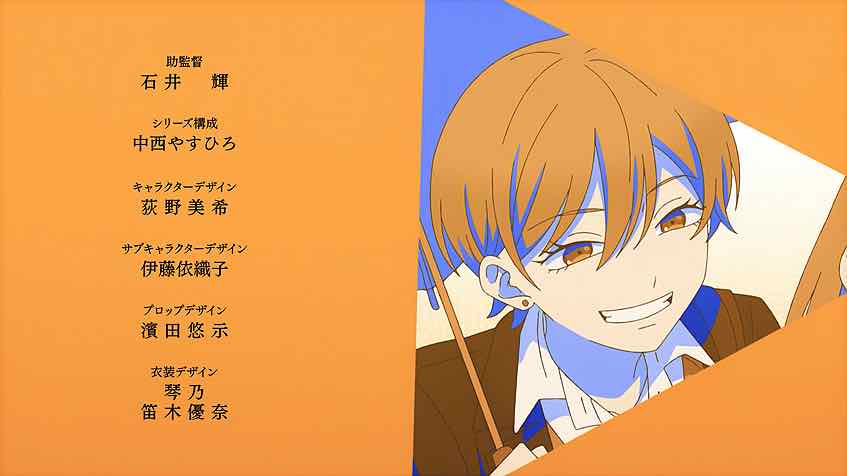


 We dive into the deep end of the pool very early this season, as the first of the big hitters steps up to the plate. I come into Koori no Jouheki with higher expectations than I did Agasawa Koucha’s other adaptation, Seihantai na Kimi to Boku. But that’s because of Seihantai – and how good it was. I knew nothing of either going in apart from reputation (which is excellent). The two series – her only two series to date – make for a fascinating compare/contrast scenario. They started about the same time – Koori in 2020 and Seihantai in 2021. This one is longer, 14 volumes as compared to 8. Both got anime adaptations back-to-back with relatively unheralded staffs and studios.
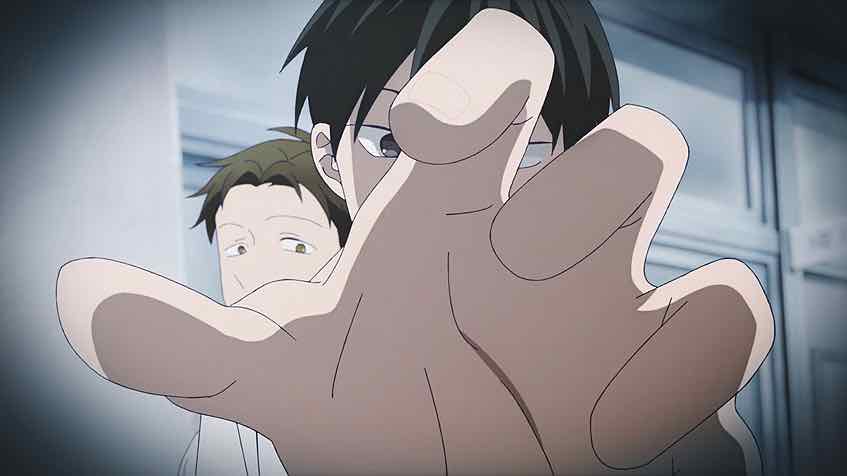 One fascinating element of this is that You and I Are Polar Opposites is a shounen, and The Ramparts of Ice a shoujo. Does that matter? Well, yes it does. Series in those demographics tend to be quite different tonally and thematically, even if it’s not as automatic as it was a generation ago. Especially romcoms – though I’m not sure yet Ramparts is a romcom, strictly speaking. It should also be noted that as it was a web manga initially the demographic label itself can be a little fluid. The service that ran it (Manga Mee) publishes both shoujo and jousei. And indeed, you’ll occasionally see Koori no Jouheki listed in either category (or even both).
 The proof is in the pudding, as they say. And what I’d say is that this series immediately hits very, very differently than Seihantai. How much of that is the source material/demographic, how much the adaptation? Hard to say. For me this adaptation is considerably more conventional than Seihantai’s, which took a very busy approach that matched that series’ somewhat hyper vibe. Director Manyuu is not a huge name, but I did quite like the work he (?) did on Migi to Dari. So far, I’d call this “restrained”. It’s fine without any production elements that really stand out.
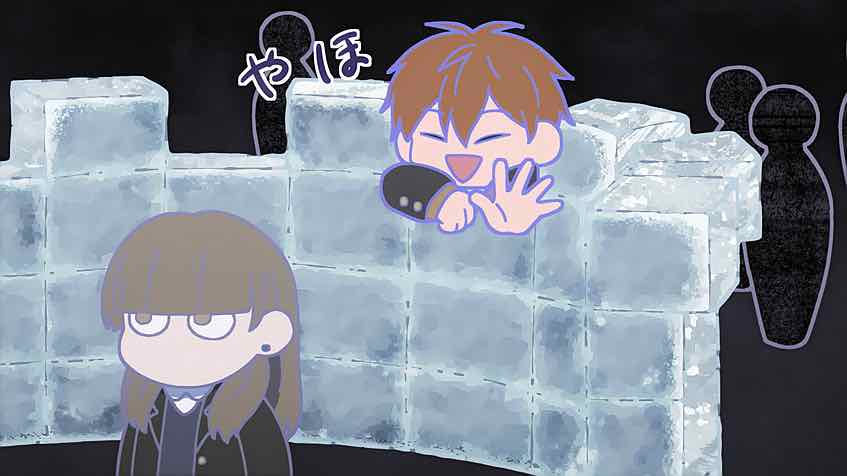
 To an extent each series’ tone is set by the protagonist. Miyu is a scatterbrained and genki goof. This show’s Hikawa Koyuki (Nagase Anna) is a scary-faced introvert (thus the title), scarred emotionally by a rough time of it in middle school. Koori is a much darker palette both visually and emotionally. That’s not to say it’s heavy or morose, but it’s much more “serious” than Seihantai. Hikawa doesn’t consider herself an angry person – just someone who’d “rather be alone than be with people I don’t vibe with”. But involuntarily her face says “back off” – the titular ramparts of ice.
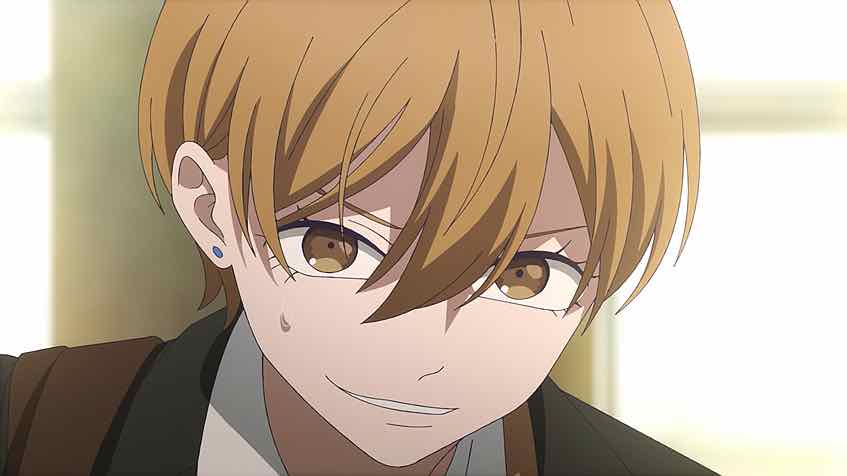
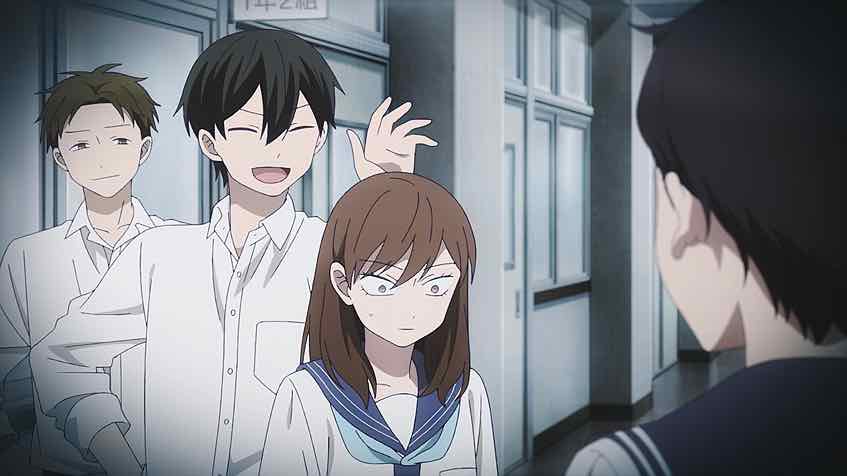
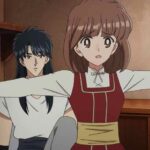
 Hikawa seems to have one friend, an odd couple pairing with popular girl Azumi Miki (Izumi Fuuka). The fact that the two girls are neighbors is the likely reason they’re close despite being nothing alike. Azumi would rather be a tomboy than the nadeshiko her friends make her out to be. Rounding out the main group are the two boys, the first of which to appear is Amamiya Minato (Chiba Shouya). He catches Hikawa making faces to the mirror and trying to figure out why she freaks people out. Minato’s bestie is Hino Youta (Inomata Satoshi), who scolds Minato for bullying Hikawa (which he really isn’t doing).
 This is a high school story built around two boys and two girls, so inevitably the audience is going to do the thing. I like the vibe between Hikawa and Hino myself. She (152 cm) has a short complex and he’s a giant (189 cm) so she flashes back to a scary encounter with a giraffe whenever Youta gets in close. Which he does often, as he never seems to have his contacts in. Amamiya unfortunately reminds Koyuki of the sorts of boys who teased her in middle school, though he’s clearly not malicious in any way (and truthfully those guys seem like they were more thoughtless than truly nasty).
 That shoujo genetic code is strong though, I tell you. You have to have drama – I assume it’s in the contract. The thing with the two guys at the end, well… I’m not saying that never happens in RL but it sure happens a lot less than in shoujo. On the whole I found Koori no Jouheki to lack something of the unforced authenticity of Seihantai. Despite being more low-key it’s also perceptibly trying harder. It also doesn’t flat-out punch you with charm right out of the gate like that series did. But I did like all the characters (Koyuki and Youta especially) and some of Koucha’s trademark quirky humor definitely shines through.
 This series’ charms are not as immediately obvious as Seihantai na Kimi to Boku’s, but that doesn’t mean it can’t build to something of similar impact. Koori no Jouheki is overall less flashy and less prone to immediate audience gratification, but the potential for something genuinely meaningful is obvious from the premiere. It would be nice to think that it too will get a split cour (though a full adaptation here would need more than two) and we’ll see the two Koucha series playing leapfrog all year. But my gut tells me this one will prove to be less commercially successful – it’s just that little bit harder to embrace (which is definitely both ironic and fitting).










ED: “Sakasama” (逆様) by Polkadot Stingray






catterbu
April 4, 2026 at 9:14 amI think I am with you here. This show is a bit more subdued in both production and material than Seihantai. Though I do think this one might be able to hit some really interesting notes of melancholy and depth of pain that Seihantai never will. It will be interesting to see if Agasawa is able to/allowed to go into some of the meaty pathos for which I think Koori has the potential.