




 To be honest I was going to open with what I fancied a rather brilliant insight about Oniyasha and World is Dancing. It even tied in with Tenmaku no Jaadugar. But thematically it doesn’t really overlap with this week’s episode, so I’ll leave that for next time. Instead, I’ll lead with my sheer outrage over the official fansubs not translating Oniyasha and Yoichi’s performance of “Sotoba Komachi”. It’s only impossible to get the whole point of the episode without understanding those lyrics, that’s all – no big deal. I mean FFS, everyone involved should be ashamed of themselves. There is an unofficial translation, and I’ll link it here with sincere thanks to the person who provided it.
 Let’s move past that travesty, because there’s a lot to take in here. Let’s start with something I remarked last week:
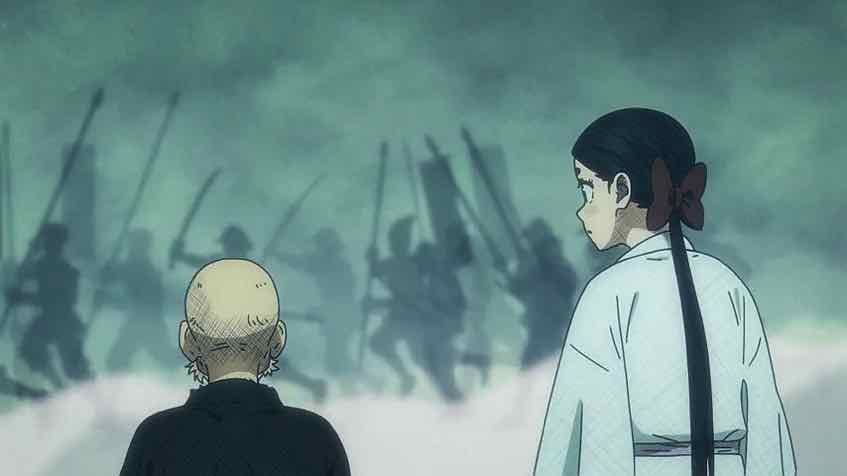
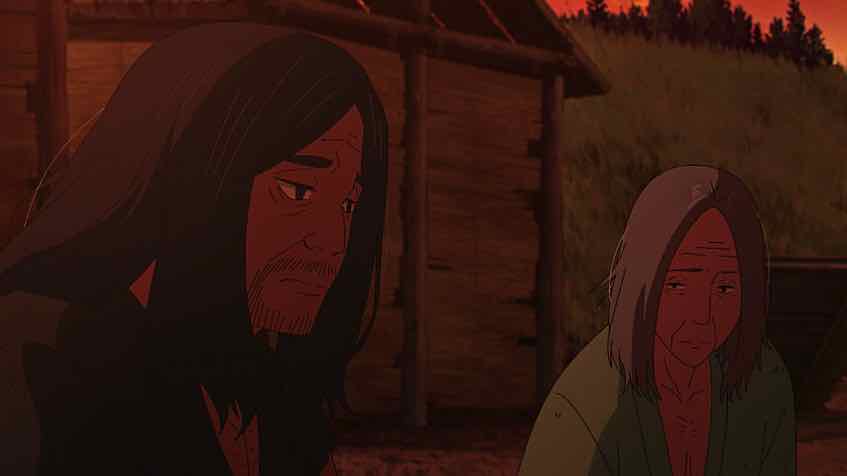
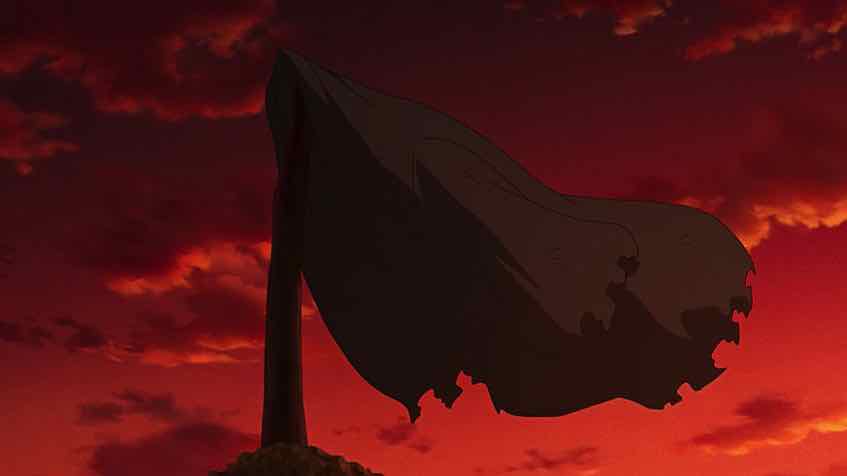
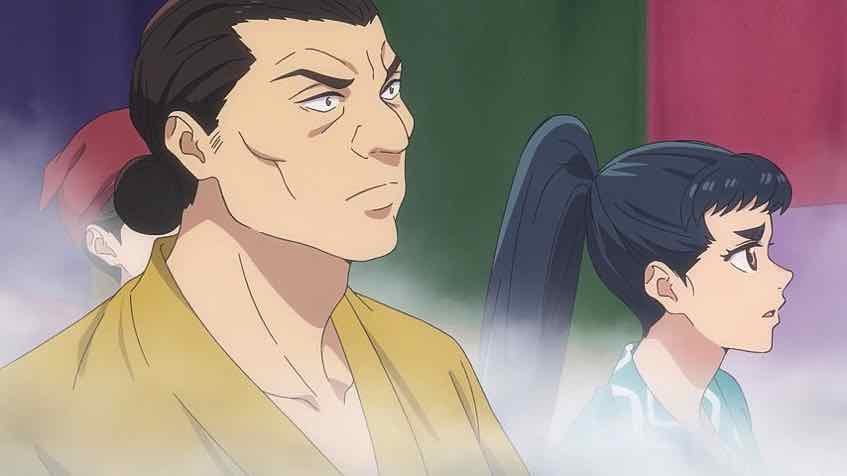
Toku was a samurai who fought against the Ashikaga in the army of Emperor Go-Daigo, and the weight of all the lives lost in the cause slowly grinds him into the earth (Toku communicates this in a passage that could have come straight from Heike Monogatari).
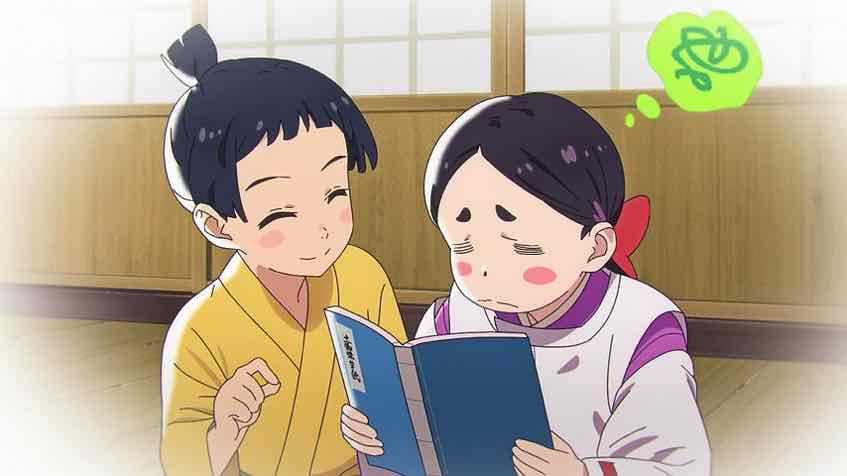
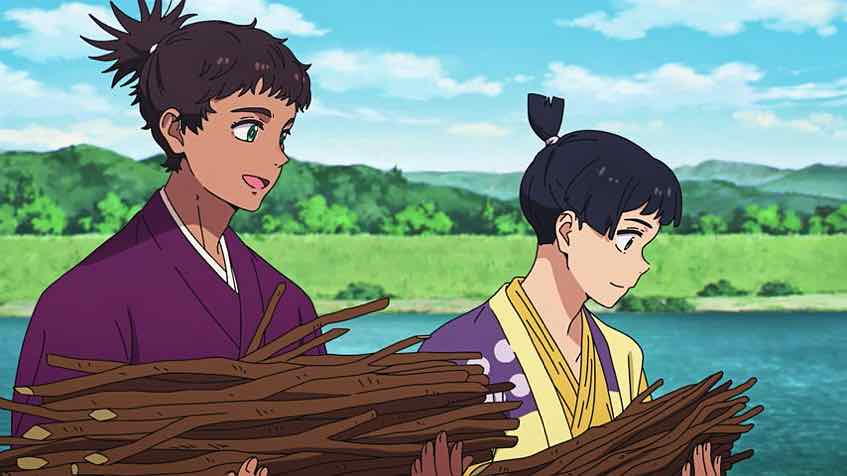
 There’s very much an incestuous quality to the tangle of allusions in this episode, starting with Tale of the Heike. Obviously Toku and Kogane’s story was very much intended to echo that – as witness the kids Oniyasha encounters role-playing it this week. It’s worth noting that Heike Monogatari was being performed by the Biwa Monks during the time this series is set, and in fact the first “official” compiled version of it appeared only a couple of years before the events of this arc.
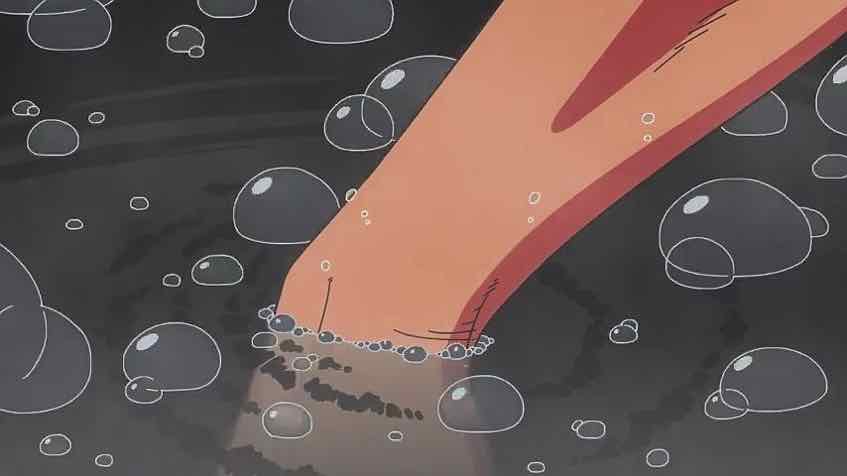
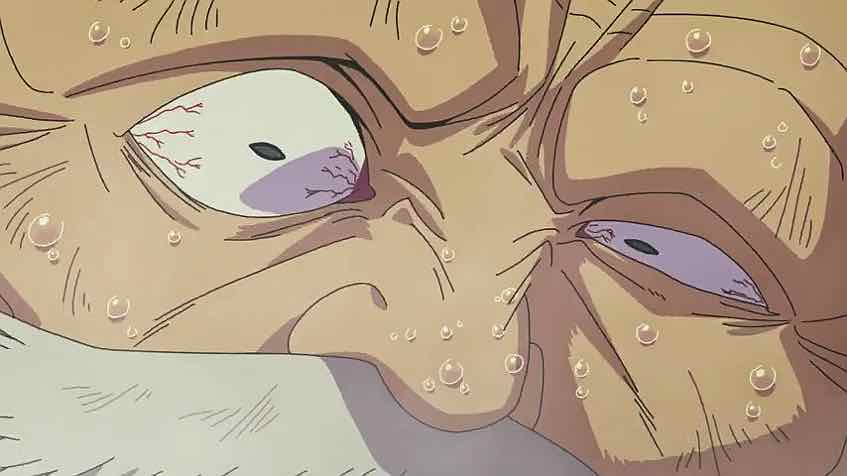
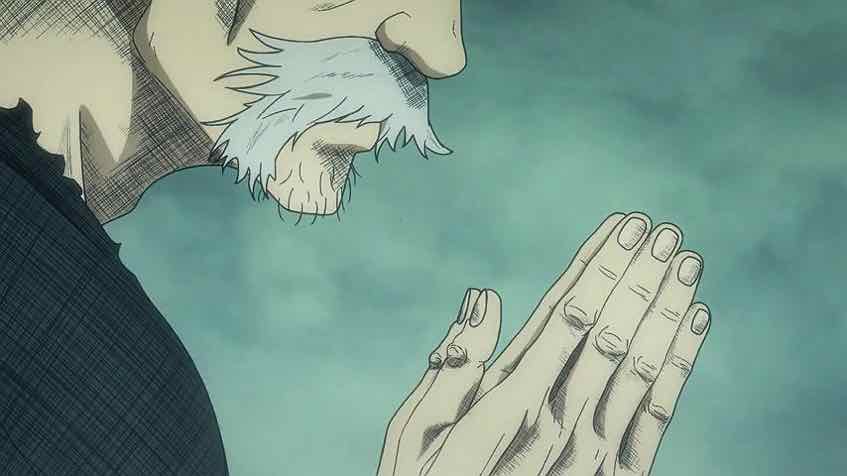
 The clear theme here is winners and losers. The powerful and the forgotten. Ironically the Heike would be anything but forgotten, thanks almost entirely to those Biwa Monks. Thanks to art, and those who perform it. That was a different civil war than the one Toku fought in, but the grim reality is the same. Toku’s only “crime” is being on the losing side. Yet he’s deemed a criminal, sentenced to “trial” by hot water – a savage ritual common to so-called Japanese justice at the time. Toku’s outrage against the cycle of winners and losers collides with reality here – he’s happy to be forgotten, if it means Kogane and Oniyasha can move on. Perhaps even tell his story and that of those likewise crushed by history, though I don’t think that’s Toku’s primary motivation.
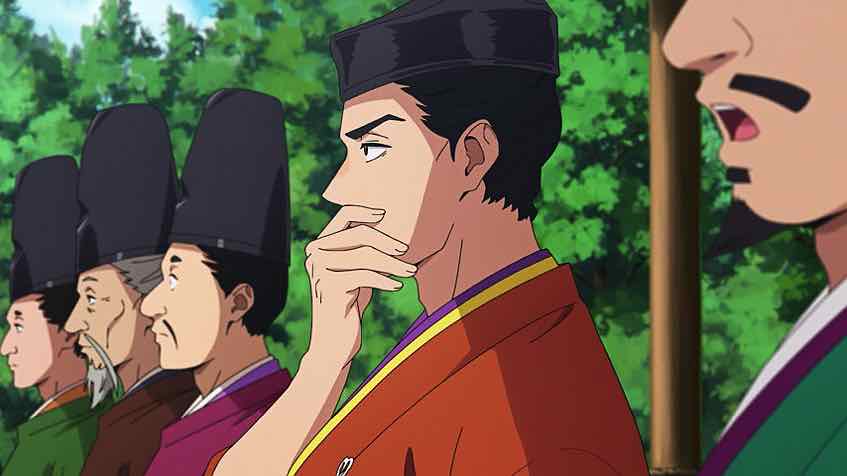
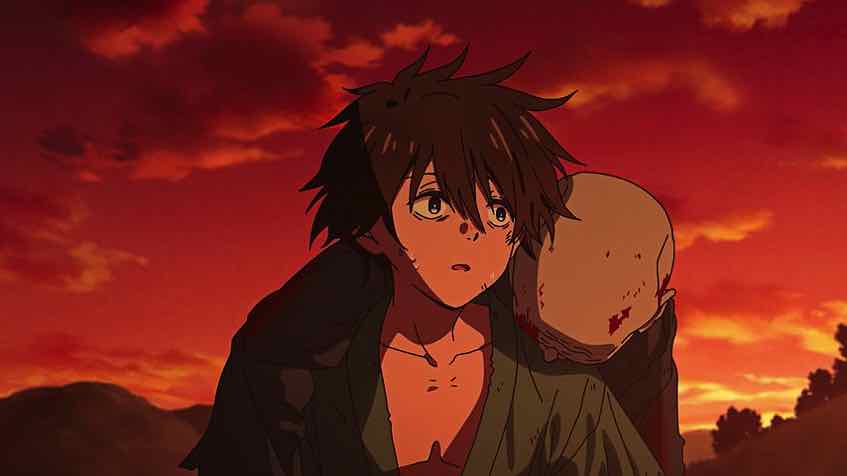
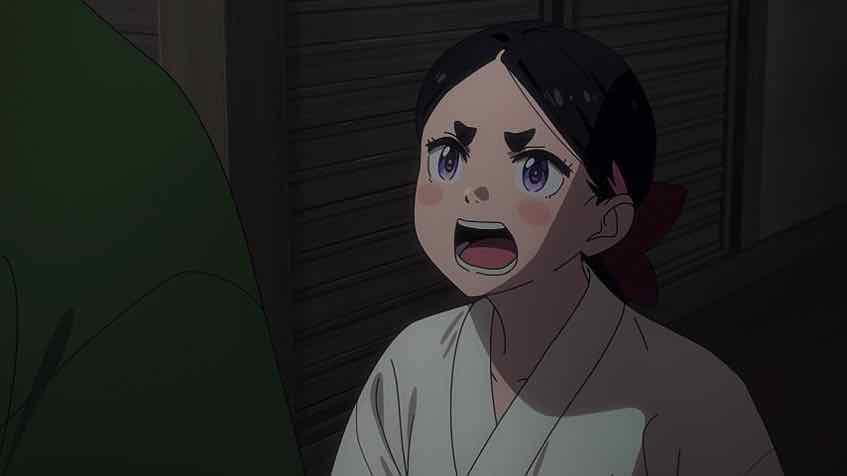
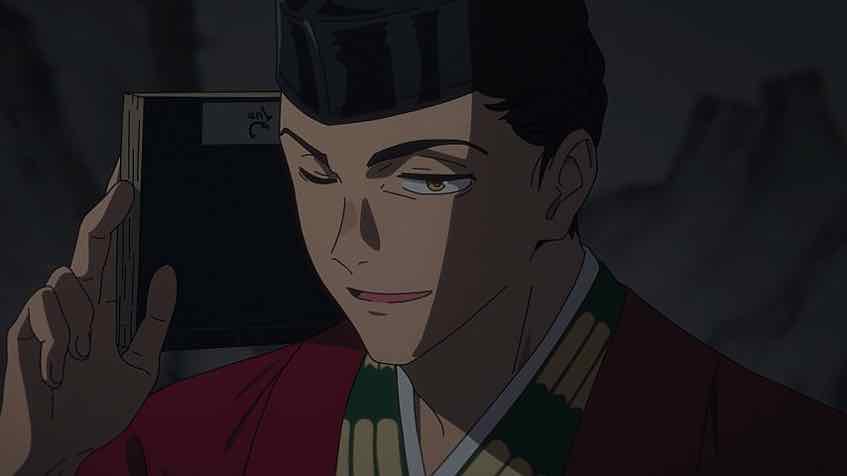
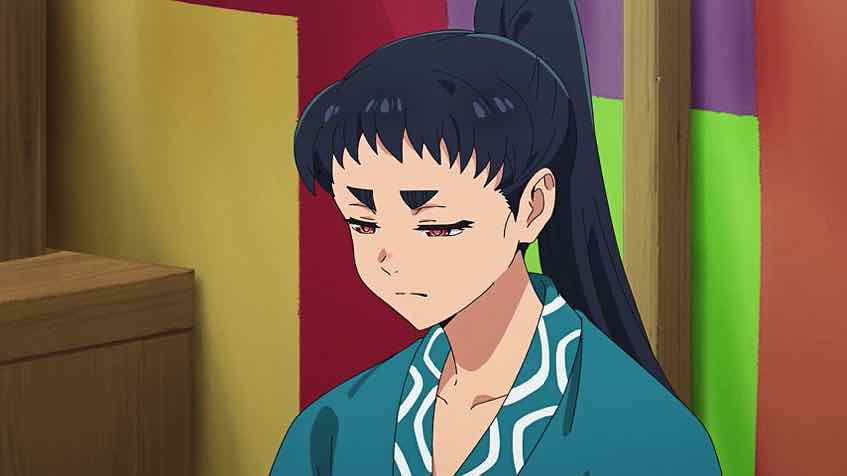
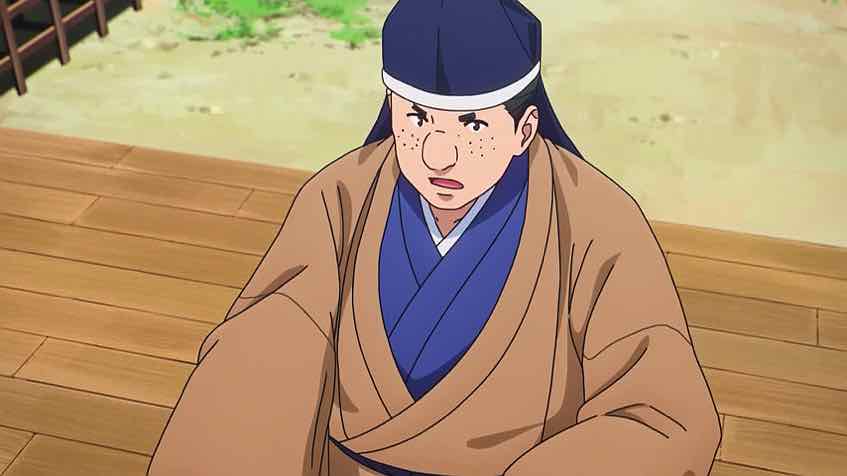
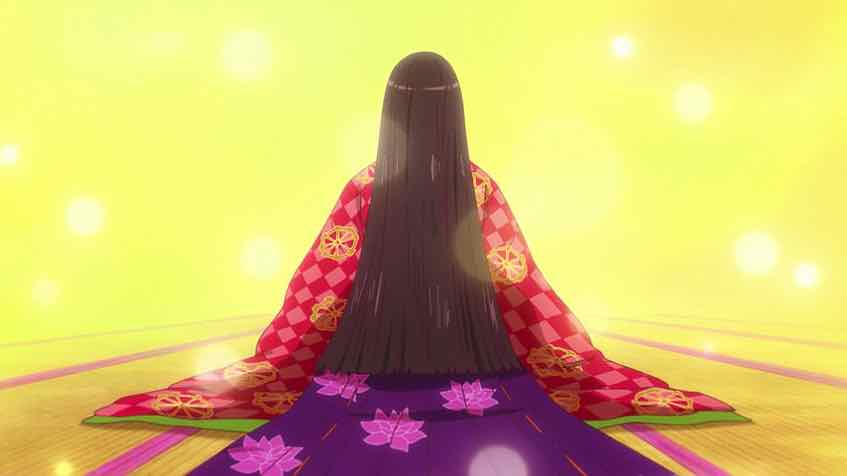
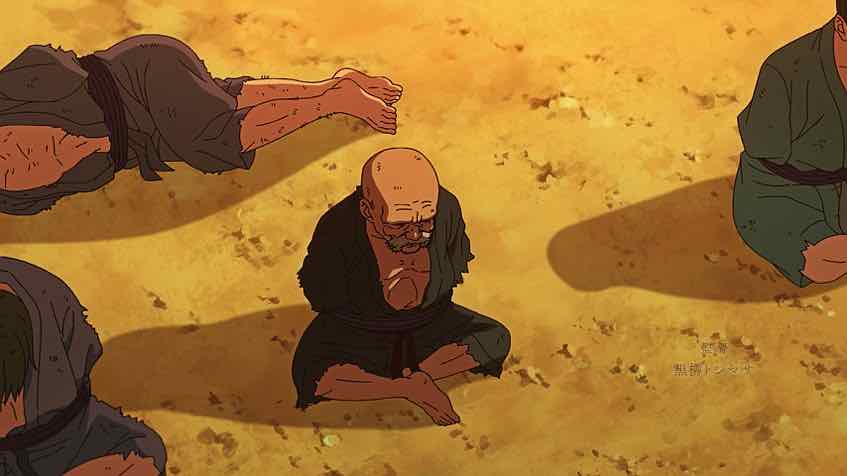 Oniyasha is a child, idealistic. His rage against this cruel injustice is as genuine as it gets, but where does it get him? Yoshimitsu has to intervene to spare him worse than a short detention when he tries to intervene. Yoshimitsu, for his part, is worth considering. Does he genuinely not hear what’s going on around him – and if so, what does that say about him? Anyone would a sense of decency would be sickened by what was being done in his name, so perhaps have no choice but to avert their senses. Or perhaps decency is not even a factor with him and such matters are too trivial for his attentions.
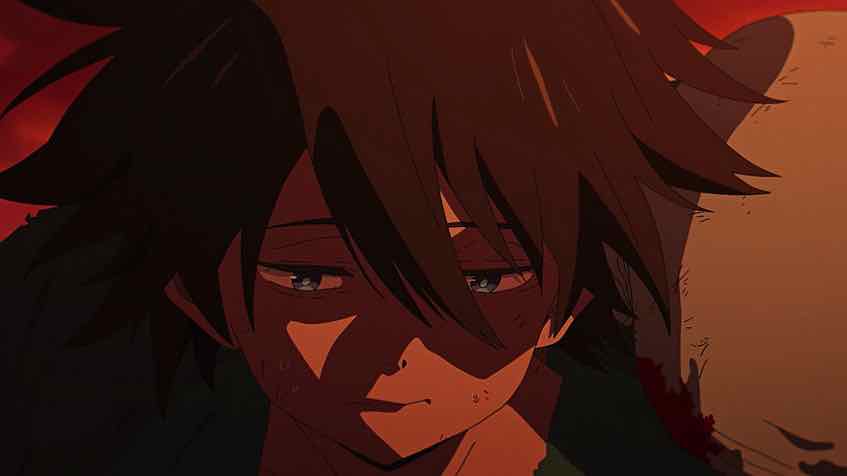
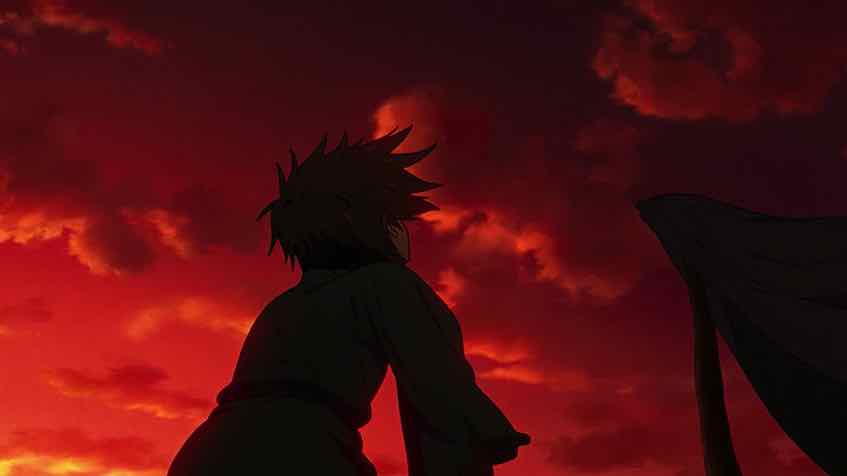
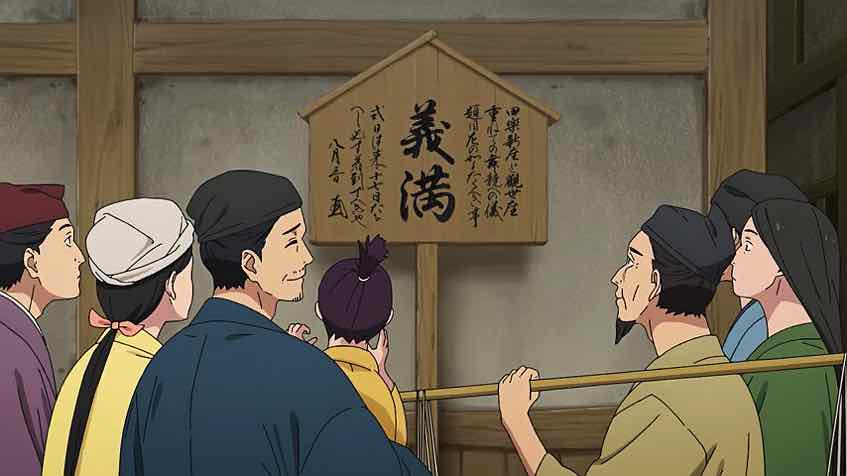
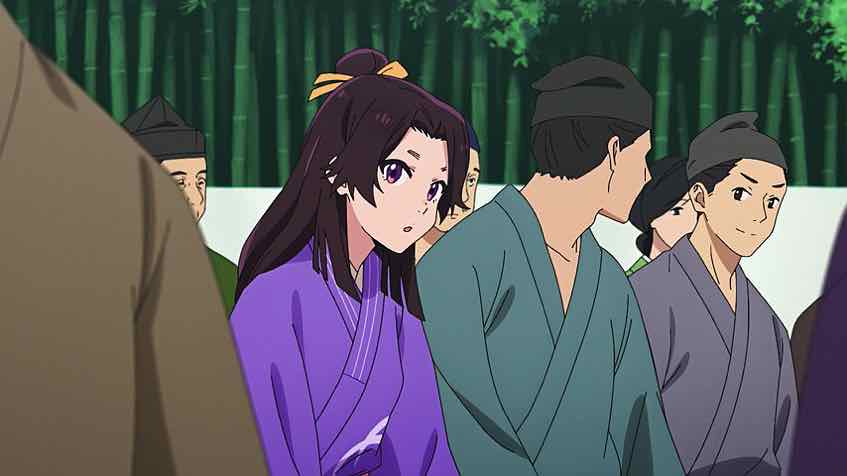
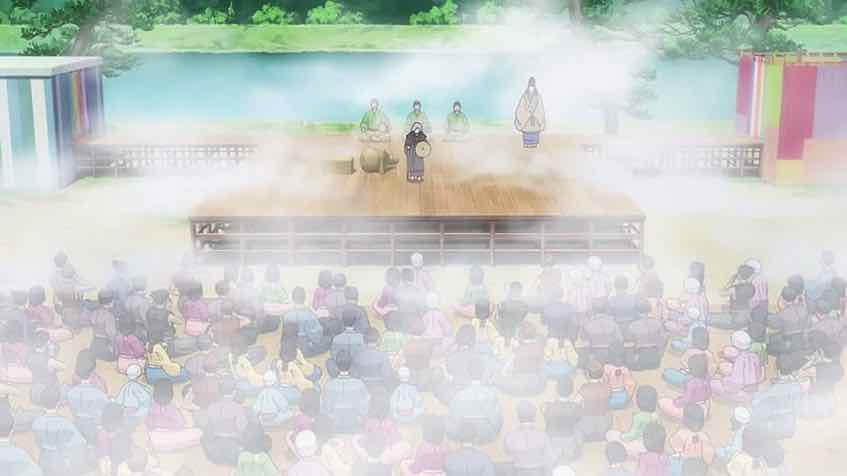
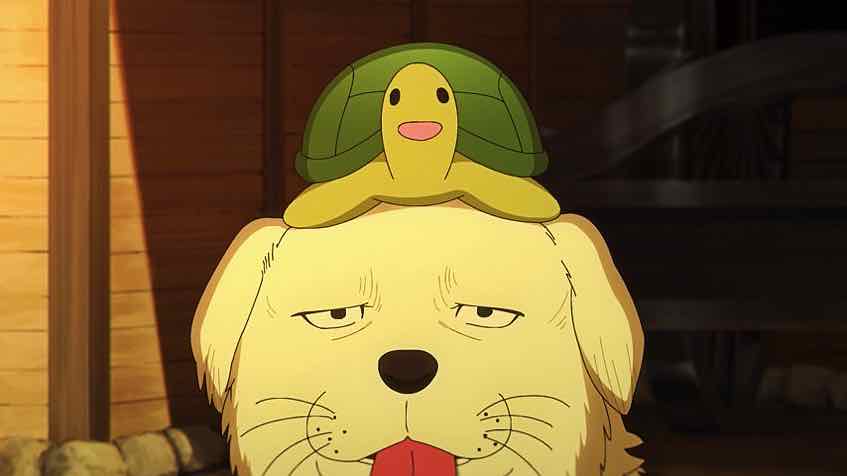 Yoshitmitsu has set the theme of “Shogun Yoshimitsu” for the next performance – certainly something a winner would do. Oniyasha bulls his way in to see him, but the futility of it is soon clear even to one so innocent as him. There’s no satisfaction to be found on that path. Yet despair is a powerful motivator. And the Tale of the Heike is a powerful inspiration, a reminder of the power of art in telling the story of the forgotten. Oniyasha realizes that the only way he can honor Toku – the only way he can make a difference in the world – is through art. The Shogun could stop him from doing so, remove his platform or even his life – but for now, he hasn’t. The stage is Oniyasha’s to command, so he has a duty to command it.
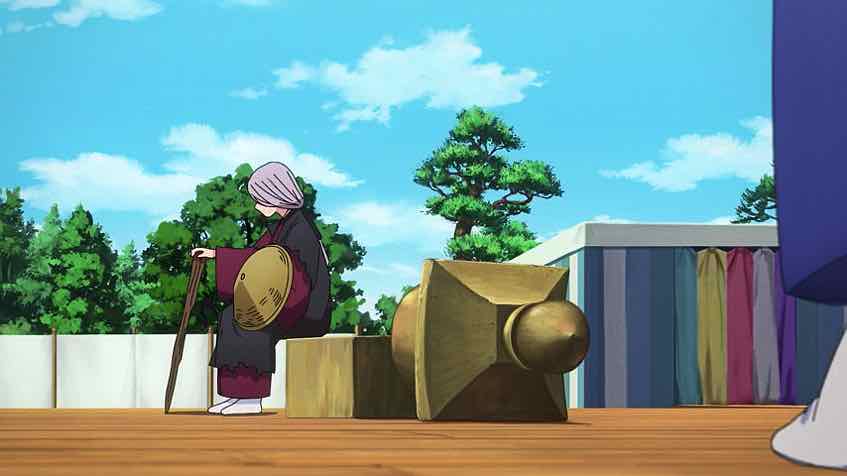
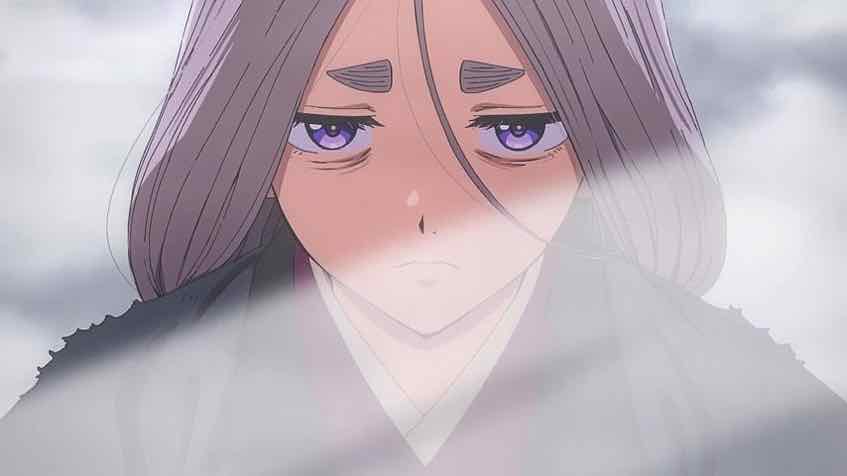
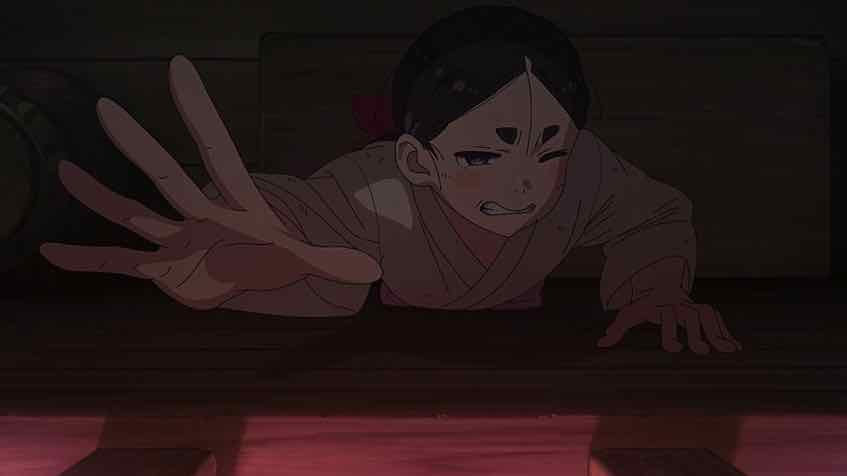 “Sotoba Komachi” has its own fascinating story as it related to this one. It was indeed a Noh play – one of the most famous in time. It was written by Kan’ami, Zeami’s father – though the exact date it was written and first performed is unknown. Zeami revived it and elevated it to new renown. It’s a tale of Ono no Komachi, a famed waka poet from the 9th Century. She meets a pair of Buddhist priests, who scold her for sitting on a Buddhist stupa. Ono, a famed beauty in youth and now withered and old, engages in a debate with one of the priests – and thoroughly bests him. She’s then possessed by the spirit of the man she toyed with in her youth – who died on the 99th night of the 100 nights of devotion she demanded of him – and performs a wild dance.
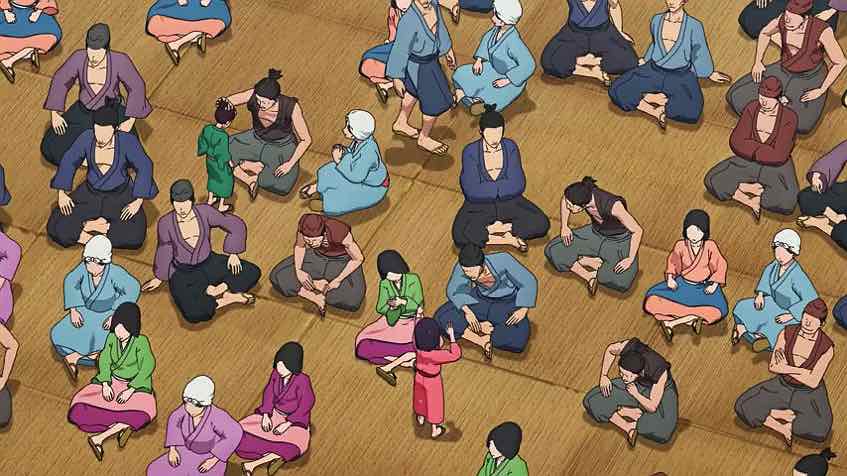
 Once you understand the lyrics of the story, it’s thematic connection to the events of this arc are obvious. The deeper in situ question is how Oniyasha relates it to Yoshimitsu, who demanded the theme of the contest revolve around him. Is the boy scolding him to remember the forgotten and not to trample them? Reminding him that even one so powerful as he will eventually wither and fade, and only in doing so have the opportunity for enlightenment? He’s obviously wading into very dangerous waters here, leaving this to the Shogun’s interpretation.
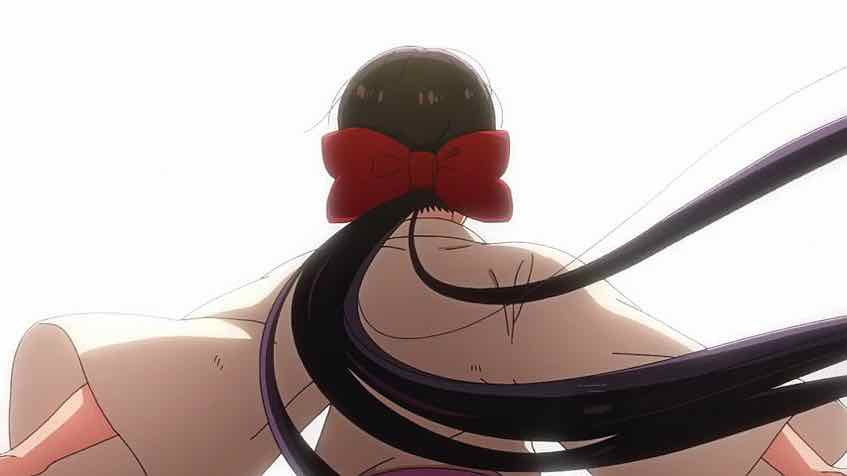
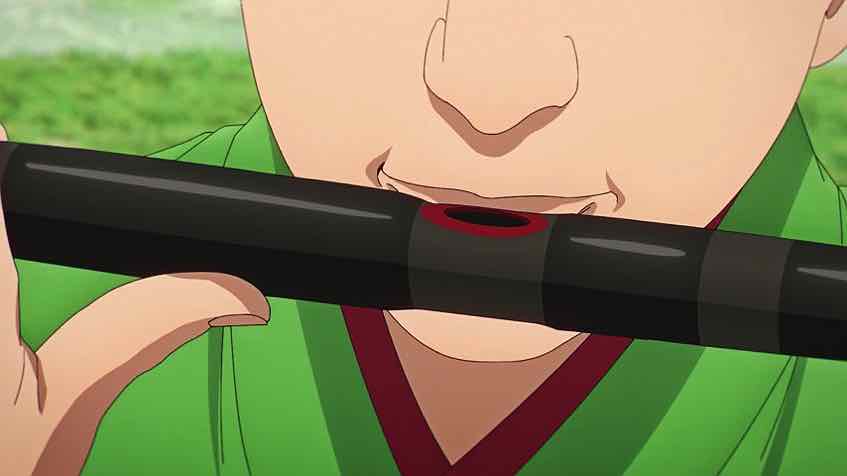
 It can’t be ignored that the “Sotoba Komachi” performance – what we hear this week is the vocal portion, performed (brilliantly) by Oniyasha and Yoichi – is done in a modern rock style. One might even call it reminiscent of Inu-oh – an anime which was based on a book called “Tales of the Heike: Inu-oh”. We can safely assume that Zeami never performed “Sotoba Komachi” in this fashion, but art is nothing if not re-invention. It survives by destroying what came before it – like the shark if it stops swimming, it dies. Be destroying what came before, it preserves it – it’s remembered. In a new form perhaps, but the essence of the old one survives in it.

























Henk
August 11, 2026 at 8:16 pmI was wondering why the song wasn’t subtitled. Thanks for providing it as it really is quite important to the whole episode!
Red
August 11, 2026 at 8:26 pmThanks for the link of the vocals’ translation, I can now sleep easy.
Guardian Enzo
August 11, 2026 at 9:26 pmYeah, it’s only the whole fucking point. What a debacle. You’re welcome, but the one you should thank is whoever translated it and subbed that video.
Ocha
August 11, 2026 at 9:40 pmI didn’t know they didn’t include the lyrics in the “official” version! That’s such a bizarre choice. Because where I’m from, this anime is streamed legally on a YouTube channel called Muse Asia outside of Japan, and they included these exact same lyrics in your link. I’m seriously grateful that I’m able to watch World Is Dancing there, since (surprisingly) Netflix didn’t pick up this series for streaming. But it’s just as well, because for sure they’d butcher the translation.
Guardian Enzo
August 11, 2026 at 10:02 pmYeah, I heard it was Muse that did sub it.
catterbu
August 14, 2026 at 3:05 amFor those in the US, I complained to HiDive and they told me “I was able to verify that the content team is aware of the song sequence missing the subtitles. I was advised that the team is working to get the correct translation approved and uploaded.” I am also pushing to get them to sub the rest of the song on the next episode.
Guardian Enzo
August 14, 2026 at 6:38 amYeoman work, thank you. I mean it’s closing the barn door after the horse is gone to an extent but certainly better than leaving it be.
It’s just hard to imagine anyone thought this was acceptable in the first place. Mind-boggling.
catterbu
August 14, 2026 at 8:22 amYeah. I know that Bang Dream series have had songs go out unsubbed before (though complaints and led to subs being added on occasion), but with those, not knowing the lyrics is not such a big deal, because the whole song is the point. Here, the lyrics ARE the point. The visuals were just meant to punctuate. The ANN review was not nice to this episode and I think it is because the “camerawork” is really quite plain unless you understand how it is married with what the characters are saying.
PS You are commenting EARLY for JST!