



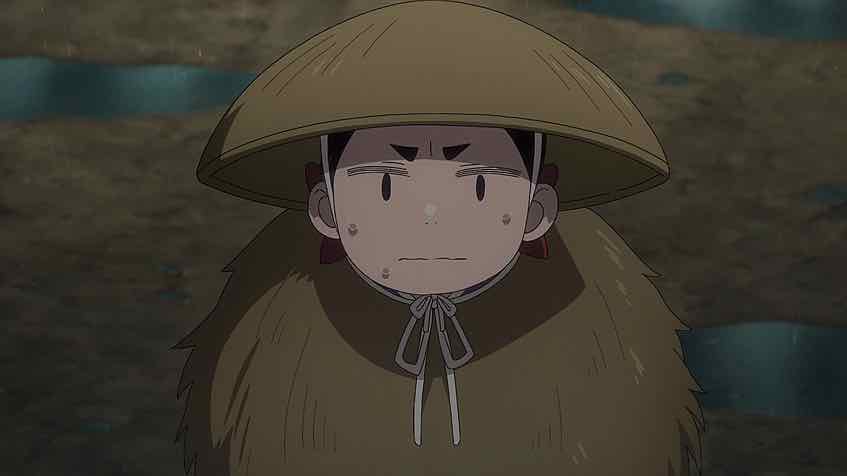


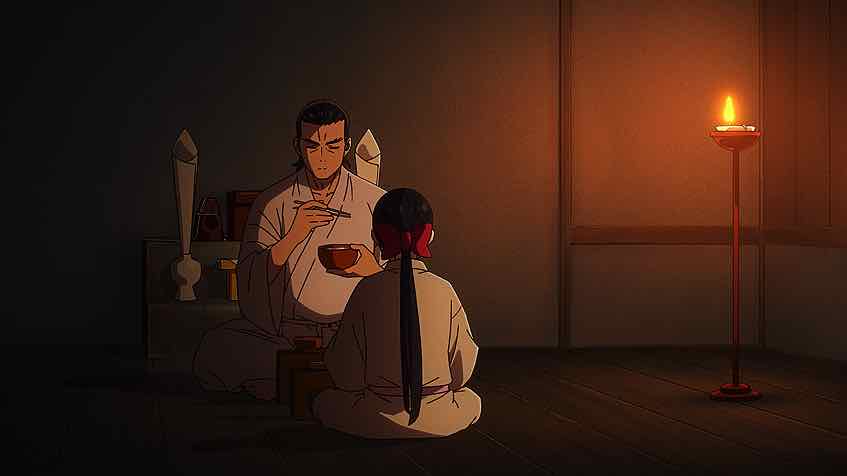
 I always love it when I can start a post with the final line of the last one. Makes me feel like I threaded the needle on the first try. That last line was “Oniyasha is not Kan’ami – he’s himself. He may not fully grasp who that is yet, but experience of discovering it is the story of Zeami and the Noh he created”. I don’t think I could have summed up what Kan’ami said to his son at the end of this episode any better than that. Children are change, never stasis. And so is art. To stop changing is to die. “Change itself, is water to the flowers”.
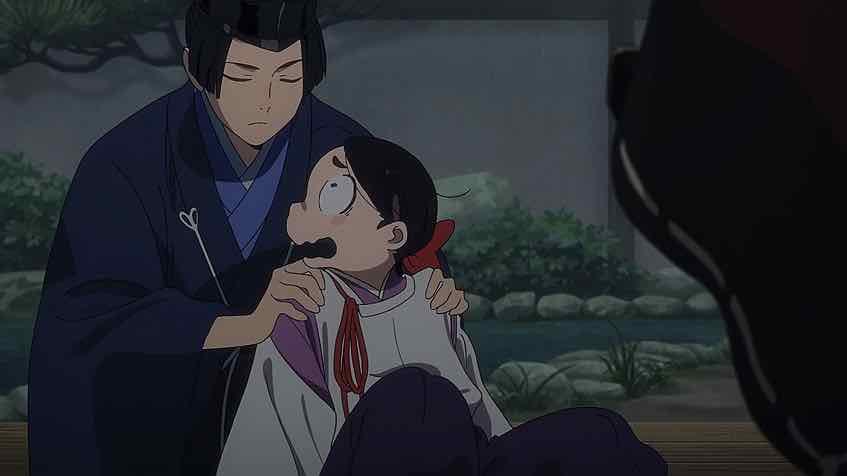
 “Form” is all over this episode, and indeed this series. The form of a person. The form of a dance. This is the process of discovery that drives Oniyasha’s experience. It drives every child’s experience in some way, but for him it’s accelerated and largely public. As I noted last week, Okina is unique in the Japanese artistic pantheon. It can’t truly be called Noh – though it’s Noh troupes who perform it – or even Sarugaku. It predates both. It’s ancient and as much spiritual as artistic. The purification rituals father and son performed this week are still required of every dancer performing Okina today.
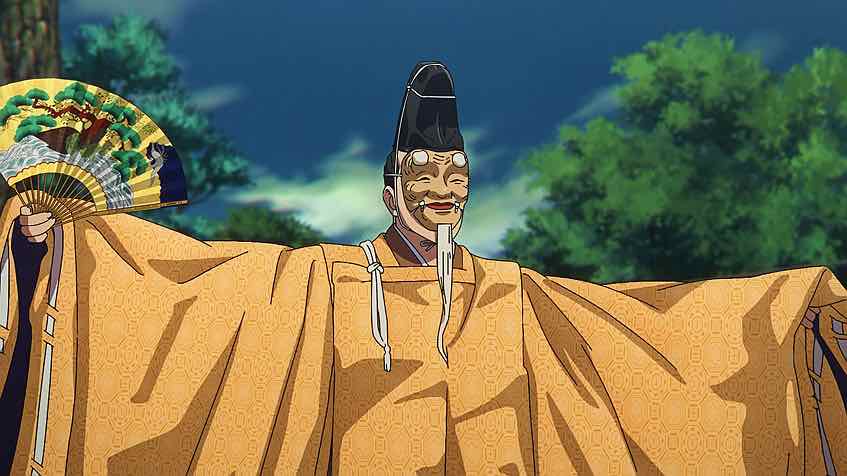
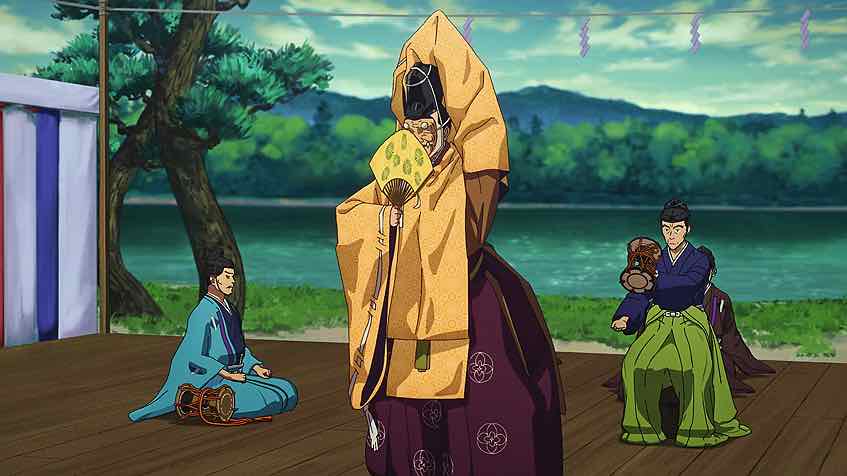
 If I were to try to explain the meaning and import of Okina fully (as if I really understood it anyway) we’d be here all day without ever getting to the episode itself. It’s fascinating and you should read up on it a bit. The “stage” on which it’s performed is temporarily a Shinto altar. The performance is an offering to pray for the peace and security of the nation. First is the Senzainomai, always performed by a young boy and meant as a sort of purification ritual. Then the Okina itself, with the mask representing a benevolent old deity bringing peace and prosperity. There’s also a third dance called Sanbasou, performed by a kyougenkata (kyogen actor), that we didn’t see in the episode.
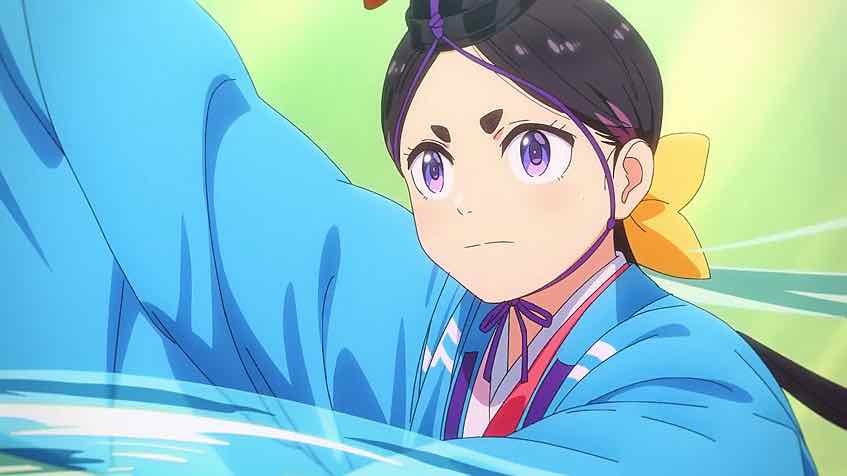
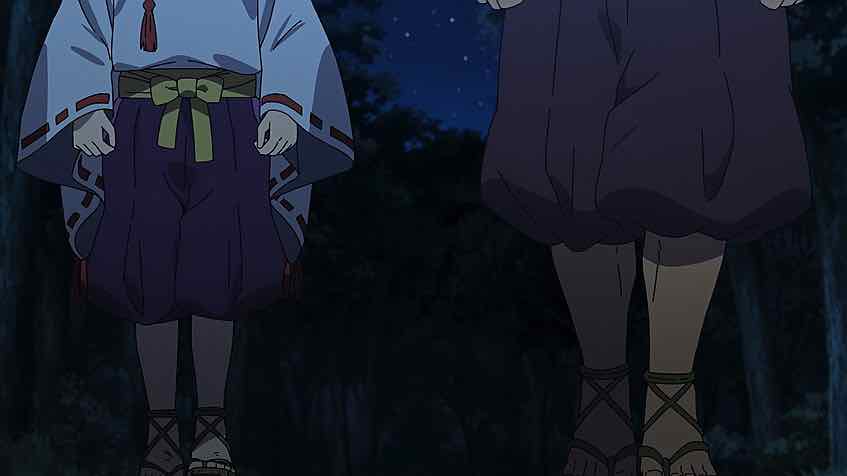
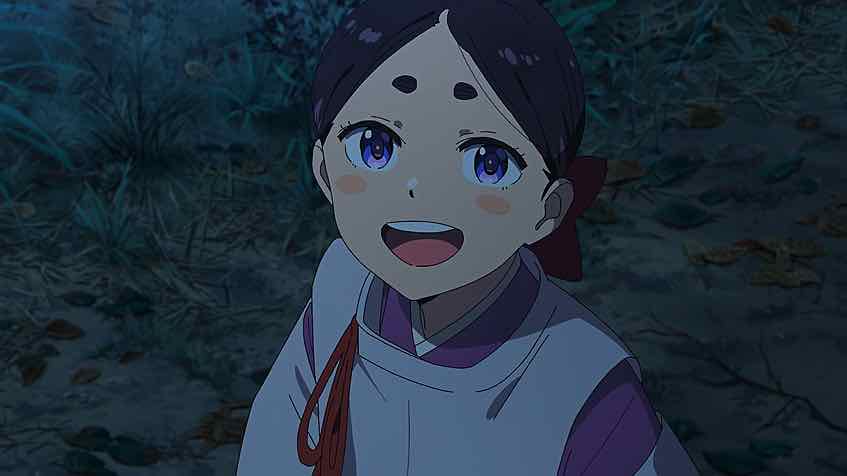
 The long and short of it is that it was a huge vote of confidence for Kan’ami to let Oniyasha dance the Senzai. He’s so nervous that he can’t sleep the night before, and needs a pep talk from the elder of the Kanze troupe to calm his nerves. His heartbeat competes with the beat of the drum inside his head. But everything he’s experienced has prepared him for this moment. What is “good”? Accepting his own form, limited though it may be. Understanding that the flow of time destroys everything in the end, and that this is not a bad thing.
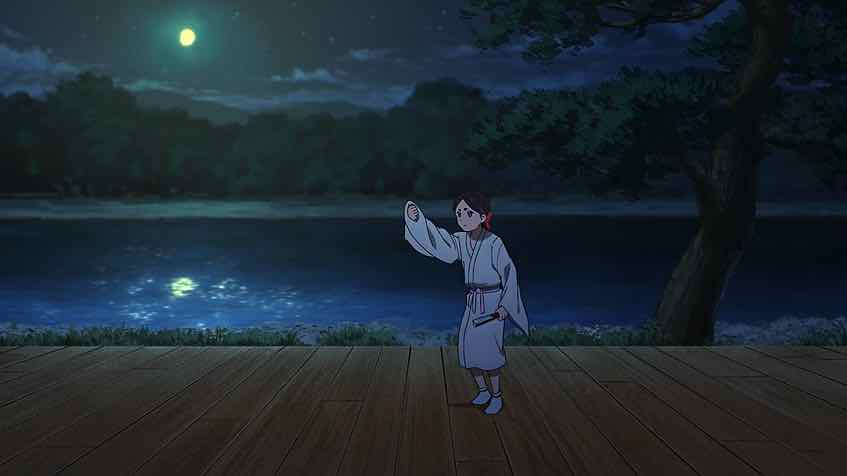
 The thing about this ritual is that the Senzai and Okina dances are meant to sharply contrast with each other, and I think that’s communicated brilliantly by CyPics here. This is not the raw, animalistic power of the improvised dances we’ve mostly seen in World is Dancing. This is form – a form passed down through time from the dim and distant past. This is the balance Oniyasha must learn, that his father urges him to learn. To understand and respect form without being a slave to it. To love Sarugaku enough to destroy it, something Kan’ami has made his life’s work.
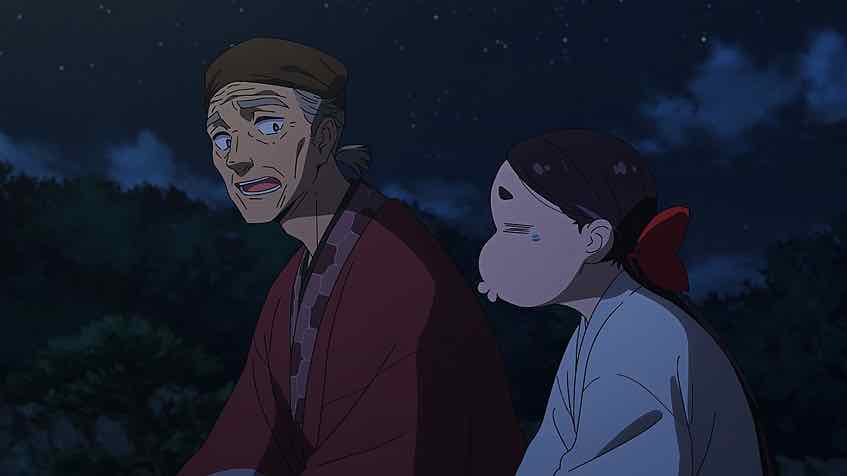
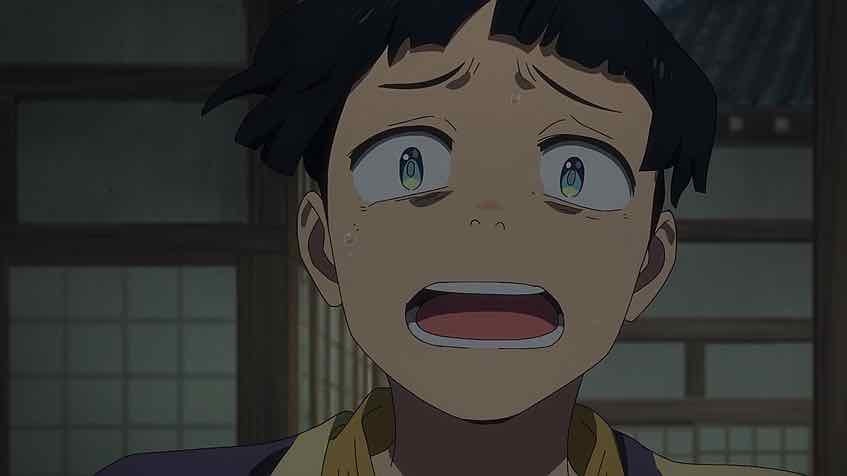
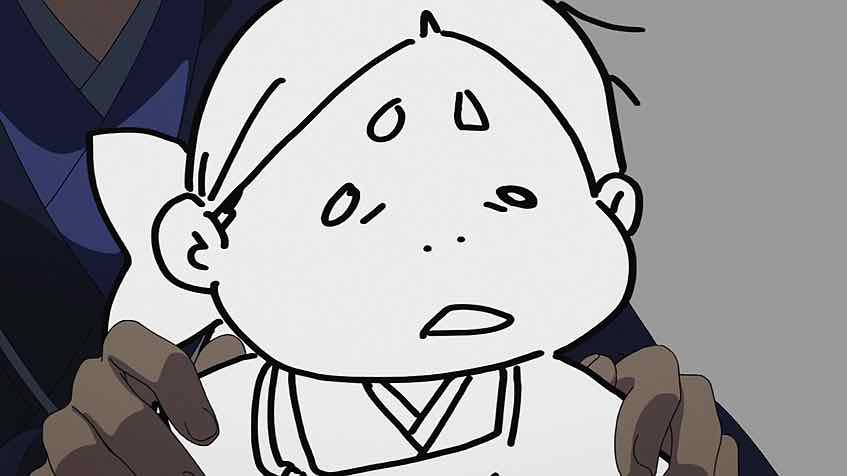
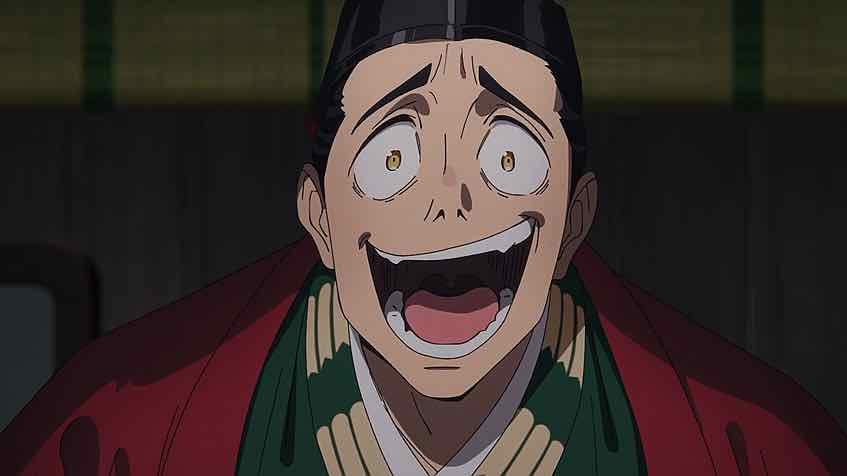
 The aftermath takes us into the realm of farce, a realm this series is far more at home in than I expected going in. Kan’ami urges Oniyasha to kneel beside the leader when they have their audience with the Shogun after the performance. Once Yoshimitsu gives the “raise your heads” order all hell breaks loose, because Oniyasha recognizes him as “the sex guy!” and unthinkingly reverts to kid mode. This could have been disastrous but Yoshitsune nimbly defuses the situation, then declares that the performance – and the Kanze – were wonderful. And offers up a “Yoroshiku” and an implication that there will be more to come.
 At this point we’re getting to the elephant in the room with World is Dancing, and I’m very curious to see how it’s handled. The Imakumano Jinja performance of Okina is one of the most important events in the history of the performing arts in Japan. Zeami would go on to effectively create Noh and the Kanze to become the dominant school (up to the present day, in fact). But the widely held view is that Yoshitsune – who was 16 at the time – favored the Kanze because he became infatuated with Oniyasha after seeing his Senzai. And in fact began a sexual relationship with him. This is in effect hearsay, but it seems to be widely held as true.
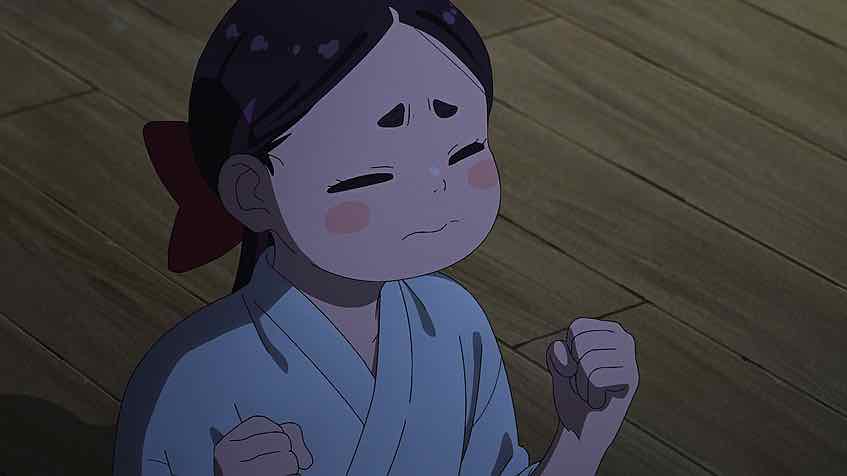 We’ll know soon enough what view the series takes on that. Yoshimitsu summons Oniyasha to his residence, Sanjobomon, in what is now the Karasuma Oike area the next day – Ishiya is convinced for his execution. And he reveals himself to have been amused by the whole situation. He also expresses frustration at the hodgepodge of laws governing a Japan with both a shogun and an emperor, and admits that as for Sarugaku, he doesn’t really “get it”. But he sees something in Oniyasha – whatever is to come of it – and invites him to stay with him. Oniyasha declines, it appears – at least for now, assuming the matter is truly his choice – but such an invitation is not to be taken lightly.
 We come full circle, then, to the question of form. Kan’ami comes to meet his son on the way home, and the boy gushes about his newfound love of performance and how he wishes to learn from his father. But Kan’ami scolds him never to accept what he’s taught without question. Never to dance a form as he inherited it, but to make it his own – to add something, to strip something away. “You do not search for your own form – you create it”. Kan’ami is bound by his own body and his own era, and so is Oniyasha – who favors his mother, Kan’ami notes for the first time. Tasking his son with creating a new form from the ashes of this one is a huge burden for one as small as Oniyasha, but Zeami would prove more than capable of carrying it.
























Henk
July 21, 2026 at 11:42 pmI think they did a great job animating the two dances, making them very distinct. I could feel the gravitas of the Okina.
Guardian Enzo
July 21, 2026 at 11:47 pmCould not agree more.
The Senzai is supposed to be gentle and pure and delicate. The Okina is sweeping and monumental and awe-inspiring. There’s obviously only so much you can do with a few minutes of anime screen time but I thought both were great.
catterbu
July 22, 2026 at 3:19 amHave not been able to find much time to comment lately, but did want to add that I have been reading along in the manga since it is available for free on kmanga and a few things are clear to me:
1. The anime is a visual upgrade over the manga, which looks good, but not quite at the level of the anime. It has not been focused on recreating manga panels, but evoking what the manga is trying to evoke in anime.
2. This adaptation has been really well written by Series Composer Kawamitsu Sawako. This is there first role in animanga, but the anime has hit all of the plot points while expanding on some things (e.g. while Oniyasha gets teased by the shogun in the manga, the whole fake beheading is not there), and contracting others.
3. Unless the pace is drastically altered, this will be a full adaptation. There are 60 chapters and 14 have been covered so far. Really excited that we should be able to get it all in one cours. And so far it has not felt rushed at all (at least to me)
Guardian Enzo
July 22, 2026 at 8:07 amWell, at that pacing they would run out of time around chapter 40-45 so they’d have to speed up.
catterbu
July 22, 2026 at 9:30 amYeah. I guess I should have been more specific. The pace in terms of number of chapters has picked up considerably. They are now the typical <20 page chapters, but the first few were 40-60 pages, I think. So assuming that remains consistent the rest of the way, it would not have to increase that much.
Andy L.
July 22, 2026 at 4:26 amI’ve come around. World is Dancing ftmfw
Guardian Enzo
July 22, 2026 at 8:23 amWord.