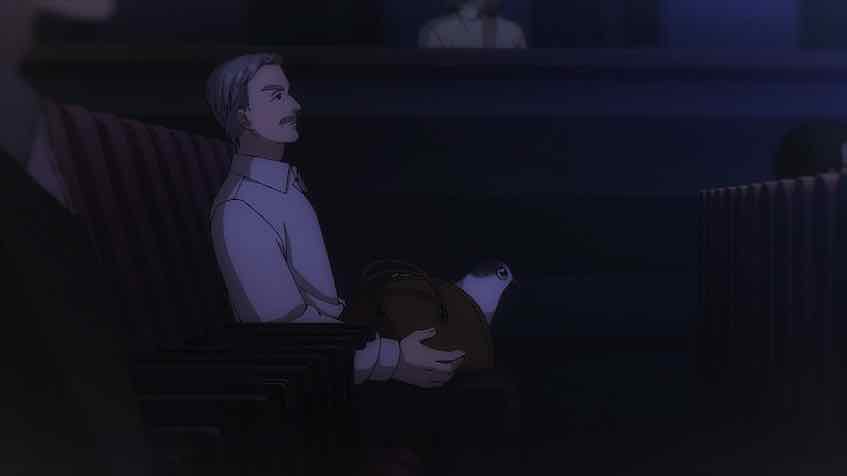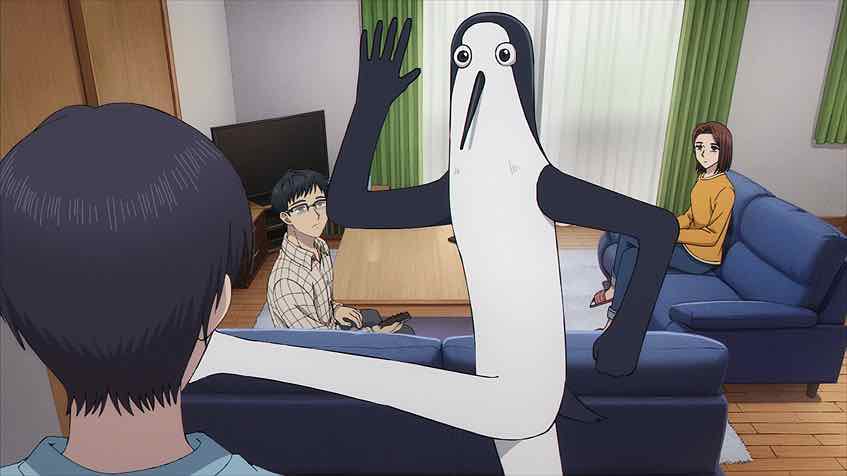



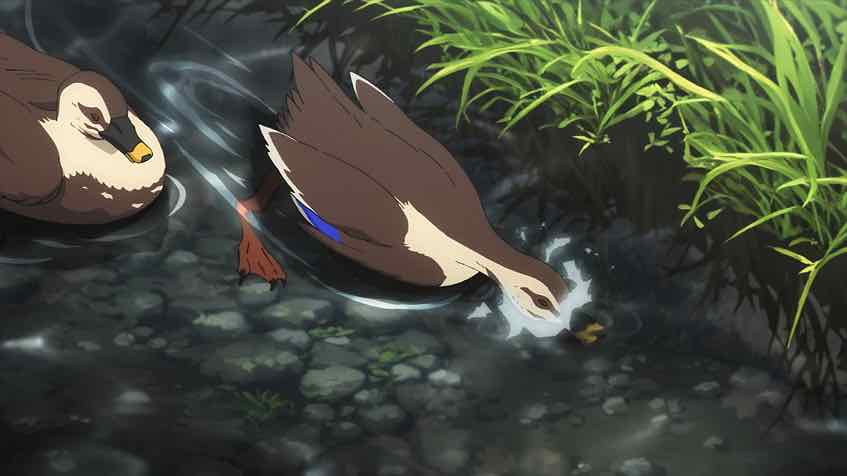
 Kujima Utaeba Ie Hororo was exactly what I was expecting it to be. Which is sort of odd, since I’d never read the manga and knew little about it. But I’ve been in manga and anime long enough to get a sense of it. It was going to be weird, quirky, relaxed. It was going to get crap aggregator scores. It had all the trademarks of a classic “that niche” show, and a sleeper. One episode is not enough to say whether it will fulfill those expectations over the long term, but it’s certainly off to a very fine start.
 There are several reasons why I’m optimistic about this show. The manga is very popular among booksellers, which is normally a very strong leading indicator. It’s finished at five volumes, which should be an ideal length for one cour. We have an extremely experienced director in Kimura Shinichiro working at one of the old (and I do mean old) school studios in Hibari. Murase Ayume plays protagonist Kouda Arata, and he’s money in this sort of role. Another interesting bit of casting is the titular Kujima, who’s played by Kouzuki Yuria. She’s nor a familiar name to most anime fans but she played Ponyo for Ghibli when she was about eight or nine years old.
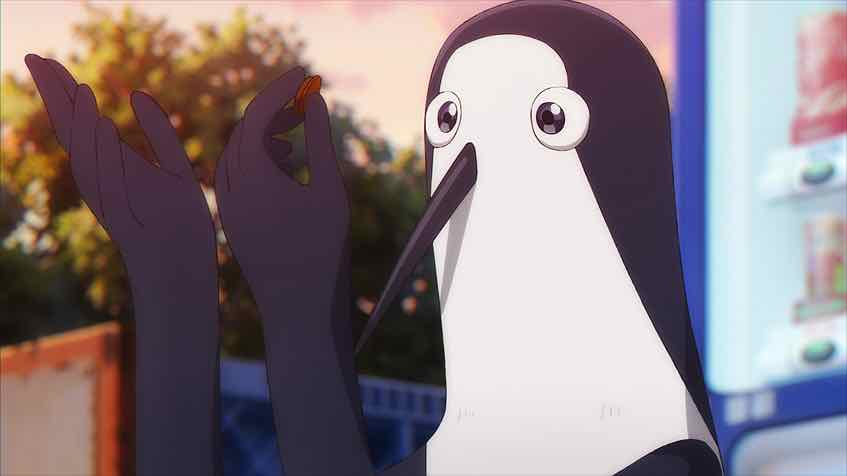
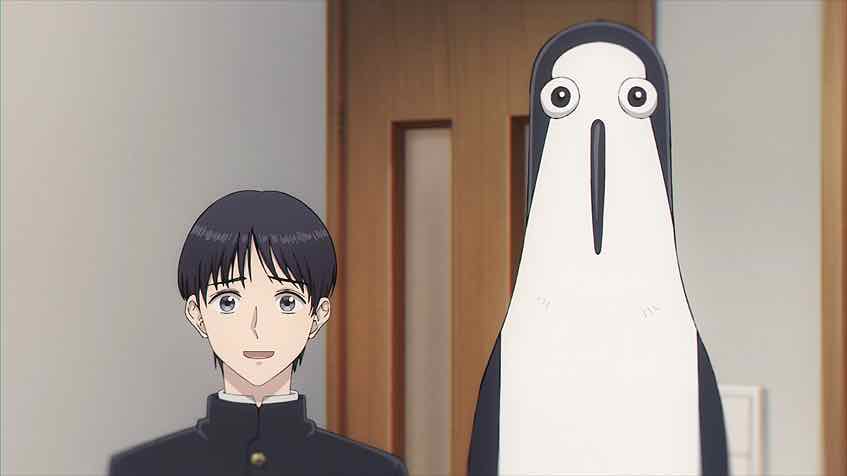
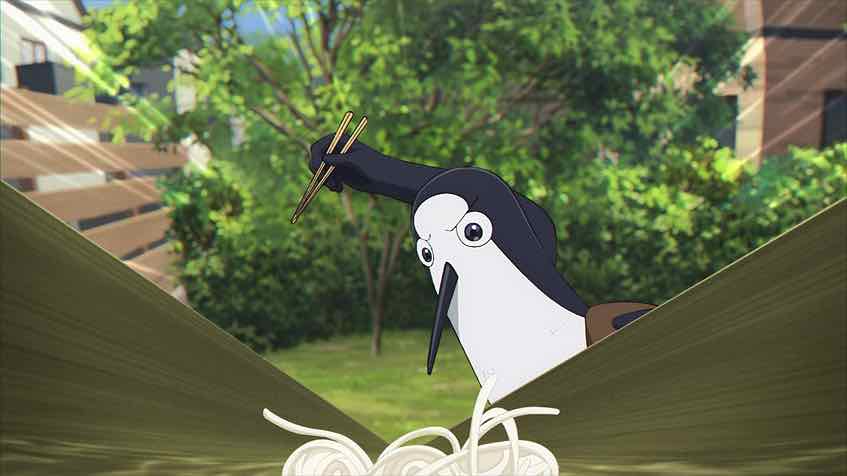
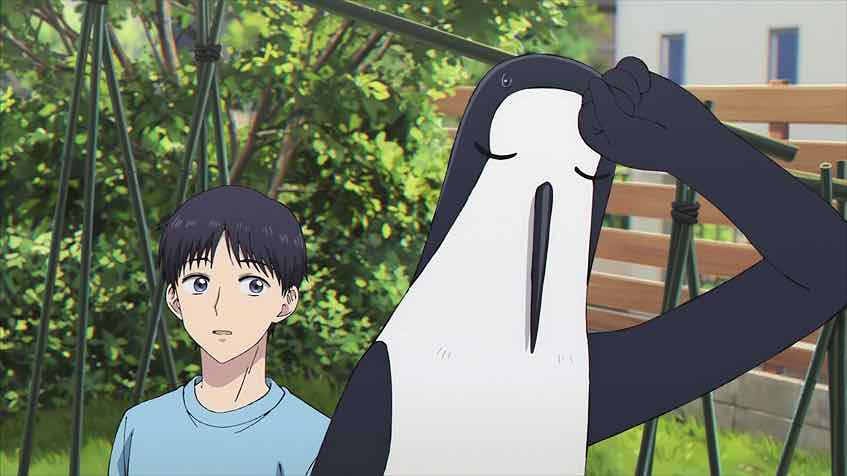
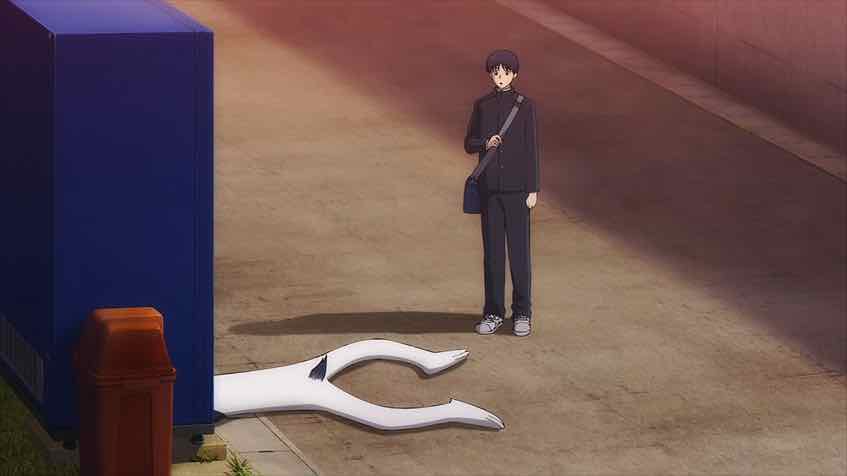
 Kujima is the MacGuffin here on every level. They (the gender is not specified) are some sort of weird giant bird from Russia. As such Kouzuki-san peppers Russian (I have no idea how well) into her dialogue, along with thickly-accented Japanese. I suspect it will be a love-hate type of performance but it works for me. Arata is a lonely first-year middle schooler with absentee parents and an angry shut-in brother with PTSD about failing his college entrance exams. When he meets Kujima, they’re scrounging under a vending machine for change (which I guess is a crime here, which is pretty dumb). Only ¥180 more, Kujima says, and it can buy a rice ball.
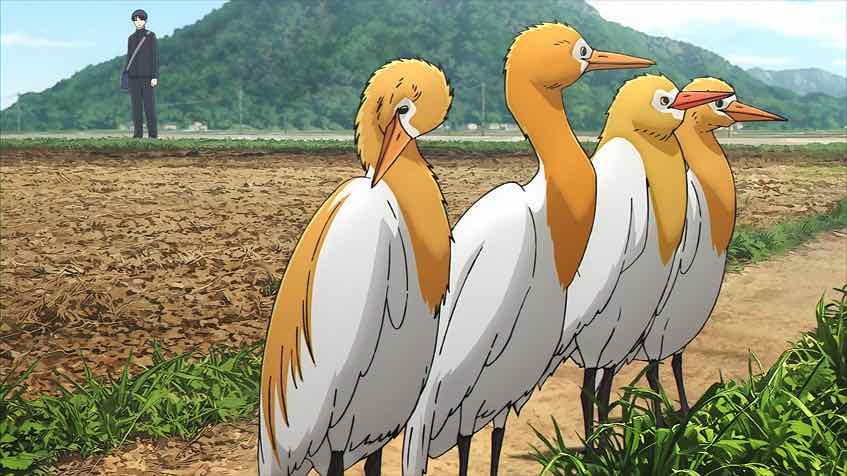 It isn’t stated but I suspect the setting here is Hokkaido, given that Kujima says it comes over from Russia and that Hokkaido natives Galileo Galilei do the OP. Arata’s blasé reaction to a giant talking bird is just one of those that niche quirks you come to expect. Not only that, he promptly invites it home for lunch. Kujima explains that its kind normally hide from humans in the deep forests but it lost its parents when it was a chick, and a Russian man adopted it. Among other things he taught it speech and cooking (and ballet), and encouraged to to migrate to Japan part-time to prepare to rejoin its flock (which implies that they do the same).
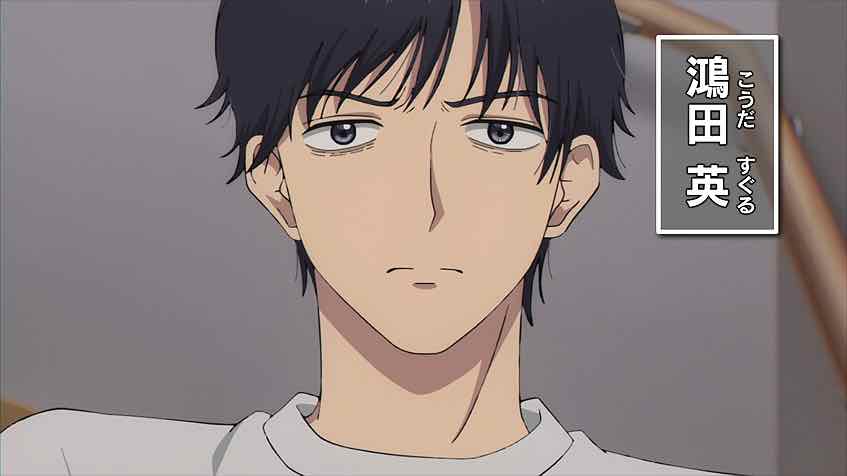
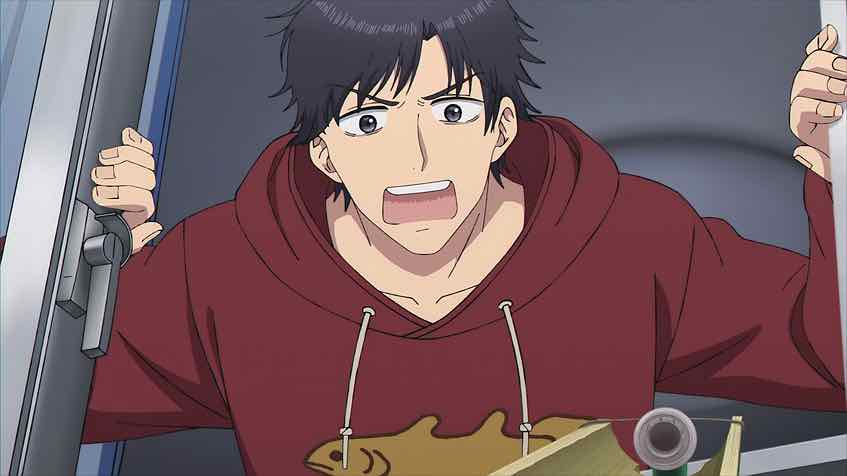
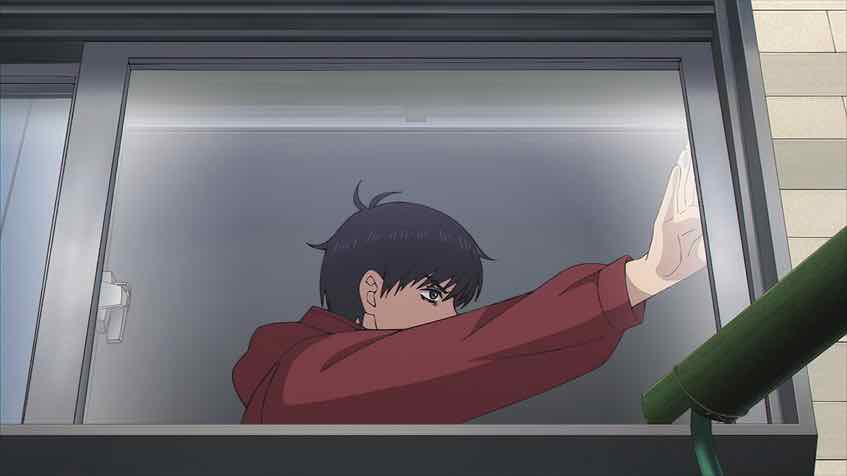
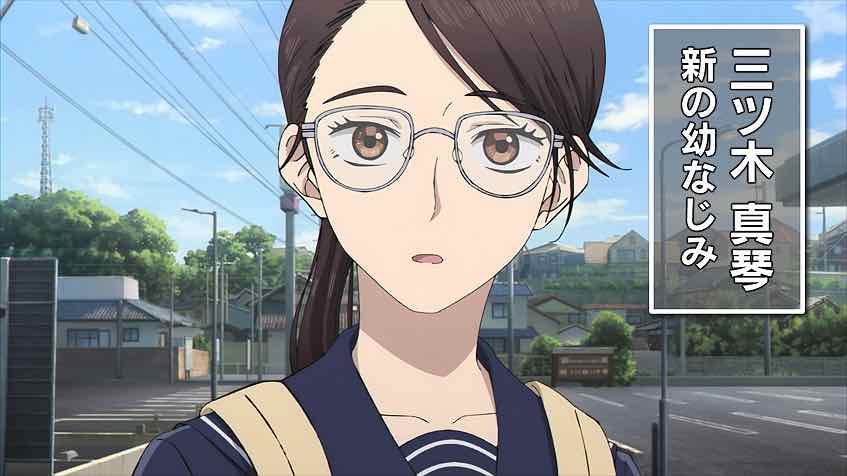 Kujima is a bird, and in a pinch will eat bugs by the river. But as a tourist it wants to sample the local fare, and Arata feels badly about the whole bugs thing. He offers frozen pasta but that elicits a firm “Nyet!”. After a recce in the fridge Kujima demands a rolled omelette. Arata protests he’s never made one and goes on to prove it. But never mind – “the first blini is always a blob”, Kujima says. It then offers to cook blini for Arata and proceeds to feast on natto (yuck) and rice. Arata’s oni-san Suguru then comes down complaining about the noise and is, unsurprisingly, astonished at what he sees at the kitchen table.
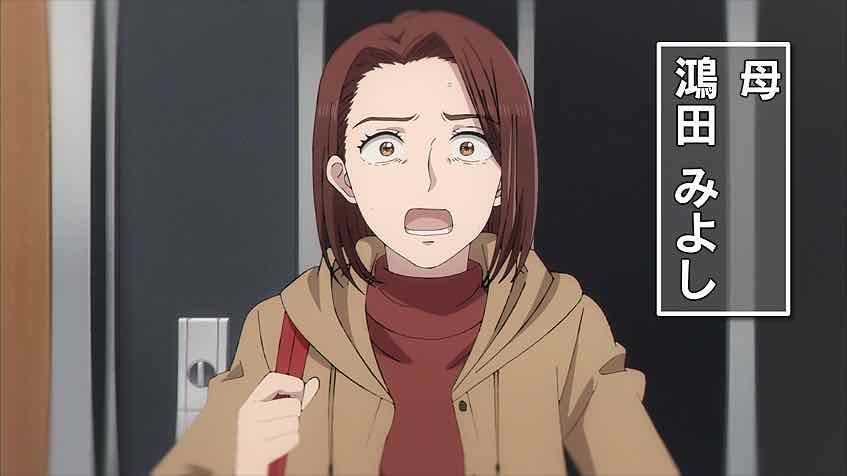
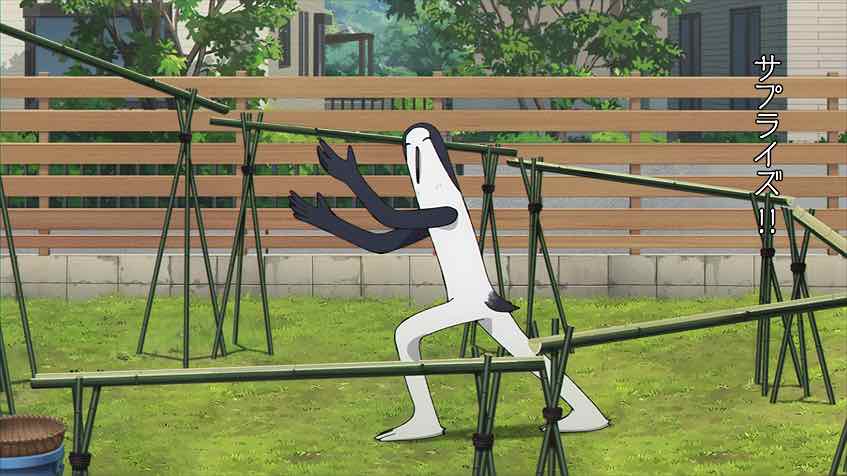
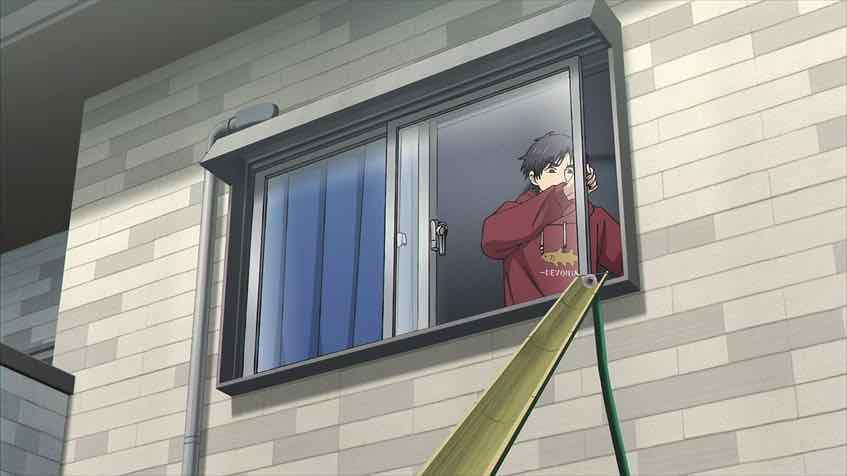
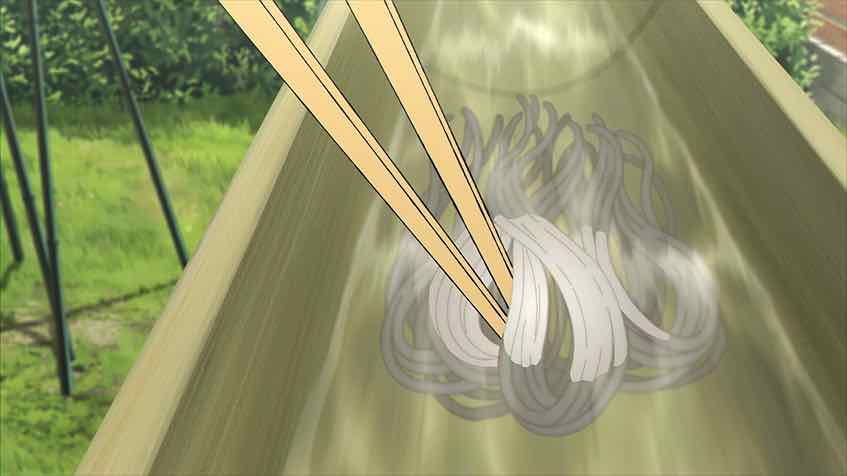
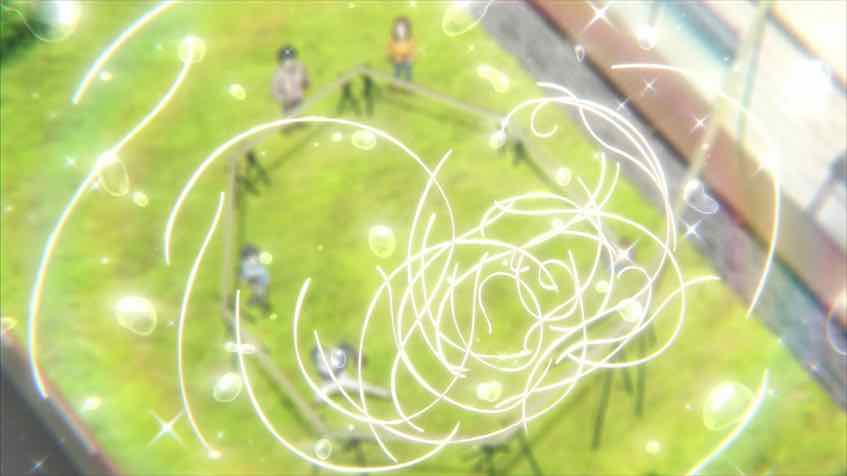
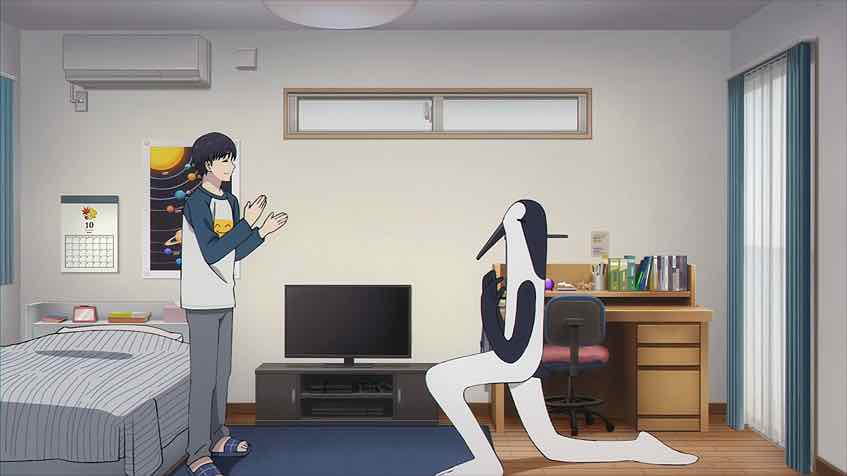
 Most is left unspoken in this premiere, but you can infer a lot about the family dynamic from what you see. Suguru clearly used to be a much kinder big brother and Arata resents the change in him. Arata is comfortable on his own but the lack of warmth and jollity in his house offends his schoolboy sensibilities. Kujima promises to liven things up, and Arata desperately wants things livened up. As such he begs his parents to let Kujima stay til spring and eventually (after seeing the bug-eating) they relent. And liven Kujima does – like building a giant nagashi somen slide (out of season, it’s October) using bamboo cut from the neighbor’s lot (OK, I can see that one being a crime).
 All in all I found this very charming and fun – exactly what I expected even if I didn’t know exactly what to expect. Kujima is weird but pretty clever – the way it used the somen slide to try and reconcile Arata and Suguru was rather insightful. I like that the emotions here are understated but still tangible, and just the overall weirdness of the piece. The OP and ED are both great, too, perfectly fitting the mood. It’s only one episode but Kujima: Why Sing, When You Can Warble? is scratching the right itch so far.