



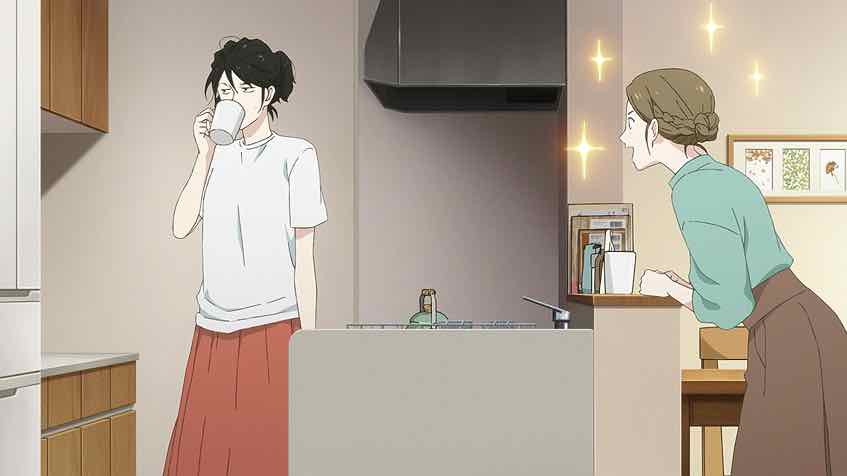

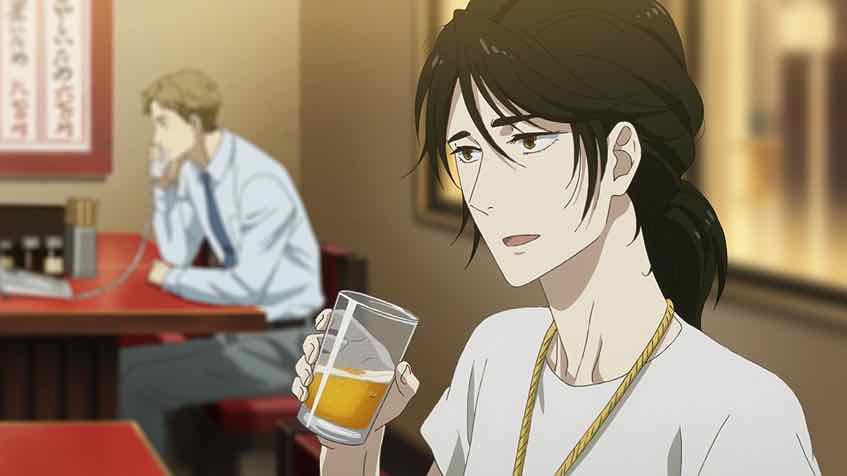


 First off, apologies for the lateness of this review. My weekly routine got sort of messed up (the Makio parallels just write themselves). And then I didn’t want to push back my usual Tuesday shows (GK and Vigilante) and Ikoku Nikki wound up getting shuffled and re-shuffled. It’s a series I really want to be able to digest at leisure, because it’s dense as hell and just as deep. There’s a lot going on with these people and the show doesn’t lend itself to drive-by viewing, never mind criticism.
 I also want to vent a little, because there’s an annoying trend with the discussion on Ikoku Nikki. I keep seeing Makio referred to as being neurodivergent or on the (autism) spectrum. First of all there’s nothing wrong with those things – in point of fact as an OCD person I could be classified as the former, depending on whether you include OCD under that umbrella. But those have become buzzwords for people who don’t understand what they mean. In my experience I’ve found extroverts tend to consider introversion to be synonymous with the spectrum, and it’s not. That’s an oversimplification and it disrespects both people on the spectrum and introverts generally.
 Here’s the thing. As Ikoku Nikki keeps pointing out, introverts and extroverts can never really understand each other, which is something I believe 100%. The difference is, introverts – by their nature – tend to take a “let it lie” approach to this. Extroverts, by their nature, tend to want to “help” introverts “fix” themselves (“tend” is the operative qualifier here). We see this dynamic playing out over and over between Asa and Makio, both of whom mean well. “Leave me be” may as well be the first line of the introvert bible, but extroverts struggle with the concept. Makio’s angst when she realized Asa was on summer break and would be home every day – that was an incredibly real moment.
 One of the key developments of this episode was certainly the one-on-one conversation between Makio and Emiri. There’s a lot of speculation that Emiri may be a lesbian, and indeed there have been hints to that effect. Whether she is or not, she’s clearly not comfortable being smushed into the conventional relationship box as her mother (who I’m convinced is going to be a big problem, especially if she gets wind of the conversation that follows) is trying to. Makio is passionate about this “what you want is your own business” idea. It’s not weird not to want to get married and have kids – no weirder than to want to do those things. But society tends not to see it that way.
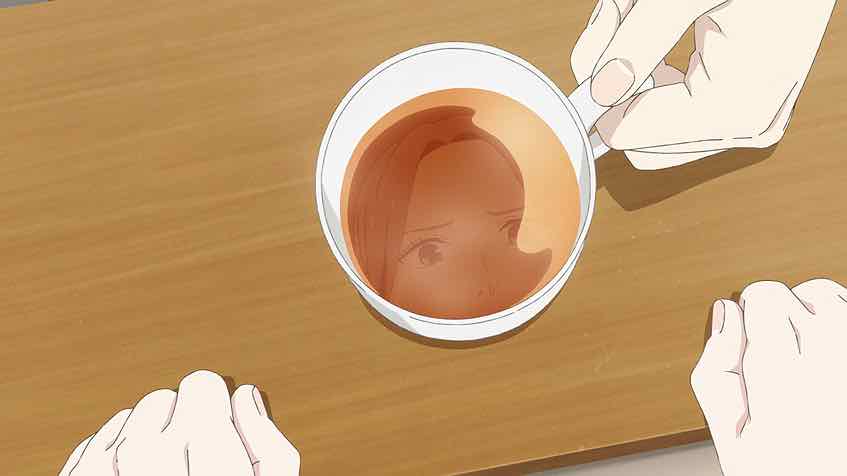
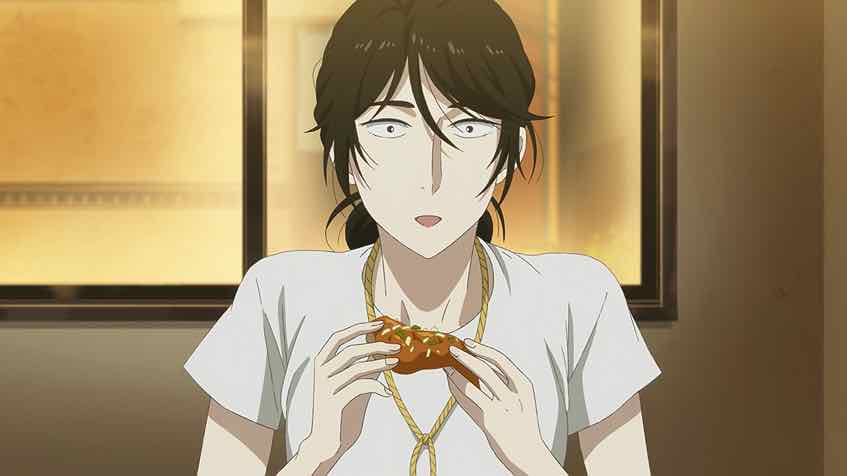
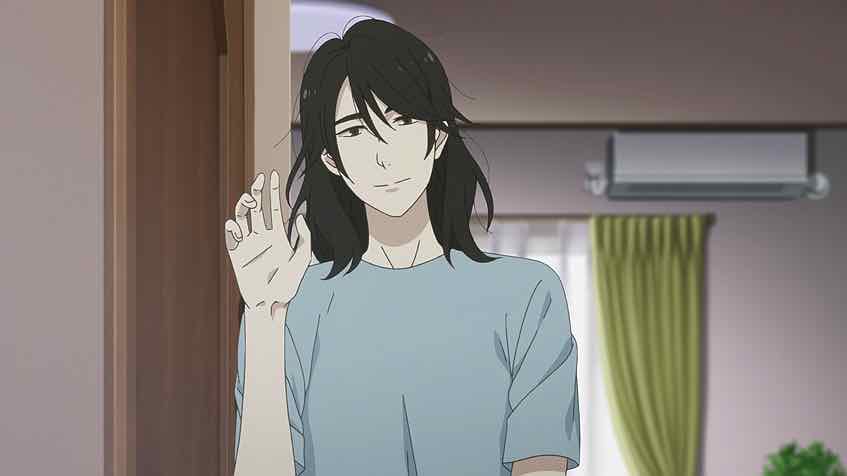 Makio, being a loner, probably doesn’t realize the potential repercussions of stuff like recommending movies to someone else’s teen (Fried Green Tomatoes is another potential trigger for Tiger Mom to go off). But this conversation goes two ways, and without realizing it Emiri (who’s no more self-aware than a typical 15 year-old should be) pushed Makio to think about her relationship with Kasamachi-kun. Makio talks about “refuge” a lot this week. Like how fiction was a refuge for her growing up, but how some people (like the eager beaver lawyer) “don’t need storytelling” in their lives. Shingo is a refuge for Makio – that much is indisputable in my view.
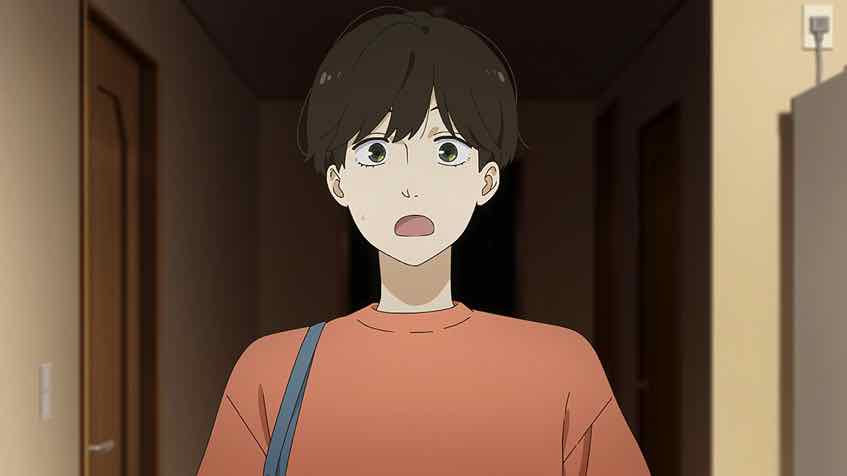 Let me just say, I adore this relationship. I like both of them as individuals, and love them together. They’re so very relatable, so genuine. So real, to use that word again. Makio faces the difficult conundrum every introvert contemplating a serious relationship does – can I force another person to adapt to how I am? It’s an inescapable truth for Makio that in the end she’ll always be most at ease on her own, even if she’s in love with another person (like Shingo). Is it fair of her to ask Shingo to accept that? He’s willing to bend over backwards for her – “if being your boyfriend makes you hate me, I just want to be your friend”. But that makes this decision even harder for her.
 “I don’t deserve help from anyone” is another thing people like Makio will instantly recognize in their own experience. Makio is not wrong to consider fairness for Kasamachi when it comes to being a couple. But the flipside is, what right does she have to decide for him? It’s not for her to say what he is and isn’t willing to accommodate in a relationship – that’s his business. Shingo comes off as a very grounded and settled guy – someone who can adapt to a lot. Makio obviously thinks he’s hot. Asa already loves him. I think it’s a valid question whether it’s better – for either party – for Makio to be with anyone. She’s right to ask it. But if there is someone, it’s hard to imagine anyone being a much better match than Shingo seems to be.
















Alan
February 11, 2026 at 5:59 pmI haven’t read your full review yet as I’m about to sit down and watch this episode… Somehow ended up with a double bill, which speaks to the fact I’ve been burning out a bit, but it is a nice bonus to have two episodes to watch whilst consciously trying to rest and find some leisure time!
The only discourse on this show i actually read is here, so this is the first time I’m coming across this idea about Makio. As an ADHD’r and most likely Autistic person (figuring the latter out bit by bit), I find that chatter interesting. What I find confusing about it is how can people tell? And is it more people in the neurospicy community? Or beyond?
To expand on my confusion, it is mostly due to the information we are presented with about Makio and how she engages with people and her environment. We ‘mostly’ (although definitely not exclusively) see her in her home environment, and given that she is definitely a very independent person, I think it’s fair to say she has things set up to suit her needs… Even if it does now contain Asa.
From time to time I get mentally involved in considering to what extent I my neurodiverse and associated labels are a disability, and to what extent society, and how it is set up, is the ‘disabler’ – full of barriers and lacking accomodations. All this is a long winded way of getting to my point that we see Makio in her own environment in which she has her own accomodations for herself in place, so I think (especially as she adapts to the new company more and more) we tend to see her functioning whilst supported by all the accomodations she needs personally. Not that anyone should particularly LOOK autistic or not, but when people get into analysing other people this way… How much of it is because unforgiving societal setups bring out neurodiverse traits in more dramatically visible ways? I think maybe a lot… And I would think that Makio would seem a lot more ‘normal’ (bleh) at home.
Either way…. This show does a beautiful job of presenting Makio, Asa, and others, as individual people who are unique from each other. I must admit sometimes I do get a sense of fictional characters might be neurodiverse and privately enjoy thinking about it, but this isn’t one of those instances.
Guardian Enzo
February 11, 2026 at 6:19 pmExcellent comment, thank you. I especially resonate with your point about society being the “disabler” – it’s one I’ve made myself. Society’s structures are, by and large, made by extroverts to suit the needs of extroverts. And there’a a general consensus that if you’re not extroverted, there’s something fundamentally “off” about you.
I don’t knock disabilities. Lots of people have them, and they’re no less worthwhile for it. OCD is one, in my view. But introversion is not a disability – I think that’s simply a matter of getting our terminology correct. Extroverts usually think of it as one (whether they admit it or not) but it isn’t.
Wiii!
February 11, 2026 at 10:14 pmI’ve been diagnosed with ASD a few years ago, and I read the manga. As much as I’m enjoying the anime, I feel that it’s been omitting or changing some small details due to media and time constrains, which ends up portraying Makio as an slightly (not much, but slightly) more attentive person towards Asa than in the original. This episode is possibly what feels more close or interested in portraying some difficulties Makio faces when it comes to facing society.
First of all, both the author and the series NEVER explicitly states that Makio could be neurodivergent or anything, but it shows many aspects along the whole story that make people interpret it that way. In the case of this episode:
1) Makio making a mess of her own department, much to Asa’s chagrin. She explains that it becomes like this when she has too much in her mind.
2) Makio’s refusal and/or difficulty in lying to others. In cases so far this is portrayed as a positive thing, but sometimes it’s a necessary tool in some social situations.
3) Makio’s doodle of Kazunari hints that she’s bad at remembering faces. And since she’s uncomfortable (or scared) of his loud voice, she prefers to continue their conversation through email.
4) The flashback where Makio is seen struggling with many social situations, from bureaucratic ones to not paying attention to a friend’s conversation.
With that being said, anime production so far has been preoccupied with Asa’s struggles because I believe they’re harder to adapt from the manga. Even if she’s considered complete extrovert, her mental state and grief processing is clearly a messy and lengthy one, so production had to find their way in and focus mostly on her while portraying many other, equally interesting, complex characters and situations.
Guardian Enzo
February 11, 2026 at 10:52 pmThanks for weighing in. I can’t speak to the manga – as I’ve said, haven’t read it. I think your observations are certainly valid, but to be charitable I think most commenters tossing labels around don’t have your level of authority on the subject.
Wiii!
February 11, 2026 at 11:36 pmWell, I can’t speak for the others, and I don’t want to assume any authority on the subject either. Neurodiversity is very, well, diverse, and many people can identify with some Makio’s quirks whereas others may actually identify with any other character, like Asa.
Needless to say, what’s important is not whether Makio has ASD, ADHD, etc., or not, but rather how she managed to find her place and become a self-sufficient adult despite her own struggles. She has her own private space, found a job that clearly suits her needs, built a social circle who loves her and she’s comfortable with, and knows the right people to ask for help whenever she needs it.
Finally, it’s equally important not to lose sight that one of the main themes of the story is the constant conflict between what one wants to be vs. what society dictates is normal and not, and that’s something we’re seeing in every character so far, not only the introvert novelist.
catterbu
February 12, 2026 at 2:50 amLots of thoughts on this one. First, thanks Enzo for taking the time to write this one up properly instead of doing a rush job. I very much appreciate that.
On neurodivergence et al. I do think that the extrovert-introvert is an dynamic in the show. But if we limit discussion to that, it can risk being a bit reductive and risk a lack of nuance. I think Makio gets labeled as neurodivergent because she does show characteristics commonly associated with ASD and ADHD. I think a fundamental point to start: being neurodivergent is not a handicap or disability in and of itself, it can be a mere statement of fact. That is, if you plot certain characteristics of how a person processes the world and they fall outside of the norm by a couple standard deviations, the person objectively is neurodivergent. Now measuring all of that accurately is definitely a difficult question. But as has been mentioned in other comments, what turns this into a disability more properly are the societal factors that prevent those of us who deviate from norms from being able to engage in “the world” successfully. So, I would assert that Makio shows signs of neurodivergence, but also she has clearly learned how to adapt pretty well to the world, function in it, and generally live a life that works for her (Asa withstanding). I do think that labels can lose utility when people get too attached to them, or reduce a character to a collection of labels instead of considering the individual, or reduce the person to a mere representative of a particular group.
On manga vs. anime. I have been reading along as we go, so I cannot write about how the anime is arcing as compared with the manga all that well, but chapter to chapter, the cuts have felt smart. I do think that we have seen a little less of Makio interacting with her friends and others when Asa is not there, but if I was adapting this manga (a scary thought), I think I would home in on the relationship between Makio and Asa and then add the others as they help enlighten that relationship as well as each character’s individual growth. I am happy that I am getting the additional context from the manga, but I have not felt like the interactions between Makio and Asa feel any different based on what has been cut.
On Kasamachi-kun. I do not know what will end up being the final state for that relationship, but I would guess that they will be together in some form or fashion at the end. I like the idea of the two of them living in either apartments next to each other, or at least having their own rooms and space. I do not really want Makio to change to “be able” to live with him. It would betray a core belief I have about Makio (and that I think the series has too): Makio does not NEED to change. It might be healthy for her to process her trauma with her sister and having smoother interactions with the people in her life might be nice, but her character trajectory does not need to be one of conforming to societal expectations for her relationships.
Finally, this series has ascended from one I was curious to check out (prior to season) to my favorite premier by a wide margin (first episode) to my favorite of the season (a few episodes) to likely contender for the top AOTY spot (several episodes) to now, I am wondering if it has the juice to make it into my top 30 anime ever. Truly remarkable work here.
Guardian Enzo
February 12, 2026 at 9:26 amIt’s about as socially unacceptable as it gets, but the “friends with benefits” option for Kasamachi-kun and Makio is one possibility. Living next door is sort of the Platonic ideal form of that, ROFL. One might argue that would be a cop-out for the two of them, but is that societal convention talking? I mean, if it works…
Another complicating factor here is Shingo seems like the sort of guy who wants kids, and I can’t imagine Makio being open to that possibility. That’s the ultimate compromise barrier with many a relationship, and the ultimate unraveling of a lot of them.
catterbu
February 12, 2026 at 12:02 pmHmmm. I would suggest that friends with benefits does not include the same level of intimacy as if they living next door, but otherwise full entwined emotionally. The kids thing is a good call. though if you are talking “societally unacceptable” options, why not just a poly relationship, or even just having a kid, but Makio just being an aunt to them?
Guardian Enzo
February 12, 2026 at 12:09 pmI’m confused. You mean Shingo having a kid with someone else, or being a donor with a surrogate?
catterbu
February 12, 2026 at 2:36 pmeither one.
Guardian Enzo
February 12, 2026 at 3:08 pmWell I guess that would be an option. What you’re describing is sort of the ultimate have your cake and eat it too introvert “romantic” relationship, LOL. Sex but no cohabitation (never mind marriage), but with proximity. A child for the one who wants one but not the one who doesn’t. Instinctively one dismisses it as a cynical cheat code but is that our cultural biases talking? I mean, if it worked for two people where’s the problem?
catterbu
February 13, 2026 at 2:32 am[in reply to Enzo] Yeah. A flavor of ethical non-monogamy. Never would expect the series to go there, but it works for plenty of people. After being married for 10 years (and subsequently divorced) + being like Makio in introversion, this is the only sort of set up I would consider. But then cultural biases never held that much weight for me by the time I got into my mid-twenties… 🙂
Nadavu
February 14, 2026 at 8:40 pmThis was the first time I truly identified with Makio, as I too can’t seem to keep track of time and have things spontaneously appear and disappear in and out of my hands. I can see how from Asa’s point of view, this is weird and deviant behavior – especially from an adult, particularly your legal guardian, but I’m glad Makio refuses to apologize for who she is.